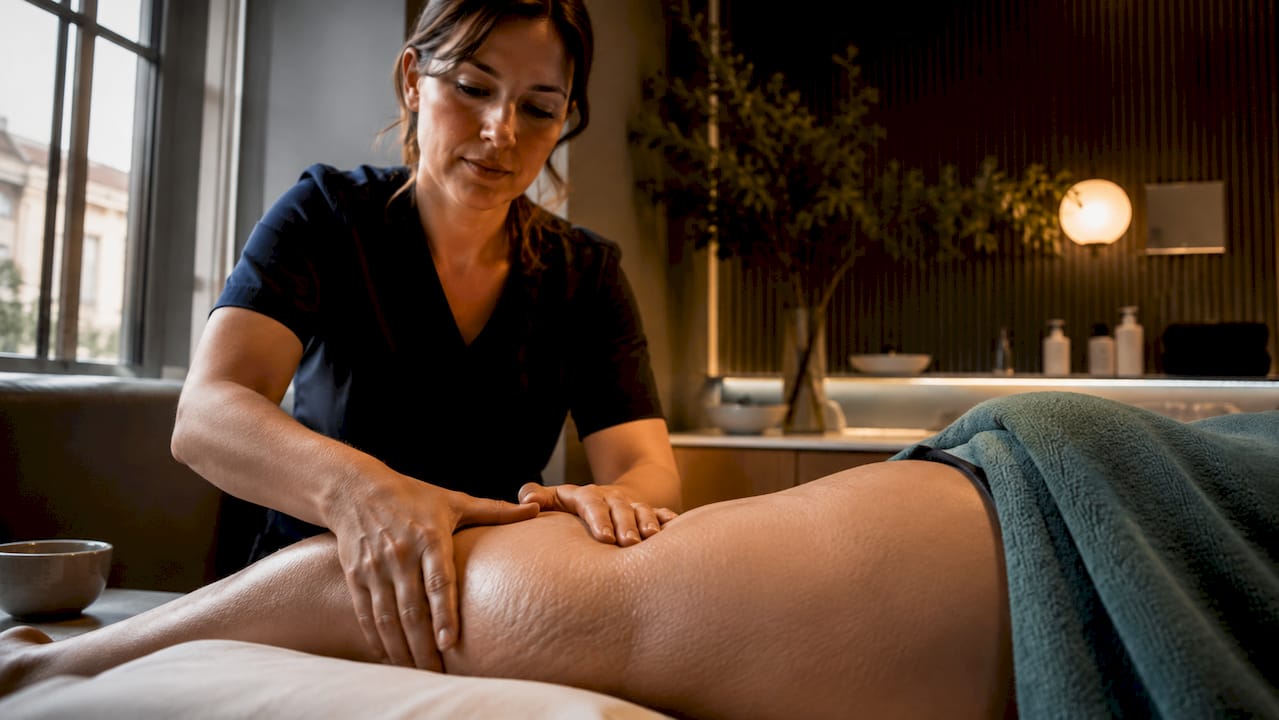

Lymphatic drainage can smooth cellulite’s appearance temporarily, mostly by reducing fluid retention, but it does not fix the fibrous bands beneath the skin that create dimpling. Clinical trials show modest, often short-lived results when used alone. It works best as one part of a broader, combined treatment plan rather than a standalone fix. The sections below unpack the evidence, the physiology, who tends to see visible change, and what a sensible treatment plan looks like.
TL;DR:
- Lymphatic drainage provides temporary fluid reduction but does not alter the fibrous bands responsible for cellulite’s dimpling.
- Studies show modest, short-term circumference decreases mainly through fluid removal, with no evidence of lasting structural changes.
- The technique is most effective for individuals with fluid retention, while those with fibrous or fat-based cellulite are unlikely to see meaningful results.
- Intensive, repeated sessions increase short-term circumference reduction but are resource-heavy and do not guarantee long-lasting change.
- Combining lymphatic drainage with energy-based or structural treatments yields more durable and noticeable improvements than using it alone.
Table of Contents
- Lymphatic drainage cellulite evidence: what the studies actually show
- How lymphatic drainage for cellulite works on the skin
- Who sees results from lymphatic massage for cellulite?
- What a lymphatic drainage session for cellulite actually involves
- Combining lymphatic drainage with other cellulite treatments
- A clinical view from The Aesthetics Room
- Why the “quick fix” narrative around cellulite persists
- Booking a lymphatic drainage consultation with The Aesthetics Room
- Sources
Lymphatic drainage cellulite evidence: what the studies actually show
Cellulite affects roughly 80 to 90% of post-pubertal women to some degree, which is why so many people search for a fix that genuinely works. The research on manual lymphatic drainage (MLD) is more limited than the marketing around it suggests.
A 2014 open prospective trial followed 20 women through a course of MLD and found it was safe but not effective as a standalone treatment. Hip circumference dropped by an average of just 0.3cm, thigh measurements barely moved, and ultrasound imaging showed no change to the dermal structure that actually causes dimpling. Quality of life scores did improve, which matters, but it is a different outcome from “cellulite disappearing.”
A separate comparative study looked at mechanical massage, manual lymphatic drainage, and connective tissue manipulation side by side. All three techniques produced roughly 0.5cm of thigh circumference reduction, with only modest differences between methods. None produced dramatic change.
A 2023 clinical review of cellulite treatments places massage and lymphatic stimulation among the older, established approaches, noting that newer modalities aimed at tissue architecture tend to deliver more durable results.
Three limitations run through almost every study in this space:
- Sample sizes are small, often fewer than 25 participants.
- Techniques vary widely between clinics and researchers, making comparisons difficult.
- Follow-up periods are short, so nobody has good data on results beyond a few months.
The evidence gap: no large randomised controlled trial has yet confirmed that MLD alone produces lasting structural change to cellulite. The consistent finding across trials is fluid reduction and comfort, not fat or fibrous tissue remodelling.
How lymphatic drainage for cellulite works on the skin
Cellulite forms when fat pushes up against fibrous septae (the connective bands anchoring skin to muscle), creating the dimpled look. Lymphatic drainage does not touch those bands directly. It targets something else entirely: the fluid sitting in the tissue around them.
Just beneath the skin sits a network of superficial lymphatic vessels responsible for draining excess interstitial fluid. Gentle, directional strokes during MLD encourage that fluid to move toward nearby lymph nodes, where the body processes it. National Geographic’s reporting on the technique describes this as genuine, measurable movement of fluid rather than any kind of “detox.”
Here is why that matters for appearance rather than structure:
- Removing excess fluid can flatten puffiness and soften the look of dimples, particularly where oedema contributes to the texture.
- It does nothing to shrink fat cells or loosen the fibrous septae pulling the skin down.
- More intensive protocols, with repeated daily sessions, tend to produce larger short-term circumference changes in trial settings than a single weekly appointment would.
That last point explains why some clinics report better numbers than the general research base suggests. Intensity, not the technique itself, tends to drive the size of the effect.
Who sees results from lymphatic massage for cellulite?
Not everyone responds the same way, and knowing where you sit matters before booking a course of sessions.
- People with visible fluid retention or puffy, oedematous cellulite tend to notice the clearest short-term smoothing, since drainage directly addresses the fluid component of their texture.
- Those with structural or fibrotic cellulite, where the dimpling comes mainly from tight septae and uneven fat distribution, are unlikely to see much change from drainage alone.
- People carrying higher body fat with pronounced dimpling generally need a different approach altogether, since fluid removal cannot address the underlying fat volume.
Contraindications matter here too. UCLA Health’s clinical guidance flags suspected deep vein thrombosis, active infection, and uncontrolled cardiac or renal disease as situations where MLD should be avoided or only performed under medical supervision. Anyone unsure which category of cellulite they have should get a proper assessment. Understanding the difference between cellulite and skin laxity is a useful starting point, since the two are often confused and respond to different treatments entirely. Always seek a certified MLD therapist or a medically trained practitioner rather than a generic spa treatment.
What a lymphatic drainage session for cellulite actually involves
Clinic sessions generally fall into two camps: gentle, skin-stretching manual techniques performed by a trained therapist, or device-assisted mechanical massage that mimics the same fluid-moving action with rollers or vacuum suction. Most sessions run 30 to 60 minutes.
Trial protocols vary considerably in intensity. Some studies use a course of 10 to 14 sessions spread over several weeks. Others test intensive daily programmes, sometimes based on the Godoy method, which combines manual and mechanical drainage with additional stimulation across dozens of hours over 10 to 14 days. These intensive regimens report larger short-term perimeter reductions, but they are resource-heavy, expensive to replicate, and not standard practice in most clinics.
Home-support measures help maintain whatever gains a session produces:
- Regular movement and exercise to support natural lymphatic flow.
- Adequate hydration, since dehydrated tissue drains less efficiently.
- Compression garments after treatment where a practitioner recommends them.
- Consistent skincare and topical agents as part of ongoing maintenance.
Pro Tip: Book drainage sessions in the days immediately after any body-contouring treatment, when swelling is highest. That is when fluid-focused work has the most to actually clear, and many clinics build post-treatment lymphatic drainage into their aftercare plans for exactly that reason.
Expect any visible change to fade within days to a couple of weeks without repeat sessions or supporting habits.
Combining lymphatic drainage with other cellulite treatments
Lymphatic drainage rarely stands alone in a well-designed treatment plan, and the evidence explains why. It addresses fluid and recovery, not the fibrous architecture that defines stubborn cellulite.
Reviews of cellulite treatment point to several categories with stronger evidence for longer-term structural change:
- Energy-based devices, including radiofrequency and acoustic wave therapy, which target tissue remodelling rather than fluid alone.
- Structural procedures such as subcision, which physically release the fibrous septae causing deeper dimpling.
- Muscle-focused adjuncts that improve overall body tone and can enhance the visual result of a combined plan.
The 2023 clinical review that surveys these modalities places lymphatic work firmly in the supporting role rather than the lead. A combined approach, drainage for comfort and fluid, energy-based or structural treatment for the underlying architecture, tends to produce more visible, longer-lasting results than any single method. Reviewing the full range of non-invasive body-contouring options is worth doing before committing to one treatment in isolation. Maintenance sessions are usually still needed regardless of which combination a person chooses.
A clinical view from The Aesthetics Room
At The Aesthetics Room, we treat lymphatic drainage as one tool among several, never a promise on its own. As a CQC-registered clinic and member of the ACE Group, our approach starts with an honest assessment: is the dimpling fluid-related, fibrous, or a mix of both? That answer shapes whether drainage features at all.
We set expectations early. Patients with oedematous puffiness tend to see quicker, more satisfying results than those with deeply structural cellulite, and we say so before treatment begins rather than after. Where drainage alone will not deliver what someone wants, we discuss combining it with other modalities or adjusting the plan entirely. A personalised consultation remains the only reliable way to know which category applies to you, and what a realistic outcome actually looks like.
Why the “quick fix” narrative around cellulite persists
Cellulite treatments sell better with a promise of transformation, and lymphatic drainage’s genuine, measurable effect on fluid gets stretched into claims it cannot support. The research is consistent: MLD helps with swelling and comfort, and the studies that show any circumference change at all tend to involve intensive, repeated protocols rather than the occasional spa session most people book.
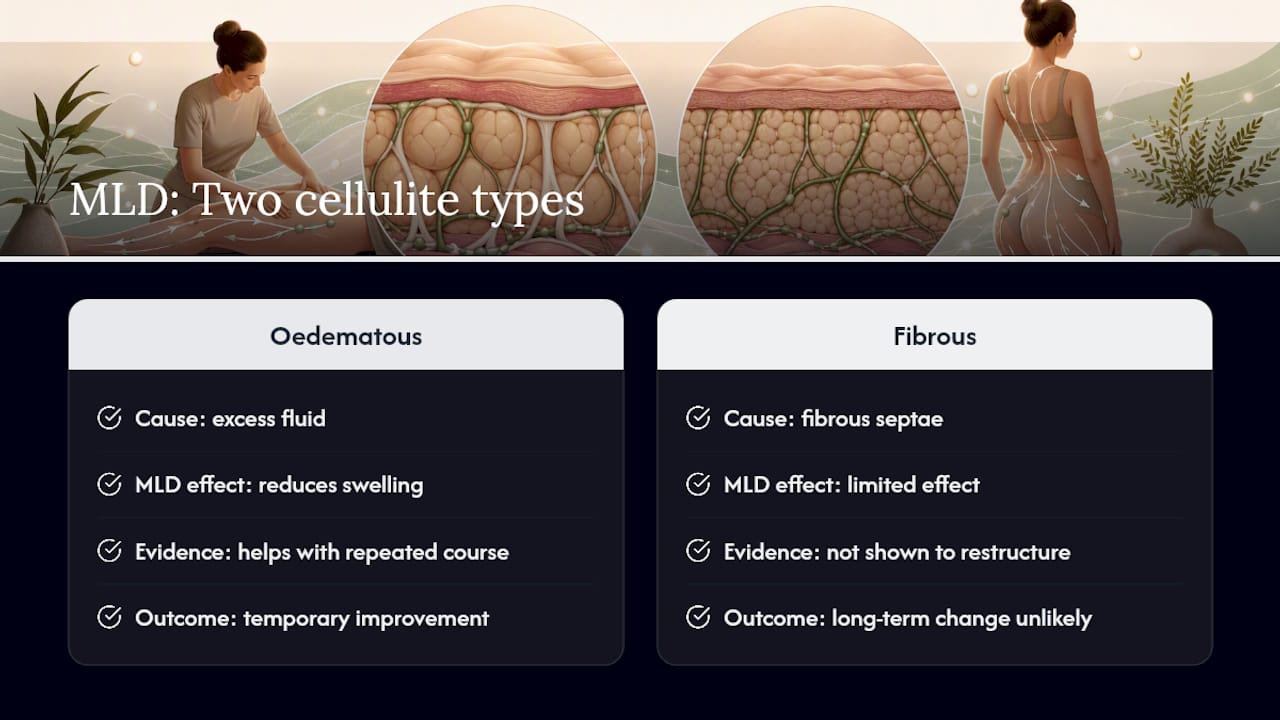
What frustrates me about the wider conversation is how rarely anyone distinguishes between fluid-driven puffiness and structural, fibrous cellulite. They are different problems requiring different tools, yet most marketing treats cellulite as one condition with one solution. A person with genuinely oedematous tissue might get real, if temporary, benefit from drainage. Someone with tight fibrous septae is chasing a result that technique was never designed to deliver, no matter how many sessions they book.
The honest position is not that lymphatic drainage is useless. It is that its role is narrower and more specific than most people are told, and a good clinician should say so before taking payment for a course of sessions rather than after.
— Vishul
Booking a lymphatic drainage consultation with The Aesthetics Room
If fluid retention or puffiness is part of what you are seeing in the mirror, a proper assessment beats guessing at home. At The Aesthetics Room, initial consultations look at your skin, your history, and where your cellulite genuinely sits on the fluid-to-fibrous spectrum before recommending anything.

Treatment plans are built around what your tissue actually needs, whether that means lymphatic drainage on its own, or paired with a structural or energy-based approach for longer-lasting change. We also use drainage as part of aftercare following other cellulite treatment options, helping reduce swelling and support recovery once a structural treatment has been performed. If you would like a clear, honest read on what to expect for your skin, book a consultation through our Botox and body treatment portfolio or get in touch directly to arrange a virtual or in-clinic assessment.
This article is general information, not a substitute for advice from a qualified doctor. Consult a qualified healthcare professional about your own circumstances before acting on anything here.
Sources
- Longitudinal evaluation of manual lymphatic drainage for the treatment of gynoid lipodystrophy
- What lymphatic drainage massage actually does for your body | National Geographic
- Lymphatic drainage massage — separating fact from fiction | UCLA Health