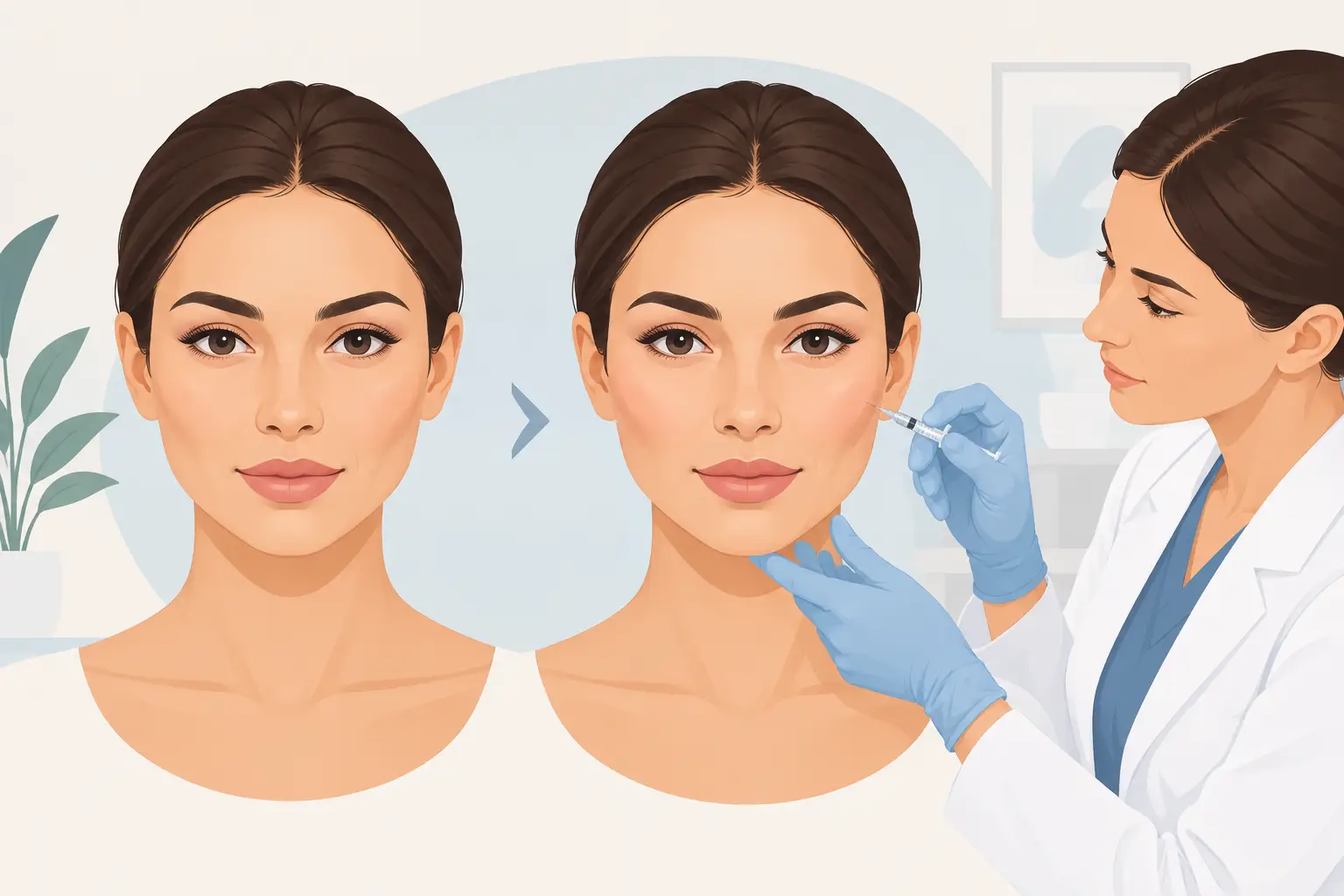


Botulinum toxin softens vertical lip lines caused by repetitive muscle movement, and it can create a subtle “lip flip” in the right patients, but it will not fix lines caused by sun damage or lost volume. Effects typically begin within days and reach their full result by two to three weeks, lasting a few months. For deeper static creases or thinner lips, fillers usually work better, either alone or alongside toxin.
TL;DR:
- Botox effectively softens dynamic lip lines caused by repeated muscle movement but does little for static lines from sun damage or volume loss.
- The full effect of treatment takes two to three weeks to develop and lasts typically three to six months, requiring regular maintenance.
- Treatment should be tailored to whether lines are dynamic or static, with filler often better suited for existing creases at rest or thin lips.
- A conservative, properly supervised approach with thorough consultation is essential to avoid side effects and achieve natural, safe results.
Table of Contents
- What are lip lines (smoker’s lines) and what causes them?
- How does Botox work on lip lines?
- What is the lip flip and how does it differ from filler?
- Botox versus fillers: which treatment actually fixes your lip lines?
- What happens during a consultation and treatment appointment?
- What are the risks and when should you seek help?
- How much does Botox for lip lines cost and how long does it last?
- How does a medically led clinic decide between Botox and filler?
- Clinician summary: start conservative, prioritise safety
- Book a lip lines consultation with Theaestheticsroom
- Sources
- FAQ
What are lip lines (smoker’s lines) and what causes them?
Lip lines, sometimes called smoker’s lines or perioral lines, are the fine vertical grooves that run from the edge of the lips up towards the nose. They fall into two broad categories, and telling them apart matters more than most people realise.
Dynamic lines only appear when you move your mouth. Pucker your lips to sip through a straw or hold a cigarette, and you’ll see them deepen; relax your face, and they soften or vanish. These are driven by the orbicularis oris, the ring-shaped muscle circling the mouth, contracting repeatedly over years.
Static lines are visible even when your face is completely still. These form once repeated muscle movement has creased the skin permanently, often compounded by loss of collagen and elastin, sun exposure, and thinning of the lip border itself.
Common contributing factors include:
- Repetitive pursing motions from smoking, drinking through straws, or habitual lip movements
- Natural ageing, which reduces collagen production and skin elasticity around the mouth
- Cumulative sun exposure, which breaks down structural proteins in the skin
- Genetics, which influence how thick your lip border is and how quickly lines set in
- Smoking specifically, which combines the mechanical pursing action with reduced skin oxygenation
The distinction isn’t academic. Botulinum toxin relaxes the muscle causing dynamic creasing, but it does nothing for skin that has already lost its structural support. A practitioner who examines your lines both at rest and during movement can usually tell within minutes which category you fall into, and that assessment should shape everything that follows.
How does Botox work on lip lines?
Botulinum toxin works by temporarily blocking the nerve signals that tell the orbicularis oris muscle to contract. With the muscle unable to pucker as forcefully, the vertical creases that form during that movement soften considerably, because the skin is no longer being folded and refolded along the same lines.
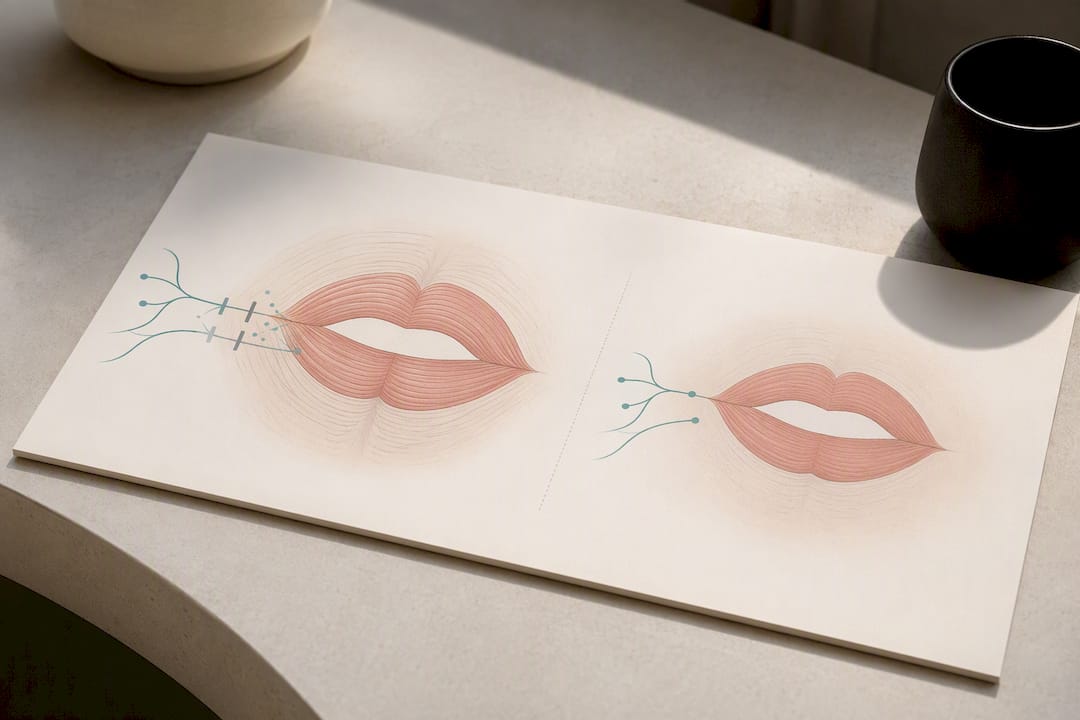
This is why toxin is effective primarily for wrinkles caused by muscle contraction rather than sun damage or sagging skin. If your lines are purely dynamic, you’ll usually see a genuine improvement. If they’re static and etched into the skin’s structure, toxin alone won’t erase them.
The timeline follows a fairly predictable pattern. Some softening is often noticeable within a few days, but the full effect typically takes two to three weeks to develop as the toxin fully diffuses into the target muscle fibres. Results generally last several months before the nerve endings regenerate and muscle activity gradually returns, which is why most patients settle into a repeat schedule rather than treating once and stopping.
Dosing around the mouth is far more delicate than on the forehead. Practitioners typically work with small, precisely placed units, because the orbicularis oris also controls speech, eating, and drinking, so over-treatment risks affecting those functions. Exact placement and unit count should always be a clinical judgement made after examining your specific muscle pattern, not a fixed formula.
It’s also worth understanding that most cosmetic uses of botulinum toxin around the lips are technically off-label, meaning the product’s licence covers other indications, not specifically lip lines. A properly run consultation should explain this plainly before you consent to treatment.
What is the lip flip and how does it differ from filler?
A “lip flip” uses small amounts of botulinum toxin injected into the upper orbicularis oris, near the vermillion border where the lip meets the surrounding skin. It doesn’t add volume. Instead, it relaxes the muscle that curls the upper lip inward, letting more of the natural pink lip tissue roll outward and become visible.
The result is a subtly fuller-looking upper lip and softened vertical lines above it, without the plumping effect fillers create. Patients often describe it as their existing lip looking “more like itself” rather than obviously bigger.
Here’s roughly how the process typically unfolds in clinic:
- The practitioner examines your lip shape at rest and during movement to confirm you’re a suitable candidate.
- A small number of units are injected into precise points along the upper lip border.
- You’re advised not to lie flat, exercise heavily, or press on the area for several hours afterwards.
- Softening begins within days, with the fuller flip effect developing over one to two weeks.
- The effect fades gradually over roughly ten to twelve weeks, shorter than toxin’s typical duration elsewhere on the face because lip muscles move constantly.
A lip flip isn’t right for everyone. It won’t add meaningful volume to genuinely thin lips, it can occasionally affect speech clarity or the ability to whistle or drink from a straw if too much muscle is relaxed, and it’s a poor fit for anyone hoping for a dramatic, long-lasting change. For those goals, dermal filler remains the more appropriate route, and a clinician should say so honestly rather than pushing toxin as a filler substitute.
Botox versus fillers: which treatment actually fixes your lip lines?
The right choice depends almost entirely on what’s causing your lines, not on which treatment sounds more appealing. Facial ageing around the mouth is rarely down to one factor alone. It’s usually a mix of volume loss, sagging, and muscle hyperactivity, which is exactly why a bespoke plan often blends more than one approach rather than relying on toxin or filler in isolation.
As a general guide:
- Toxin works best for purely dynamic lines that appear only on movement, and for the subtle upper-lip flip effect
- Filler works best for static creases already visible at rest, thinning lips, and lost lip border definition
- Combination treatment suits patients with both muscle overactivity and volume loss, addressing movement and structure together
- Resurfacing options, such as chemical peels or laser treatment, help with the fine crepey skin texture that often surrounds lip lines, independent of muscle or volume
- Surgical lip lift is occasionally considered for severe photoageing or significant sagging, though this sits well beyond what injectables can achieve
A useful rule of thumb: if you can smooth the lines out by relaxing your face, toxin should help. If the lines are stubbornly there regardless of expression, you’re looking at filler, resurfacing, or a blend of both. Our guide to treatments for smoker lines breaks this comparison down further, and our page on anti-wrinkle injections versus dermal fillers covers the decision in more general terms across the face.
What happens during a consultation and treatment appointment?
A responsible consultation takes time rather than rushing you toward a needle. Professional guidance is clear that patients shouldn’t feel hurried into a decision and should have space to discuss risks, benefits, and alternatives properly. Surgical patient checklists recommend at least two weeks of reflection between initial consultation and treatment for more invasive procedures, and applying that same unhurried approach to injectables is good practice, even when it isn’t strictly required.
What the appointment itself typically involves:
- A full medical history review, covering allergies, medications, and any previous facial treatments.
- Examination of your lip lines both at rest and in movement to confirm the right technique.
- A clear conversation about off-label use, realistic outcomes, and written consent.
- The injections themselves, using a fine needle at multiple small points around the mouth.
- Immediate aftercare advice: expect possible bruising, apply ice if needed, and avoid strenuous exercise for the rest of the day.
Full results build over two to three weeks. Most patients book a follow-up review around that point, then plan their next treatment for roughly three to four months later, depending on how quickly the effect fades. Our Botox London page covers what to expect from consultation through to treatment in more depth.
What are the risks and when should you seek help?
Most side effects are minor and short-lived. NHS patient leaflets list headache, bruising at injection sites, and temporary localised muscle weakness as the common experience, usually resolving within days to a couple of weeks. There’s currently no pharmacological reversal agent, so any over-treatment has to be managed conservatively while the effect wears off naturally over the following months.
Rare but serious: symptoms of toxin spreading beyond the treatment site, including muscle weakness elsewhere, slurred speech, or blurred vision, can take up to four weeks to develop and require urgent medical attention.
Genuinely serious reactions, such as toxin spread affecting swallowing or breathing, are very rare but must be reported to the MHRA via the Yellow Card scheme if they occur.
UK regulation is tightening around this space. It’s a criminal offence in England to administer botulinum toxin for cosmetic purposes to anyone under 18, and local authorities are expanding licensing requirements for injectable procedures more broadly.
Before booking anywhere, check:
- The clinic holds CQC registration or equivalent regulatory oversight
- The practitioner has recognised medical training, not a weekend certificate
- Treatment happens in a clinical setting, never a salon or someone’s home
- Product packaging and batch numbers are shown; unusually low prices can signal unlicensed toxin
More detail on adverse events and reporting sits on our Botox side effects page.
How much does Botox for lip lines cost and how long does it last?
Prices vary based on practitioner experience, clinic location, and how many units your treatment plan needs. A single small area like the lip flip typically requires fewer units than the forehead, but expect to pay for expertise, not just product volume. Suspiciously cheap deals are a genuine warning sign, often linked to unlicensed or diluted toxin rather than a bargain.
Factors that influence what you’ll pay include:
- The practitioner’s qualifications and reputation, since experienced injectors typically charge more
- Geographic location, with central London clinics generally priced higher than suburban ones
- The number of units required for your specific muscle pattern
- Whether you’re combining toxin with filler or other treatments in the same visit
Results generally last three to six months, though this varies by individual metabolism, muscle strength, and how the area was treated. Some people find the lip flip effect fades closer to ten weeks, given how constantly the mouth moves.
To stretch results between sessions:
- Wear SPF regularly, since UV exposure accelerates the static lines toxin can’t touch
- Consider stopping smoking, which reduces both the mechanical pursing and skin damage driving line formation
- Book maintenance appointments before the effect fully wears off, rather than waiting until lines are back in full force
How does a medically led clinic decide between Botox and filler?
Assessment starts with watching how your lips move, not just how they look at rest. That distinction between dynamic and static lines shapes whether toxin, filler, or a combination gets recommended, and it’s a judgement made by trained practitioners rather than a fixed protocol applied to everyone.
A patient convinced they need filler sometimes turns out to have purely dynamic lines that respond well to a conservative dose of toxin instead, and the reverse is just as common: someone hoping toxin alone will restore volume that simply isn’t there anymore.
Bespoke planning matters because two patients with visually similar lip lines can have entirely different underlying causes. Membership in professional safety groups reflects a commitment to safety protocols at every stage, from consultation through aftercare.
Pro Tip: Ask your practitioner to show you your lip movement in a mirror before treatment begins. Seeing exactly which creases disappear when your muscles relax helps set realistic expectations for what toxin alone can achieve.
Clinician summary: start conservative, prioritise safety
The most sensible approach to lip lines is the least dramatic one. Start with a conservative dose, assess the result after a few weeks, and adjust from there rather than chasing a dramatic change on day one. Botulinum toxin has real limits, and pretending otherwise sets patients up for disappointment.
Take the reflection time a good consultation offers you. Ask to see your practitioner’s qualifications, ask what product they’re using, and ask them to justify why toxin, filler, or a combination suits your specific lines. A practitioner who welcomes those questions is generally one worth trusting.
— Vishul
Book a lip lines consultation with Theaestheticsroom
This clinic offers an alternative to rushed high-street injectors for lip lines treatment. Every plan starts with a proper assessment of dynamic and static lines rather than a one-size-fits-all approach, delivered by medically trained practitioners at a CQC-registered clinic.

The positioning is built around bespoke treatment planning, whether that means a conservative lip flip, a combination of toxin and filler, or a referral toward skin resurfacing if that’s genuinely what the lines need. Patients are not pushed toward the most expensive option when a simpler one solves the problem. If lip lines are bothering you, the sensible next step is a proper consultation rather than guessing from a mirror. Browse Botox treatments or check current costs on the price list before booking a visit at a Knightsbridge clinic.
This article is general information, not a substitute for advice from a qualified doctor. Consult a qualified healthcare professional about your own circumstances before acting on anything here.
Sources
- Thinking about having cosmetic surgery? — Royal College of Surgeons
- Botulinum Toxin A injections — Lancashire Teaching Hospitals NHS
FAQ
Can you get rid of lip lines with Botox?
Botox meaningfully softens lip lines caused by muscle movement, but it won’t remove static lines already etched into the skin from sun damage or lost volume. For those, filler or resurfacing treatments typically work better, sometimes combined with toxin for a fuller result.
What is the best treatment for vertical lip lines?
It depends on the cause: toxin suits dynamic lines that appear on movement, while filler suits static creases and thinning lips. Many patients get the best result from a combination, and our smoker lines treatment guide walks through how that decision is made.
How much does Botox cost for lip lines?
Pricing depends on units needed, practitioner experience, and location, so there’s no single fixed figure. Current treatment costs are listed on our price list, and it’s worth being cautious of any clinic quoting prices well below the norm.
What is the riskiest place for Botox?
Areas near the mouth and eyes carry more risk than the forehead because the muscles there control essential functions like speech, swallowing, and blinking. This is precisely why lip and perioral treatment needs a practitioner experienced with that specific anatomy, working in a properly regulated clinical setting.