
A fuller-looking upper lip does not always call for filler. For some people, the concern is not volume but the way the upper lip disappears when smiling, curls inwards at rest, or reveals more gum than they would like. This lip flip review looks at what the treatment can realistically achieve, how it feels, and when another approach may deliver a better result.
What is a lip flip?
A lip flip is a subtle anti-wrinkle injectable treatment designed to relax a small part of the orbicularis oris muscle around the mouth. As the muscle relaxes, the upper lip can gently roll outwards, allowing more of its natural pink surface to show.
The aim is refinement rather than transformation. A well-planned lip flip may make the upper lip appear more visible at rest and when smiling, soften the appearance of a gummy smile, and create a slightly more balanced relationship between the upper and lower lip. It does not add physical volume in the way dermal filler does.
That distinction matters. If your goal is a noticeably plumper lip, sharper lip border or correction of significant asymmetry, a lip flip alone is unlikely to meet your expectations. If you already like the shape of your lips and simply want a little more upper-lip show, it can be a considered, low-commitment option.
Lip flip review: what results can you expect?
The best lip flip results tend to look understated. Friends may notice that you look fresher or that your smile seems more open, without being able to identify why. The lip itself should still look like your lip – just slightly more everted and visible.
Most people start to see a change within three to seven days, with the result usually settling by around two weeks. The effect is temporary and commonly lasts around two to four months. Longevity varies according to your metabolism, muscle activity, dose and individual response.
A lip flip is particularly popular with people who feel their upper lip vanishes on smiling. It can also be helpful where a mild gummy smile is caused by upper-lip movement. However, gum show can have several causes, including tooth position, gum tissue and facial structure. An experienced practitioner should assess the reason before suggesting any injectable treatment.
Results are often described as natural because the treatment works with existing anatomy rather than creating volume. Natural does not mean risk-free or suitable for everyone, though. Precision is essential around the mouth, where even very small changes in muscle activity can be noticeable.
What does the appointment involve?
A responsible appointment begins well before treatment. Your practitioner should discuss your medical history, previous aesthetic treatments, allergies, medications, concerns and desired outcome. They should assess your lip proportions both at rest and in movement, including how you speak, smile and purse your lips.
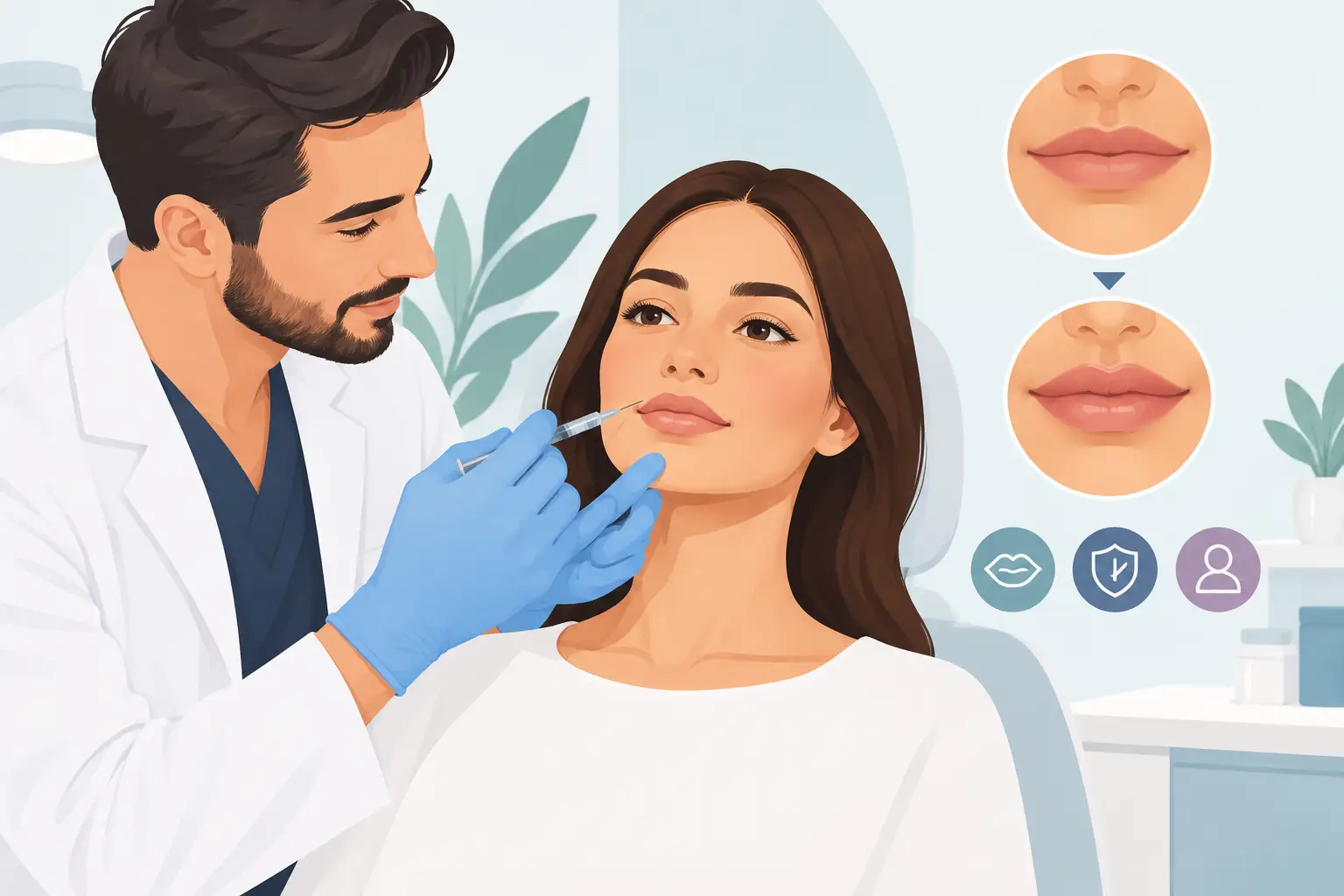
After consent and a personalised plan are agreed, tiny amounts of prescription-only anti-wrinkle product are placed at carefully selected points around the upper lip. The injections themselves are brief and generally well tolerated. You may feel a short, sharp pinch at each injection point.
There is usually little to no downtime. Small marks, tenderness, redness or minor swelling can occur and commonly settle quickly. If bruising develops, it may take longer to fade, so it is sensible to plan ahead of an important event.
Aftercare instructions differ slightly according to your practitioner and medical assessment. You will commonly be advised to avoid rubbing or pressing the area, strenuous exercise, excessive heat and alcohol for a period after treatment. Following the guidance you are given is more useful than relying on generic social media advice.
The trade-off: a subtle change can affect function temporarily
The upper lip is involved in far more than smiling. It helps with pronunciation, drinking from a cup or straw, applying lipstick and certain facial expressions. Because a lip flip intentionally reduces muscle movement, some people notice temporary changes in these everyday actions.
For the first few days or weeks, you may find that drinking through a straw feels less controlled, pronouncing particular sounds takes more effort, or your upper lip feels slightly unfamiliar. These effects are usually mild and temporary, but they are worth considering if your work requires frequent public speaking, singing or a great deal of face-to-face communication.
This is one reason a conservative approach is often preferable. Chasing a dramatic result with a treatment designed for subtle enhancement can create an outcome that feels less comfortable or natural. At The Aesthetics Room, treatment planning should always prioritise facial balance, safety and how you want to feel in your result, not simply a trend-led look.
Lip flip risks and safety considerations
When performed by a suitably qualified medical practitioner, a lip flip is generally straightforward. Nonetheless, it is still a medical aesthetic procedure and should be treated accordingly.
Potential side effects include temporary bruising, swelling, tenderness, asymmetry, an altered smile, difficulty pursing the lips and a feeling of reduced control around the mouth. If product is placed inaccurately or the dose is not appropriate for your anatomy, these effects may be more pronounced. Unlike dermal filler, anti-wrinkle treatment cannot be dissolved, so the effect needs to wear off gradually over time.
Suitability should never be assumed from a photograph. A consultation is especially valuable if you have had previous lip filler, dental work, facial surgery, a history of cold sores, neuromuscular conditions, or are taking medication that may affect treatment. Pregnancy and breastfeeding should also be discussed openly with a qualified clinician, who can advise on whether to postpone treatment.
Choosing a provider based solely on price can be a false economy. The product is only one part of the treatment. Assessment, facial anatomy knowledge, clinical judgement, sterile practice, prescribing protocols and appropriate follow-up all contribute to a safer, more polished experience.
Lip flip versus lip filler: which is right for you?
Lip flips and lip fillers are sometimes presented as competing treatments, but they address different concerns. A lip flip changes the way the upper lip sits by relaxing muscle movement. Lip filler uses hyaluronic acid gel to restore or add structure, hydration and volume.
If your upper lip disappears when smiling but you are happy with its volume, a lip flip may be enough. If your lips have lost definition over time, appear dehydrated, or you would like more volume and shape, filler may be more appropriate. For some patients, a very small amount of filler combined with a conservative lip flip can create a balanced outcome, but combination treatment should be tailored carefully.
There are also occasions when neither is the first answer. Concerns such as marked lip asymmetry, pronounced gum show, dental bite issues or skin quality changes may require a different treatment plan or a referral to another healthcare professional. Good aesthetic care is as much about knowing when not to treat as it is about delivering a treatment well.
Questions to ask at your consultation
Rather than arriving with a fixed treatment in mind, explain what you notice in the mirror and in photographs. Is your concern visible only when you smile? Do you want more shape, more volume, or less gum show? Do you have a deadline such as a wedding or holiday?
Ask your practitioner what result is realistic for your anatomy, what functional changes you may notice, how long the effect is likely to last and what happens if you are unhappy with the result. A considered clinician will welcome these questions and give you space to decide without pressure.
The right lip flip should not make you look treated. It should make your smile feel a little more like the version of yourself you recognise and enjoy. If subtle enhancement, honest advice and medical oversight matter to you, a personalised consultation is the most valuable place to begin.