
Most PRP hair plans start with a course of three to four sessions, then move to maintenance sessions every three to six months. The exact rhythm depends on your type of hair loss, how you respond and the protocol your practitioner follows. Here is how a maintenance plan is built, how to tell whether it is working and how to look after your scalp between visits.
TL;DR
- A typical PRP course is three to four sessions, four to six weeks apart, followed by maintenance every three to six months.
- Published protocols differ. One academic review suggests sessions at months 1, 2, 3, 6, 9 and 12 in the first year.
- PRP works best as part of a wider plan. Keep up any topical or oral hair-loss treatment your clinician recommends.
- Our PRP hair session costs £450. We set your follow-up interval after your consultation.
- Aftercare is simple: keep the scalp undisturbed for the first 24 to 48 hours and avoid blood-thinning medicines beforehand unless a doctor says otherwise.
Table of Contents
- What PRP maintenance actually means
- How often should you have PRP for hair?
- What to expect from a maintenance session
- When results show and how long they last
- Pairing PRP with other treatments
- Who maintenance suits
- Preparing for each session
- Aftercare between sessions
- Choosing a clinic for long-term PRP
- Is PRP available on the NHS?
- Book PRP hair treatment in London
- FAQ
- Sources
What PRP maintenance actually means
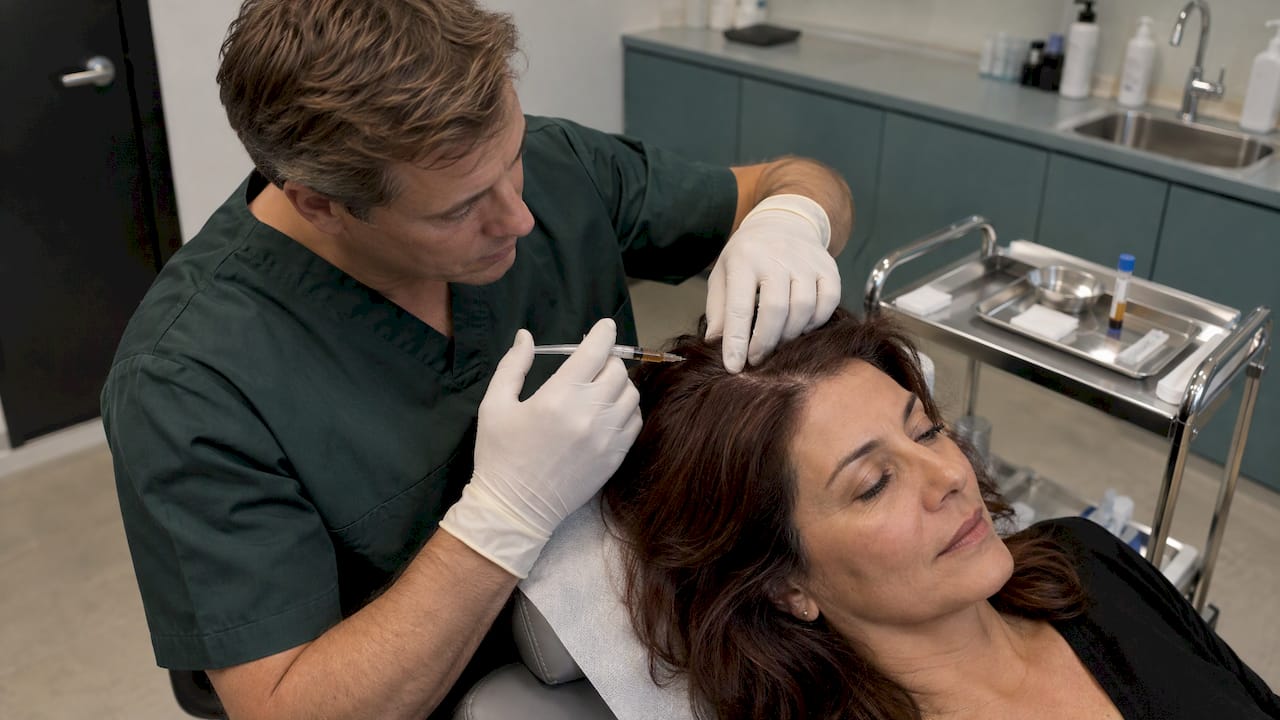
PRP stands for platelet-rich plasma. A small sample of your blood is spun to concentrate the platelets, and the result is injected into the scalp. The aim is to deliver growth factors to the follicles and encourage them to stay active.
Hair grows in slow cycles, so one session is rarely the whole story. The first course builds the response. Maintenance is what keeps follicles supported once you have reached a result you are happy with. Think of it as a regular top-up rather than a repeat of the full course.
The PMC review of PRP for androgenetic alopecia notes that the underlying hormonal driver of pattern hair loss is not switched off by PRP. That is why a plan matters. Regular sessions and the right supporting treatments work together.
How often should you have PRP for hair?
There is no single universal timetable. Here is what the published guidance says.
| Source | Initial phase | Maintenance |
|---|---|---|
| UK pharmacy guide | 3 to 4 sessions, 4 to 6 weeks apart | Every 3 to 6 months |
| PMC review (2018) | Monthly for the first 3 months | Every 3 months in the first year (months 1, 2, 3, 6, 9, 12) |
| AAD Clinical Pearls (2024) | A common protocol is 3 sessions, 1 to 2 months apart | Sessions every 4 weeks up to 6 months have been proposed |
The AAD notes that larger randomised trials are still needed to define the best frequency. Preparation methods, centrifugation and injection technique also vary between clinics. That variation is the reason we plan your schedule around you rather than a fixed template.
A sample first-year timeline
This is an illustration of how a plan can be laid out, not a promise of results. Your own schedule is agreed with your practitioner.
- Consultation: we review your hair-loss pattern, medical history and medicines.
- Weeks 0 to 12: three or four loading sessions at the interval your practitioner recommends.
- Around month 3 to 4: a review with photographs to compare against your starting point.
- Months 6 to 12: maintenance sessions, spaced according to how your hair is responding.
What to expect from a maintenance session
Maintenance sessions follow the same steps as the first course. A small blood sample is taken, processed and injected across the thinning areas. Your practitioner also checks the scalp, compares it with earlier photographs and decides whether the gap between sessions should stay the same, lengthen or shorten.
The AAD summary reports that androgenetic alopecia has the most evidence behind PRP. A meta-analysis it cites found significant increases in hair count, thickness and density compared with placebo. Those figures are why pattern hair loss is the main condition we treat with PRP.
When results show and how long they last
Hair moves slowly, so measure progress in months. In the PMC review, improvement was most commonly reported after the third month. Most studies followed patients for six months or less. Some longer follow-up showed density declining again in a few patients, with progressive hair loss most apparent at 16 months in one study.
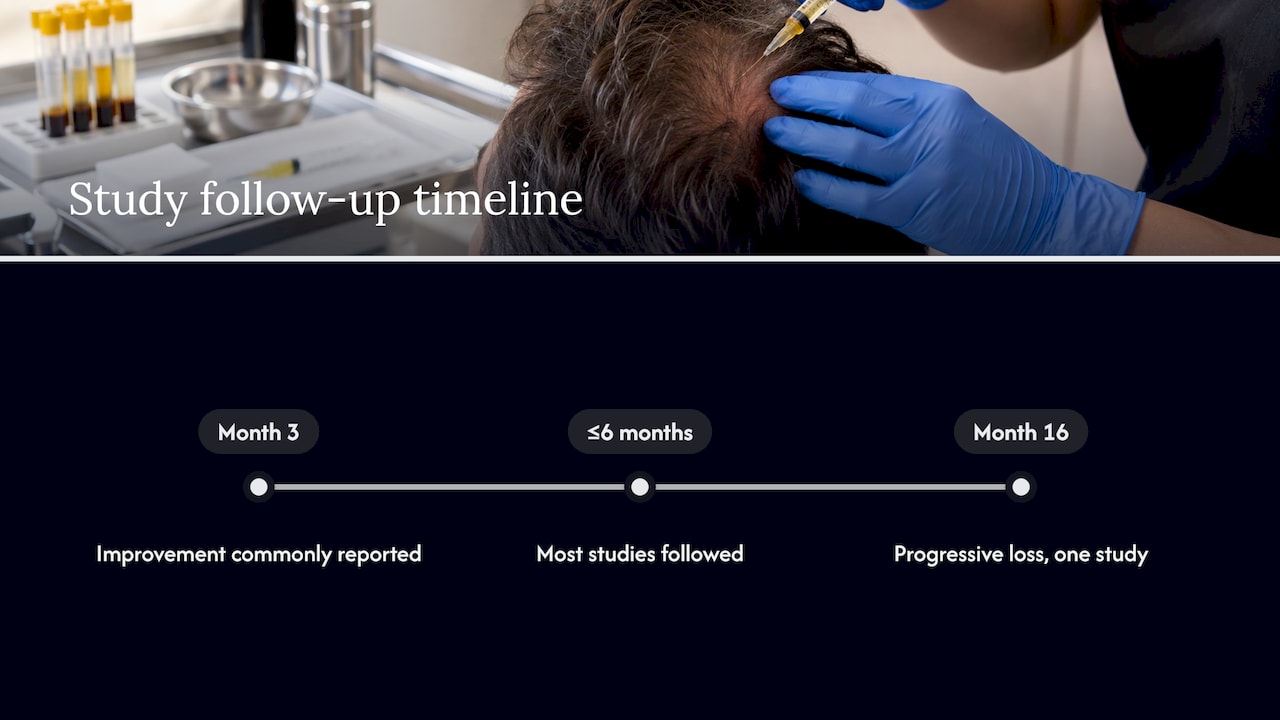
That is the practical case for maintenance. Hair loss that is driven by genetics and hormones continues in the background, so regular support helps you hold on to what you have gained.
How to tell whether it is working
- Photographs: take them in the same light, at the same angle, before each session.
- Parting width and crown density: these are easy to compare over time.
- Shedding: a temporary increase can happen early on. Tell your practitioner if it continues.
- Hair thickness: finer hairs becoming stronger is often noticed before total density changes.
If your hair is not responding as hoped by the review point, your practitioner can adjust the plan. That could mean a different interval, added supporting treatments or a referral for tests.
Pairing PRP with other treatments
The PMC authors recommend PRP as an adjunct and encourage patients to continue topical or oral therapies, such as minoxidil, spironolactone or finasteride, where those have been prescribed. Those medicines address the hormonal side. PRP supports the follicles. Together they cover more of the picture.
At our clinic, the supporting options include:
- Vitamin Hair Therapy at £218
- Medical Skincare Prescription at £50
- PRP for facial hair at £258, for beard and eyebrow areas
Our price list shows each treatment, and our guide to PRP hair treatment costs explains what you pay across a full plan.
Who maintenance suits
PRP is most often considered for early to moderate thinning. Specific situations deserve a conversation first:
- Sudden or patchy shedding, or shedding after illness, medication changes, pregnancy or rapid weight loss, needs a diagnosis before any treatment plan. Our guide to postpartum hair loss and PRP covers timing.
- Receding temples in men respond differently to crown thinning. See our guide to male hair thinning at the temples.
- Medical conditions and medicines can affect whether PRP is appropriate, as set out below.
Who should not have PRP
The ACE Group patient leaflet lists contraindications including pregnancy or breastfeeding, allergy to anaesthetic or anticoagulant agents, skin infection near the treatment area and being unwell on the day. It also lists conditions that need careful assessment, such as diabetes, autoimmune conditions, blood clotting disorders, cancer, immunosuppression, severe anaemia and blood-borne infections. Tell your practitioner about all of them, and about every medicine you take.
Preparing for each session
The same ACE leaflet advises avoiding medicines that affect clotting or platelet function, such as aspirin, warfarin and anti-inflammatories like ibuprofen and naproxen, for 5 to 7 days beforehand, unless medically required. It also advises avoiding alcohol for 48 hours before PRP.
Never stop a prescribed medicine without speaking to your GP or prescriber first. If you take anything that thins the blood, we will discuss it at your consultation.
On the day, wash your hair in the morning and skip styling products. Eat and drink normally so you feel steady during the blood draw.
Aftercare between sessions
Good aftercare protects each session. A typical UK aftercare guide suggests:
- Avoid washing your hair for 24 hours.
- Avoid vigorous exercise for 48 hours.
- Avoid hair dye, chemical treatments, saunas and swimming for 48 to 72 hours.
- Keep touching the scalp to a minimum while the injection sites settle.
Some practitioners also ask patients to avoid ibuprofen for a few days. Follow the instructions your own practitioner gives you.
Common effects and when to call us
The most common effects are redness, swelling, tenderness, mild bruising and scalp tightness. The AAD notes these are usually immediate and settle within about 24 hours. The PMC review found temporary pain at the injection site to be the most common effect, with no major adverse events reported in the studies it covered.
Contact your practitioner promptly if you notice increasing pain, spreading redness, warmth, swelling, discharge or fever. The ACE leaflet also states that any unexpected side effect should be reviewed by your practitioner as soon as possible, and that you should have an out-of-hours number for emergencies. If you cannot reach us and feel seriously unwell, seek urgent medical care.
Choosing a clinic for long-term PRP
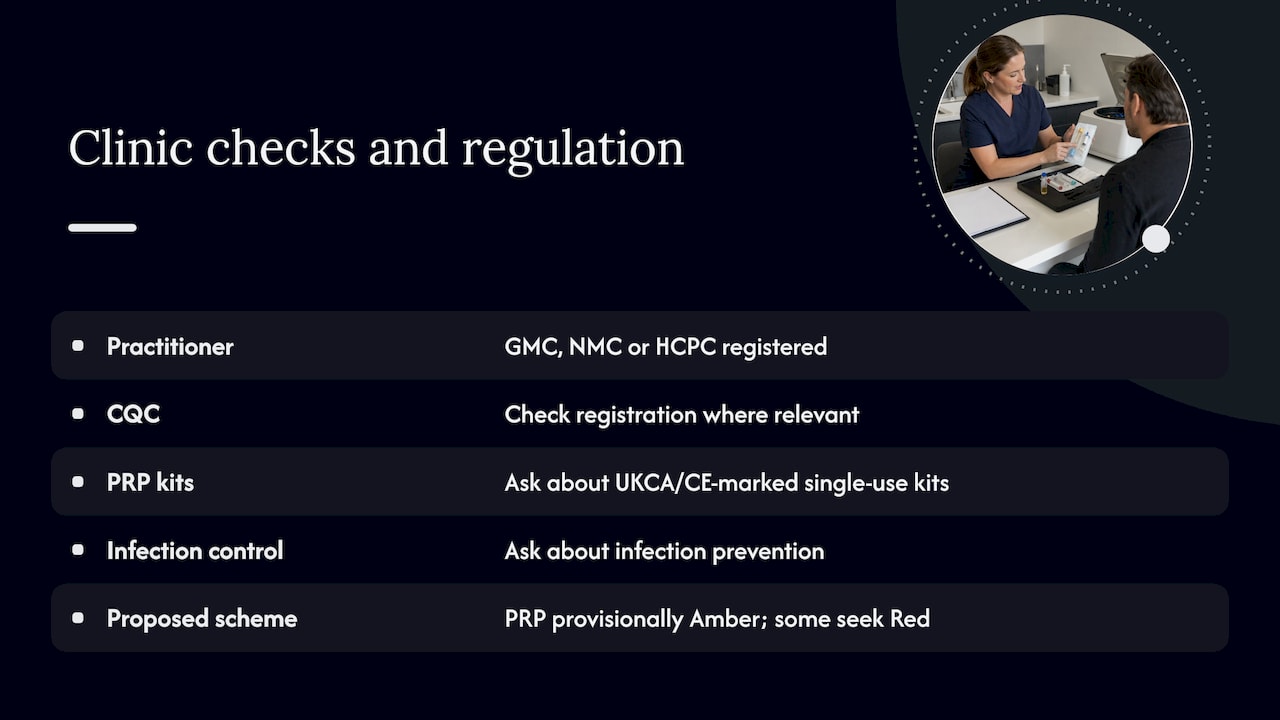
Because maintenance means returning for months or years, the clinic you choose matters. The UK guidance advises confirming that your practitioner is registered with the GMC, NMC or HCPC. It also advises checking CQC registration where relevant, and asking about UKCA or CE marked single-use PRP kits and infection prevention.
Regulation is moving. The Aesthetics Journal reports that JCCP guidance treats hair restoration as a regulated activity when carried out by a regulated healthcare professional. It also reports that PRP is provisionally in the Amber category of the proposed licensing scheme in England, with some consultation respondents calling for a move to Red, which would require treatment by qualified, regulated professionals in CQC-registered premises.
We are CQC registered and a member of the ACE Group, which is dedicated to patient safety. All treatments are performed by medically trained professionals.
Is PRP available on the NHS?
No. Bolt Pharmacy’s UK guide states there is no NICE guidance recommending PRP for hair loss and that it is not routinely available on the NHS. It is a private treatment, and that is why planning the number of sessions up front helps you budget with confidence.
Our view on PRP maintenance
In our clinic we see maintenance as the part of PRP that turns a good early response into a lasting routine. We do not hand out one schedule to everyone. Your consultation covers your hair-loss pattern, your medical history and the other treatments you use, and your interval is built from that.
We favour a medically led, whole-person approach. That means looking at the scalp, and also at the internal factors that influence hair, such as nutrition and recent illness. It is why we offer Vitamin Hair Therapy and a medical skincare prescription alongside PRP.
Our practitioners are medically trained, our clinic is CQC registered and we belong to the ACE Group. You get one clear plan, photographs at each review and a named person to contact if anything feels unexpected.
Vishul
Book PRP hair treatment in London
Our PRP hair treatment is priced at £450 per session, with PRP for facial hair at £258 and Vitamin Hair Therapy at £218. Book a consultation, in person or virtually, and we will map out your course and your maintenance interval. You can see every treatment on our full price list, and our guide to London aesthetic consultations explains what happens at the first visit.

Ready to plan your next step? Visit The Aesthetics Room to book your appointment.
FAQ
How often should I have PRP for hair?
Most plans begin with three to four sessions four to six weeks apart. After that, maintenance is commonly every three to six months. Protocols vary, so your practitioner sets your interval after assessing your response.
Does PRP regrow hair permanently?
PRP does not switch off the genetic and hormonal causes of pattern hair loss, so results are not considered permanent. In the studies reviewed in PubMed Central, some patients saw density decline again at longer follow-up. Regular maintenance and any prescribed supporting treatments help you keep your results.
How do I speed up recovery after PRP?
Follow the aftercare plan: leave your hair unwashed for 24 hours, avoid vigorous exercise for 48 hours and skip dyes, saunas and swimming for 48 to 72 hours. Most redness and tenderness settles within a day or two. Contact your practitioner if symptoms worsen.
Can I have PRP if I take blood thinners or aspirin?
These medicines affect clotting and platelet function, so tell us before booking. Guidance suggests avoiding them for 5 to 7 days before PRP unless they are medically required. Never stop a prescribed medicine without advice from your GP or prescriber.
How much does PRP for hair cost at The Aesthetics Room?
A PRP hair session is £450. Facial hair PRP is £258 and Vitamin Hair Therapy is £218. Your total depends on how many sessions your plan includes.
Sources
- PRP Hair Loss Treatment: UK Guide, Bolt Pharmacy
- Platelet-rich plasma for androgenetic alopecia: a review, PMC
- Platelet-rich plasma for alopecia, AAD Clinical Pearls
- ACE Group patient leaflet on PRP
- New PRP Guidance Released for Hair Treatments, The Aesthetics Journal