
PRP (platelet-rich plasma) for hair uses a small sample of your own blood, concentrated and injected into the scalp to support thinning areas. For women with early to moderate pattern thinning, a 2024 meta-analysis found it significantly improved hair density and thickness. Results build gradually over a course of sessions, so a clear plan and a proper consultation matter. Here is how it works, who it suits, what to expect and what to check before you book in the UK.
TL;DR
- PRP is made from your own blood, so it is not a manufactured drug or an implant. It is injected into the scalp areas affected by thinning.
- A 2024 review of 21 studies and 628 participants found PRP significantly enhanced hair density and thickness in women with hair loss.
- A common programme is one session a month for three months, then a booster about every six months. Visible change usually takes months, not weeks.
- Suitability depends on the cause of your hair loss. A medical consultation should rule out reversible causes first.
- At The Aesthetics Room, PRP for hair is priced at £450. We are CQC-registered and members of the ACE Group.
Table of Contents
- What PRP hair treatment is and how it is done
- Does PRP work for women’s hair loss?
- Who PRP may suit, and who should wait
- How many sessions, and when will you see results?
- Is PRP for hair painful? Side effects and aftercare
- What to check before booking PRP in the UK
- Our perspective
- PRP hair treatment at The Aesthetics Room
- FAQ
- Sources
What PRP hair treatment is and how it is done
PRP is an autologous treatment: it is prepared from your own blood, concentrated for platelets and plasma components, and injected where hair is thinning. According to the American Hair Loss Association, it is not a stem cell product, an exosome product or a pharmaceutical drug. Platelets carry growth factors that are involved in healing, which is the reason PRP is used to support follicles.
The process is straightforward. The ACE Group patient leaflet describes it in these stages:
- A small amount of blood (10 to 30 ml) is taken from your arm.
- The blood goes into a specialised PRP collection tube.
- It is spun in a centrifuge for 5 to 15 minutes to separate the components.
- The PRP layer is drawn off with a sterile syringe. In some cases calcium chloride or thrombin is added to activate the platelets.
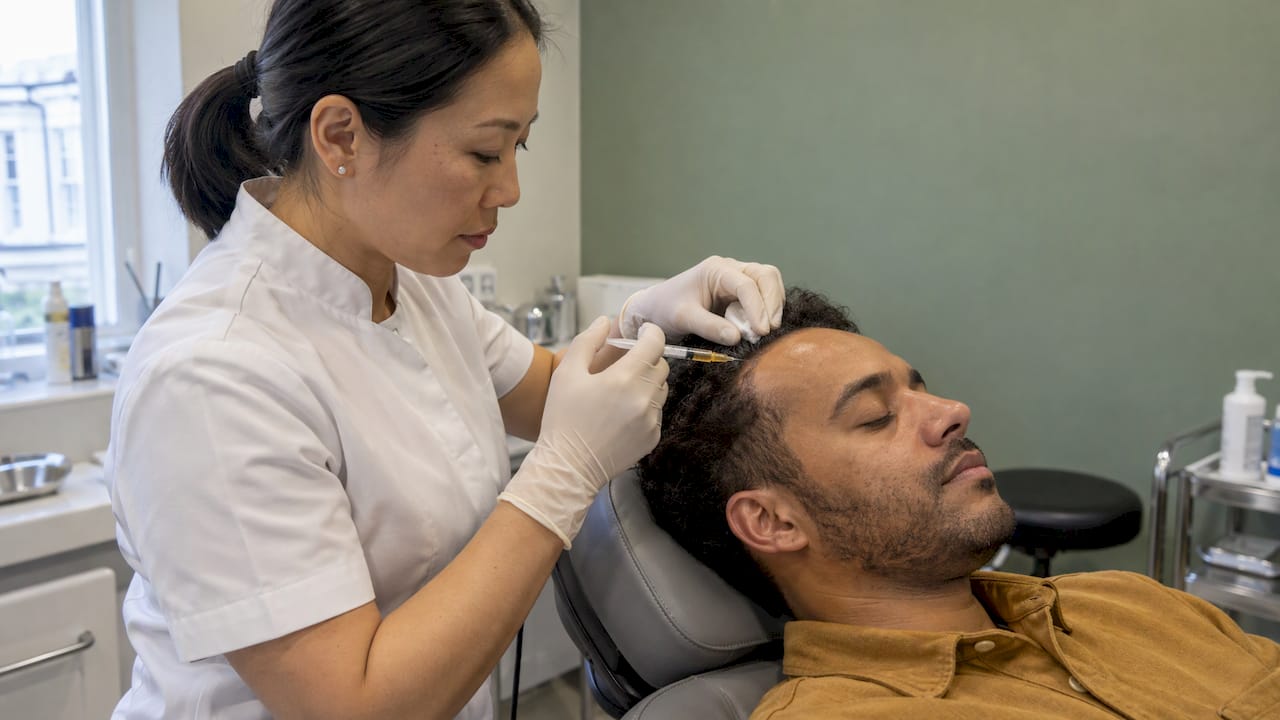
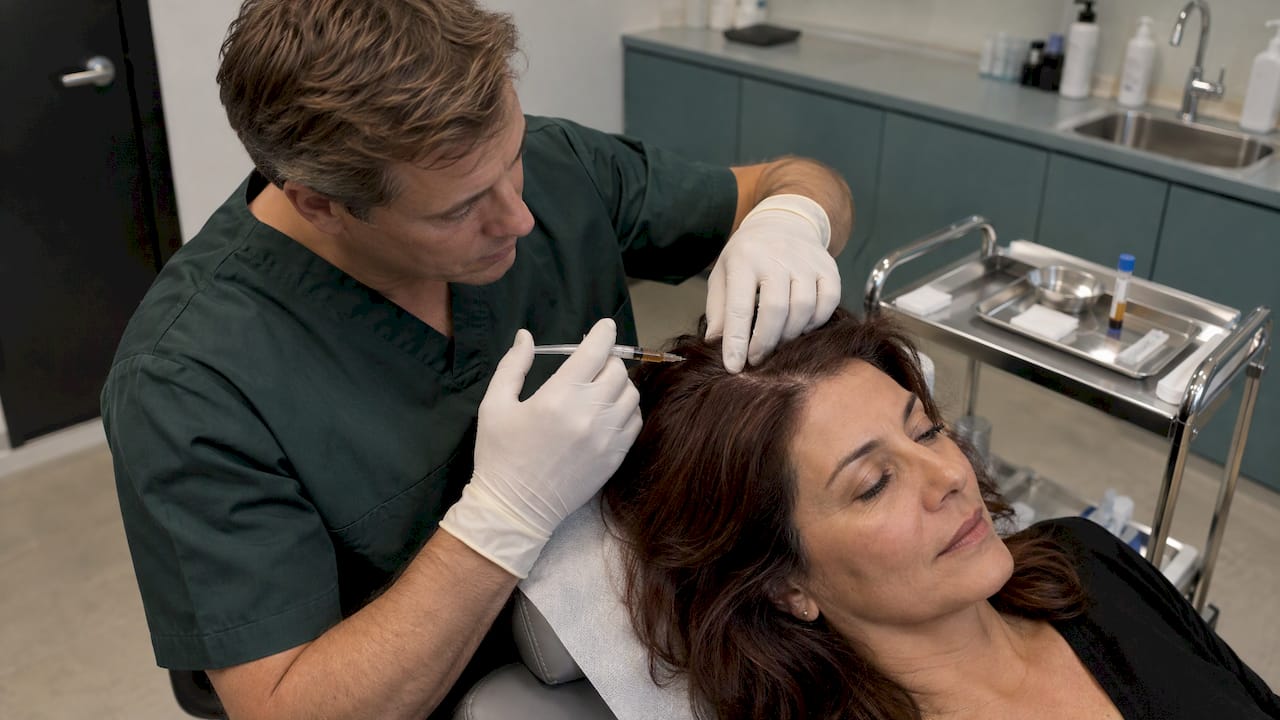
- The PRP is injected into the scalp, often after numbing cream is applied to keep you comfortable.
The International Society of Hair Restoration Surgery (ISHRS) notes that PRP preparation aims to concentrate platelets to two to six times the starting level. It also notes that PRP is often given alongside microneedling, and that there is no consensus on the ideal concentration. That is why the protocol your practitioner uses matters.
Does PRP work for women’s hair loss?
The research is encouraging, and it is most useful when you read the details rather than the headline.
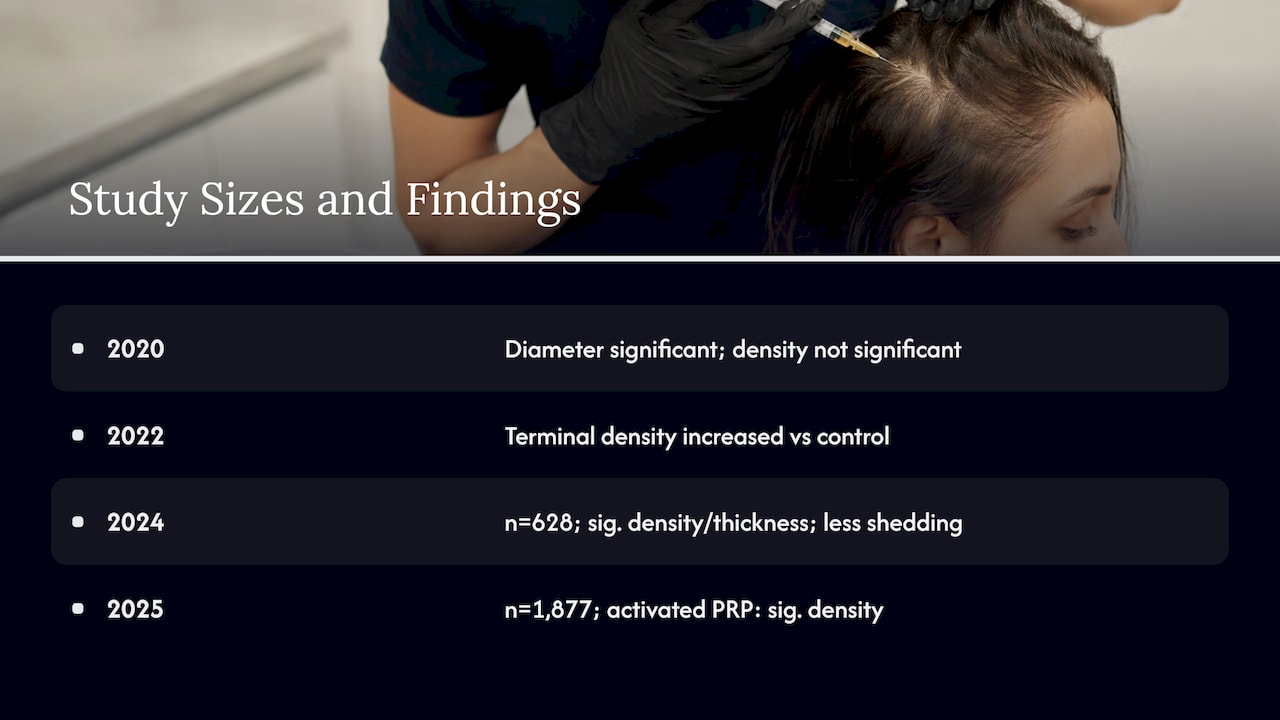
The largest recent review in women. A 2024 systematic review and meta-analysis in Skin Research and Technology pooled 21 studies and 628 participants. It found PRP significantly enhanced hair density and thickness in women with hair loss, with a significant reduction in the number of hairs pulled in the PRP group.
Terminal hair density. A 2022 meta-analysis in the Journal of Cosmetic Dermatology looked at female pattern hair loss. PRP increased terminal hair density compared with control, and no major side effects were reported. The authors described the results in women as promising, and called for larger studies to refine preparation, concentration, session number and interval.
Preparation matters. A 2025 analysis of 43 randomised controlled trials and 1,877 participants found that activated PRP increased hair density and reduced recurrence compared with placebo. Only activated PRP produced a significant effect on density in that analysis. This is a good reason to ask a clinic how it prepares its PRP.
Diameter and density. A 2020 meta-analysis in Dermatologic Therapy found that in women PRP significantly increased hair diameter, while the change in density in that smaller pool of data did not reach significance. Later, larger reviews are the ones that report density gains in women, which is consistent with the field maturing as more trials are published.
In short, PRP is a well-studied option for women with thinning hair, and the evidence keeps getting stronger as protocols are standardised. Individual response still varies, which is why a personalised plan is the right starting point.
Who PRP may suit, and who should wait
PRP tends to suit adults with early to moderate androgenetic alopecia (female pattern thinning) who still have viable follicles. Typical signs are a widening parting, reduced ponytail volume or overall thinning on the crown rather than smooth, completely bald patches.
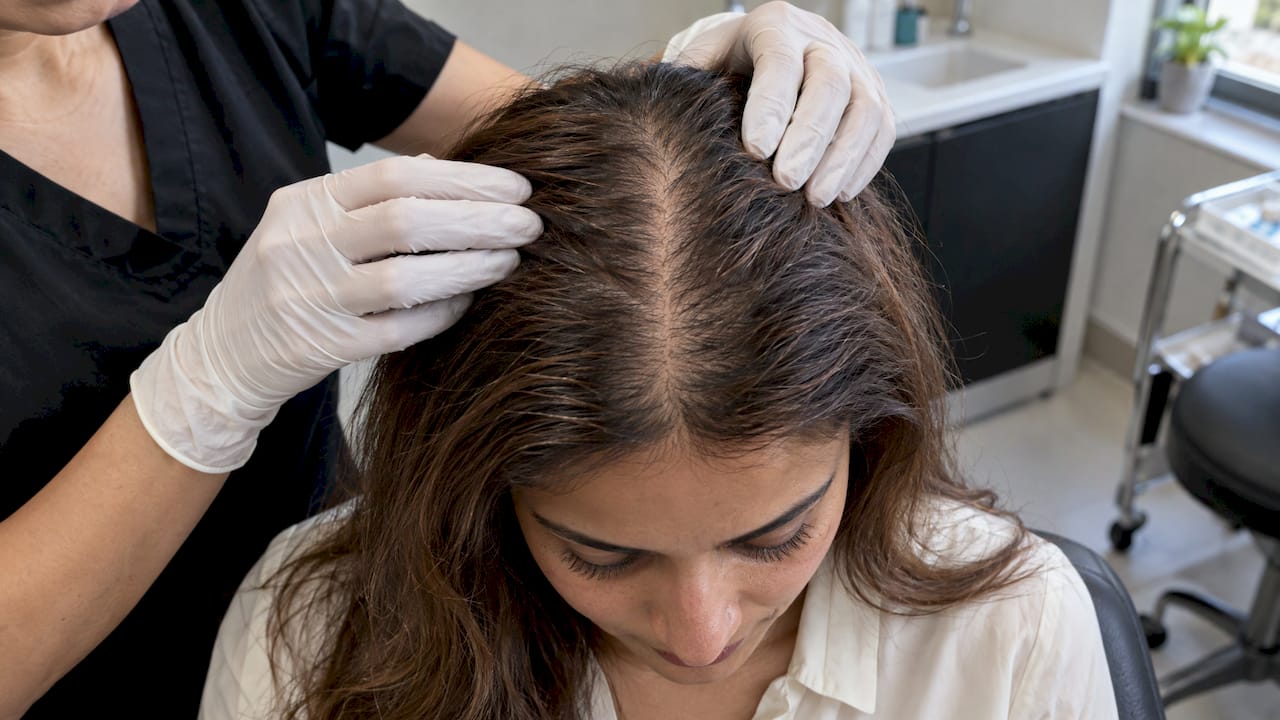
Hair loss in women has many causes. Iron or vitamin deficiency, thyroid problems, hormonal change, stress and recent illness can all play a part, so these should be considered before any treatment starts. If you are noticing shedding after a baby, our guide to postpartum hair loss and PRP explains when treatment helps and when it is sensible to wait.
Situations where PRP is not suitable
The ACE Group leaflet is clear that safety comes first. PRP should not be performed if you are pregnant or breastfeeding, and it is not recommended if you are actively trying to conceive or undergoing IVF. Other reasons it may not be suitable include:
- allergy to anaesthetic agents or anticoagulants
- skin infection in or near the treatment area
- conditions such as diabetes, rheumatoid arthritis or other autoimmune conditions
- blood clotting disorders, cancer, immunosuppression or severe anaemia
- medicines that affect bleeding or platelet function, such as aspirin, anti-inflammatories, warfarin or DOACs
Tell your practitioner about every medicine and supplement you take. Do not stop a prescribed medicine yourself: speak to your GP or prescriber first.
How many sessions, and when will you see results?
The ISHRS describes a common programme as one session each month for three months, followed by a booster roughly every six months. Your practitioner may adjust this to your pattern of hair loss and how you respond.
Timeline expectations that keep things realistic:
| Stage | What is typical |
|---|---|
| Initial course | Around three monthly sessions |
| First months | Hair grows in cycles, so changes are gradual |
| Several months in | Improvements in density and quality become visible |
| Ongoing | Boosters about every six months to support results |
Northwestern Medicine notes that it can take a few weeks to months to notice an improvement in hair. Take a clear photograph of your parting and crown in the same light before you start, and again at each visit. Slow change is easier to see side by side.
Hair growth runs on a natural cycle, so PRP works with that rhythm. It supports the follicles you have, which is why starting while thinning is still early to moderate gives the best foundation.
Is PRP for hair painful? Side effects and aftercare
Most women describe PRP as manageable. Numbing cream is often applied first, and the injections are given with a fine needle. In the 2024 meta-analysis, there was no notable difference in pain or discomfort between PRP and control groups, and the adverse effects reported were mild and transient. They included headache, scalp tightness, swelling, redness, minor bleeding and tingling, and they resolved on their own within 24 hours.
The ACE Group leaflet lists the wider range your practitioner will discuss with you at consent:
- mild soreness or tenderness at the injection sites
- swelling and redness from temporary inflammation
- minor bleeding and bruising that usually settles within a few days
- occasional itching, nausea or feeling faint
- rarely, infection, allergic reaction or nerve injury
Follow the aftercare given to you at your appointment, as protocols differ between clinics. If you develop signs of infection, such as spreading redness, heat, discharge or fever, contact your clinic or your GP promptly.
What to check before booking PRP in the UK
PRP for hair is not routinely available on the NHS and there is no NICE guidance recommending it for hair loss, so most women choose a private clinic. That makes choosing carefully part of the treatment.
Regulation is also tightening. According to the Aesthetics Journal, the Joint Council for Cosmetic Practitioners published new guidance in 2026 confirming that treating hair loss caused by androgenetic alopecia with PRP is a medical procedure. The CQC confirms that hair restoration procedures are a regulated activity when carried out by a regulated healthcare professional. Under the proposed licensing scheme for non-surgical cosmetic procedures in England, PRP was provisionally in the medium-risk category, with some consultation respondents arguing for a stricter one.
A practical checklist:
- Practitioner registration: confirm they are registered with the GMC, NMC or HCPC.
- Clinic registration: check the clinic’s CQC registration for England.
- Consultation: expect a discussion of your history, risks, realistic outcomes and alternatives, with written consent.
- Equipment: ask about single-use, CE- or UKCA-marked PRP kits and infection control.
- Preparation: ask how the PRP is prepared and whether it is activated, given the 2025 findings above.
- Aftercare and complaints: ask what support follows treatment and how complaints are handled.
If you are also thinking about your face, the same standards apply to every injectable treatment. Our guide to London aesthetic consultations explains what a good first appointment looks like, and facial aesthetic treatments are worth understanding alongside hair care if you want a joined-up approach to your appearance.
Our perspective
We see PRP as one of the most natural ways to support thinning hair, because it works with your own biology. There is no foreign material and no manufactured compound, only your own platelets, prepared with care and placed where follicles need support.
The research in women is encouraging, and our approach is designed around it: a medical consultation first, a plan built around your pattern of hair loss, and treatment delivered by medically trained professionals in a CQC-registered setting. As members of the ACE Group, we hold ourselves to its patient safety standards.
We also believe hair does not exist in isolation. Our holistic protocols look at internal and external factors, and we can pair PRP with options such as vitamin hair therapy or a medical skincare prescription when that suits you. The aim is natural-looking, fuller hair and the confidence that comes with it.
Vishul
PRP hair treatment at The Aesthetics Room
Our clinic is in Knightsbridge, and we also promote our Harley Street and Mayfair locations. You can begin with a virtual or in-person consultation to talk through your hair history and goals.
Current published prices, from our price list:
- PRP for hair: £450
- Vitamin hair therapy: £218
- Medical skincare prescription: £50

If you are ready to talk through your options, book a consultation at The Aesthetics Room and we will build a plan around your hair and your timeline.
FAQ
Is hair loss a common symptom of menopause?
Hormonal change around the menopause can contribute to thinning for many women, which is one reason a consultation looks at the whole picture rather than the scalp alone. Your GP can check hormone and thyroid levels and nutritional causes. If thinning is pattern-based and follicles are still active, PRP may be considered as part of your plan.
How painful is PRP for hair?
Most women find it tolerable, particularly with numbing cream applied beforehand. A 2024 meta-analysis found no notable difference in pain or discomfort between PRP and control groups. Any soreness, tightness or redness is usually short-lived.
Does PRP treatment work?
Pooled research in women shows significant improvements in hair density and thickness, although studies differ in how PRP is prepared and delivered. Activated PRP showed the clearest effect on density in a 2025 analysis. A personalised protocol and realistic expectations give you the best start.
How many sessions will I need?
A common programme is one session a month for three months, followed by a booster about every six months. Your practitioner will tailor this to your pattern of hair loss and how your hair responds.
Sources
- American Hair Loss Association: PRP for hair loss
- ACE Group patient leaflet: PRP
- ISHRS: PRP for hair loss
- Effectiveness of platelet-rich plasma in treating female hair loss (2024)
- Use of autologous platelet-rich plasma in female androgenetic alopecia (2022)
- Platelet-rich plasma in the management of alopecia (2025)
- Platelet-rich plasma for androgenetic alopecia (2020)
- Northwestern Medicine: PRP for hair loss
- Aesthetics Journal: new PRP guidance for hair treatments
- Facial aesthetic treatments