
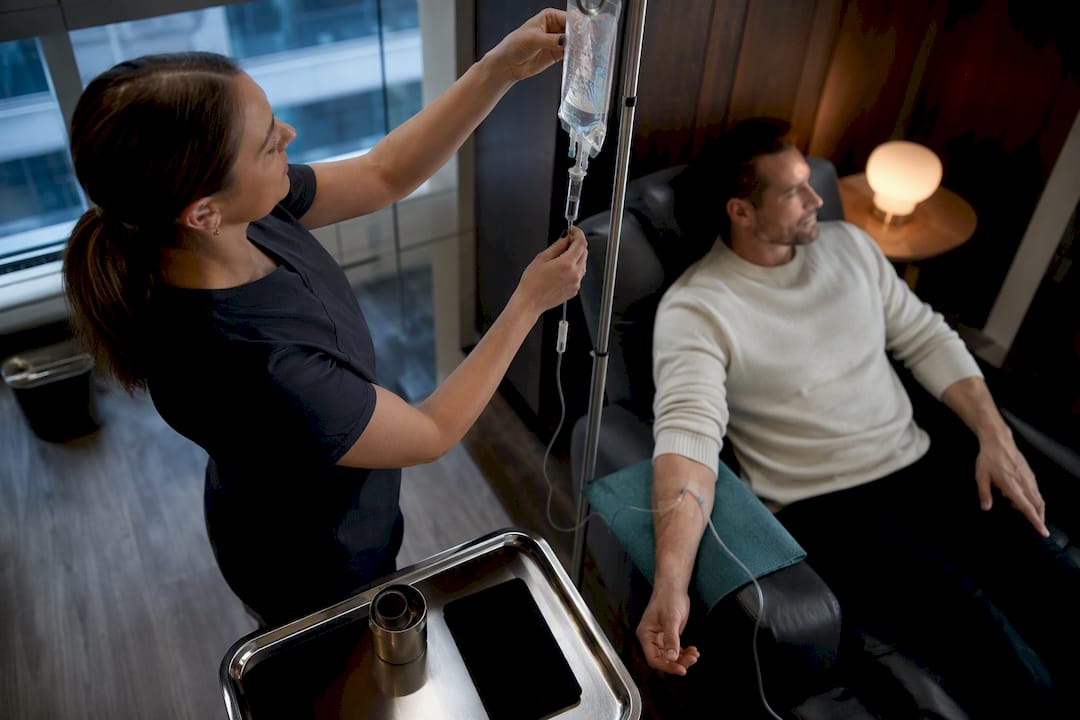

NAD+ IV therapy can genuinely lift energy and mental clarity for some patients in the short term, and there are plausible biological reasons why. What it cannot yet claim, based on the human trial evidence available, is proven long-term anti-ageing benefit. The gap between those two facts matters more than any clinic brochure suggests, and it should shape how you decide whether an infusion, medical supervision, and a realistic set of expectations are right for you.
TL;DR:
- Human trials do not yet show long-term anti-aging benefits from NAD+ infusions, despite short-term energy and focus reports.
- Most subjective improvements are not supported by large, controlled studies or validated biomarkers, making them unreliable.
- IV NAD+ clearance is rapid with delayed plasma level increases, and longer infusions tend to have more side effects.
- Oral NAD+ precursors are supported by stronger evidence for raising blood metabolites and pose fewer tolerability issues.
- Responsible clinics conduct baseline tests, supervised protocols, and follow-up assessments, contrasting with unregulated walk-in infusions.
Table of Contents
- What are the real NAD drip benefits people report?
- What clinical studies and pharmacokinetic data actually show
- How NAD drips are given: dose, timing and side effects
- Who is a reasonable candidate for NAD+ IV therapy?
- Oral NAD+ boosters and lifestyle alternatives worth considering
- How a medically led clinic handles NAD+ therapy responsibly
- Cost considerations and typical pricing for NAD+ IV therapy
- NAD+ IV drips versus other NAD+ boosting methods
- The mechanism: how NAD+ actually influences cellular processes
- Where the evidence actually points
- Considering IV therapy at a clinic that treats safety as the starting point
- Sources
What are the real NAD drip benefits people report?
Patients booking NAD+ infusions are usually chasing one of a handful of outcomes, and most of them trace back to the same biological currency: adenosine triphosphate, the molecule your cells burn for energy. NAD+ is a coenzyme every mitochondrion needs to convert food into usable fuel, so when levels are topped up intravenously, some patients report feeling less fatigued within hours.
The mental clarity claims lean on a related but distinct mechanism. NAD+ fuels sirtuins and PARP enzymes, both involved in DNA repair and neuroprotection, which is the biological rationale behind reports of sharper focus and steadier mood after treatment. Whether that translates into measurable cognitive improvement in a healthy adult, rather than a subjective lift from a two-hour rest and hydration, is a different question entirely.
Commonly reported benefits include:
- Reduced fatigue and a subjective energy boost within 24 to 48 hours
- Sharper concentration and reported mood stability
- Support for cellular repair and DNA maintenance via sirtuin activation
- Short-term recovery benefits noted in clinic case series after physical exertion or illness
- Anecdotal skin brightness or texture improvement, though this is the least studied claim
Most of these reports are patient-reported, not measured against a placebo group or objective biomarker. That distinction runs through nearly every study in this field. Preclinical and small human studies do show NAD+ repletion improving mitochondrial and stem cell function, and animal models show lifespan extension, but the human data supporting those same claims is thinner and drawn from far smaller cohorts. A subjective energy lift the day after an infusion is real to the person feeling it. It is not the same thing as a validated clinical outcome, and reputable clinics should say so plainly rather than let the two blur together.
What clinical studies and pharmacokinetic data actually show
Oral precursors have the stronger evidence base here, which surprises people who assume the intravenous route must be superior simply because it is more clinical-looking. Randomised trials of nicotinamide riboside and nicotinamide mononucleotide consistently raise blood NAD+ metabolites, though the downstream metabolic benefits (glucose control, lipid profiles, physical function) are inconsistent across studies.
Direct IV NAD+ evidence in humans is smaller in scale and more limited in what it actually measures. A pharmacokinetic study using continuous infusion found that administered NAD+ is rapidly cleared from plasma for at least the first two hours, with plasma levels not rising meaningfully until after that point and urinary excretion of NAD+ and its metabolites increasing by six hours. That delayed, variable kinetic pattern is one reason infusion protocols differ so widely between clinics.
Tolerability data adds a further complication. A pragmatic 2026 study comparing IV NAD+ with IV NR found NAD+ infusions took roughly 97 minutes on average against 37 minutes for NR, with more moderate to severe infusion-related symptoms reported in the NAD+ group.
| Evidence type | What it shows | Main limitation |
|---|---|---|
| Oral NR/NMN human trials | Reliably raises NAD+ metabolites | Inconsistent effect on clinical outcomes |
| IV NAD+ pharmacokinetics | Rapid tissue uptake, delayed plasma rise | Small studies, short follow-up |
| IV NAD+ vs IV NR tolerability | Longer infusions, more side effects with NAD+ | Single pragmatic study, not a large RCT |
| Anti-ageing clinical endpoints | Largely absent in healthy adults | No large, long-term RCTs exist yet |
Critical reviews of intravenous longevity therapies conclude the biological plausibility is real, but the endpoint data is not: these treatments lack large, well-powered randomised trials with validated ageing outcomes, and should be treated as experimental outside specific protocolised indications.
How NAD drips are given: dose, timing and side effects
A typical NAD+ infusion runs anywhere from 30-minute to two hours, and the range depends almost entirely on dose and how well the individual tolerates the rate of delivery. Clinicians infuse slowly and titrate upward because pushing NAD+ too fast commonly triggers nausea, facial flushing, chest tightness, or a racing heartbeat. These reactions are usually dose-related and tend to settle once the infusion rate is reduced.
Practitioners manage this by starting low, slowing the drip at the first sign of discomfort, and stopping altogether if symptoms persist. Before any infusion, a properly run clinic will check current medications, confirm pregnancy status where relevant, and review baseline liver or renal function if the patient’s history warrants it.
- Sessions commonly last 30 to 120 minutes depending on dose
- Infusion rate is adjusted in real time based on tolerance
- Nausea, flushing, and chest tightness are the most reported reactions
- Medication and pregnancy screening happen before any needle goes in
Pro Tip: Ask your clinic exactly how they titrate dose and what their protocol is if you feel unwell mid-infusion. A clinic that cannot answer that clearly and confidently is not one worth booking with.
Who is a reasonable candidate for NAD+ IV therapy?
NAD+ infusions make more sense for some people than others, and the honest answer depends less on desire for the outcome and more on what problem you are actually trying to solve.
- People with marked, unexplained fatigue working with a clinician to monitor response, ideally as part of a defined protocol rather than an open-ended top-up habit.
- Those with a specific clinical indication flagged during consultation, where baseline testing supports a trial of supervised infusion.
- Healthy adults chasing a vague anti-ageing outcome with no baseline markers are poor candidates. Without a measurable starting point, there is no way to judge whether the infusion did anything at all.
- Anyone who is pregnant, has unstable cardiac disease, or is managing active severe illness should prioritise standard medical care first. NAD+ IV therapy is not an emergency treatment and should never substitute for one.
The sensible sequence is test, trial under supervision, then measure. Skipping straight to repeat infusions without any of those steps is where most of the disappointment (and most of the risk) tends to concentrate.
Oral NAD+ boosters and lifestyle alternatives worth considering
Oral nicotinamide riboside and nicotinamide mononucleotide are worth taking seriously as a first-line option, not a consolation prize. Trials show these supplements consistently raise NAD+ metabolites in blood, and they do it without needle access, infusion time, or the tolerability issues seen with IV dosing.
Lifestyle measures carry a stronger evidence base for healthy ageing than any NAD+ product, oral or intravenous:
- Consistent, sufficient sleep supports the same cellular repair pathways NAD+ influences
- Resistance training improves mitochondrial density independently of supplementation
- Stable blood glucose control protects the metabolic systems NAD+ therapy claims to support
- Balanced nutrition sustains NAD+ synthesis via the body’s own salvage pathways
A sensible clinic approach looks like a short, supervised IV course for a specific, protocolised reason, followed by oral maintenance and biomarker follow-up rather than indefinite repeat infusions with no measurable target.
How a medically led clinic handles NAD+ therapy responsibly
Governance is the part most comparison articles skip, and it is the part that actually protects you. A clinic worth choosing should be CQC accredited, run consultations with a qualified clinician rather than a sales team, and use baseline testing to decide whether NAD+ IV therapy is appropriate at all, rather than offering it to anyone who asks.
A responsible patient pathway typically looks like this:
- Initial consultation reviewing medical history, medications, and goals
- Baseline testing where clinically indicated
- A supervised infusion with monitoring throughout
- Structured follow-up to assess actual response
- Optional oral maintenance once a supervised course concludes
Theaestheticsroom’s approach to IV vitamin therapy follows this same logic: screening and clinician judgement come before any infusion is booked, not after. A clinic that will not turn a patient away when NAD+ is not appropriate is not being cautious. It is simply not doing its job properly.
Cost considerations and typical pricing for NAD+ IV therapy
NAD+ IV pricing varies substantially by dose, session length, and whether the infusion is part of a single treatment or a supervised course. Longer infusions, which are common given the slower administration NAD+ typically requires compared with other IV formulations, generally cost more than a standard 30 minute vitamin drip because they consume more clinician time and monitoring.
Clinics pricing NAD+ separately from other IV vitamin services usually reflect that time investment in the fee, rather than charging purely for the substance itself. A single session priced without any baseline testing or follow-up is often the cheapest option on paper and the poorest value in practice, since there is no way to judge whether it achieved anything.
If you are weighing cost, ask what is actually included: consultation time, any baseline blood work, the infusion itself, and follow-up review. A protocolised short course with testing at either end will cost more upfront than repeat single sessions, but it is the only structure that lets you judge whether the spend delivered a measurable result. Treat any clinic quoting a price with no mention of screening or follow-up as a signal to ask more questions before booking.
NAD+ IV drips versus other NAD+ boosting methods
Efficacy and convenience pull in different directions here, and neither route wins outright. IV administration bypasses the gut and liver entirely, but that does not guarantee intact NAD+ reaches target cells. Extracellular enzymes rapidly break NAD+ down to nicotinamide, which then re-enters cells through the same salvage pathway that oral precursors rely on. In practical terms, the IV route may not be delivering the direct molecular advantage many patients assume they are paying for.
Oral NR and NMN win on convenience by a wide margin: no appointment, no infusion chair, no monitoring requirement, and a comparable rise in blood NAD+ metabolites in trial settings. What oral dosing lacks is the clinical oversight and baseline testing that a supervised IV course typically includes, which matters if you want to track whether a treatment is actually working rather than simply hoping it is.
The realistic comparison is not “IV wins” or “oral wins” but which fits your situation: a protocolised, monitored IV course suits someone with a specific indication and a clinician tracking outcomes, while oral supplementation suits long-term, low-effort maintenance where dramatic short-term effects were never the goal.
The mechanism: how NAD+ actually influences cellular processes
NAD+ works as a coenzyme, meaning it does not do the job itself but enables other enzymes to do theirs. Its best-known role is in mitochondrial energy metabolism, where it shuttles electrons through the processes that generate ATP, the molecule every cell burns as fuel. Lower cellular NAD+ availability is associated with reduced mitochondrial efficiency, which is the biological basis for fatigue-related claims.
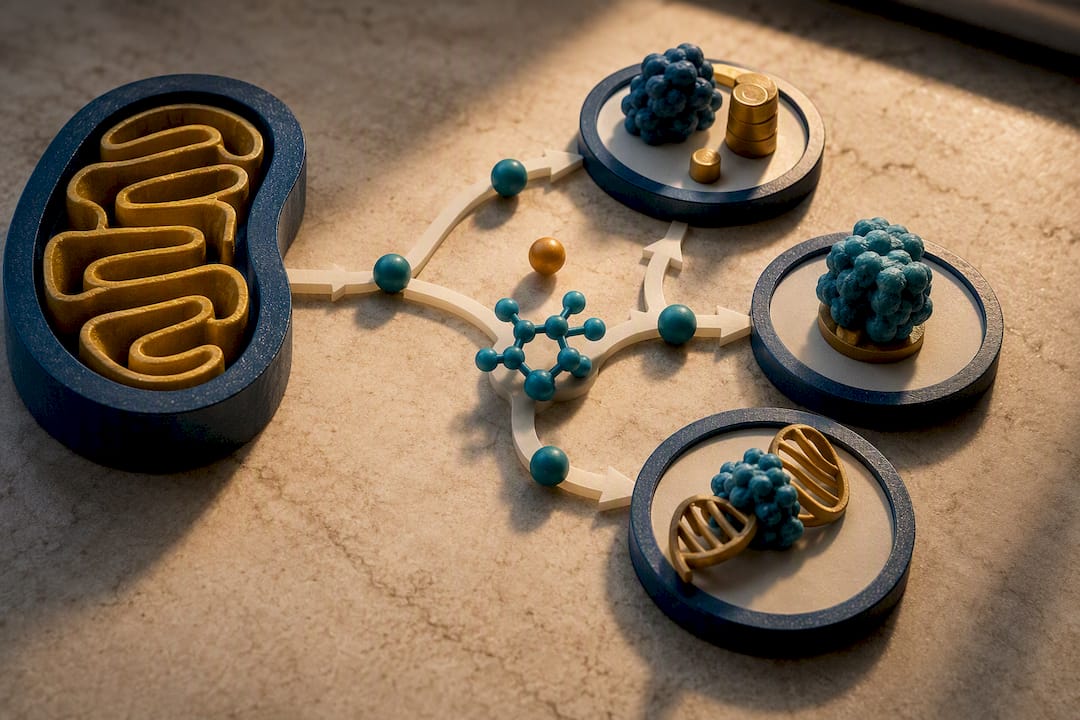
NAD+ also fuels two enzyme families central to cellular maintenance: sirtuins, which regulate gene expression and stress resistance, and PARPs, which repair damaged DNA. Both consume NAD+ as they work, and both are implicated in processes linked to cellular ageing, which is why NAD+ features so heavily in longevity research despite the thin human outcome data.
None of this confirms that boosting NAD+ externally reverses ageing in a healthy adult. It confirms that NAD+ is a genuinely important molecule in processes connected to energy and repair, which is a considerably narrower claim than the one most marketing copy implies.
Where the evidence actually points
The honest read on NAD+ IV therapy is that it sits in an unusually wide gap between plausible science and proven outcome. The biology is not invented. Sirtuins, PARPs, and mitochondrial ATP production are well-established pathways, and NAD+ genuinely fuels all three. What has not happened yet is the large, controlled human trial that shows a healthy adult who receives NAD+ infusions ages more slowly, or performs measurably better, than one who does not.
Conventional wellness marketing skips past that gap entirely, treating a subjective energy lift as proof of a longevity effect. It is not. The two are related in theory and separated by a considerable evidence gulf in practice, and readers deserve to know that before they book, not after.
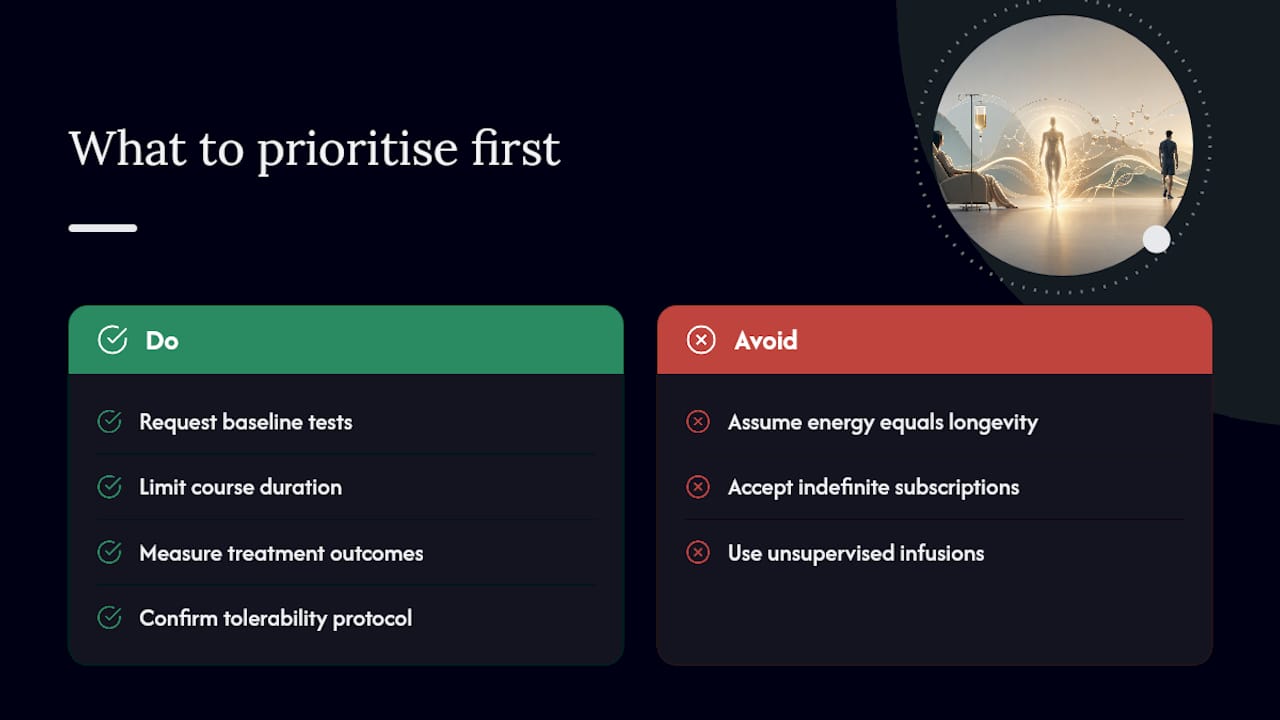
What should you prioritise first? Ask for baseline testing, treat any course as time-limited and measurable rather than an indefinite subscription, and be skeptical of any provider who cannot describe their tolerability protocol without hesitation. Supervision is not a nice-to-have here. Given the documented variability in product quality and adverse effects across the NAD booster market, it is the single factor most likely to separate a reasonable experience from a poor one.
— Vishul
Considering IV therapy at a clinic that treats safety as the starting point
A responsible medical aesthetics clinic typically takes a stepwise approach to NAD+ and IV vitamin therapy including clinician-led consultation, screening before any infusion, and treatment plans tailored to individual goals rather than a generic drip menu. That structure is precisely what separates a supervised course with a measurable purpose from a walk-in infusion with none.

If energy, recovery, or general wellbeing is what brought you here, our team can talk you through whether IV vitamin therapy fits your situation, and what a sensible, monitored course looks like. For readers whose real interest is skin quality and visible ageing rather than infusions specifically, our guide to the science behind skin ageing and complementary treatments is worth reading alongside this one. Every treatment plan at a reputable clinic starts with a proper consultation, in person or virtually, so you know exactly what you are booking and why. Book a consultation to get a clear, honest answer on what is right for you.
This article is general information, not a substitute for advice from a qualified doctor. Consult a qualified healthcare professional about your own circumstances before acting on anything here.
Sources
- NAD+ precursor preclinical and clinical evidence (PMC9512238)
- Pharmacokinetics and metabolism of IV NAD+ in humans (Frontiers, 2019 DOI)
- Frontiers pragmatic comparison of IV NAD+ versus IV NR (2026)
- Intravenous longevity therapy: a critical review (Acta APA, 2026)