


A well-structured before and after care process is the single most important factor in determining how safely and effectively you recover from any cosmetic or aesthetic treatment. Whether you are preparing for Botox, dermal fillers, skin rejuvenation, or fat dissolving, the care you receive before and after the procedure shapes your results far more than the treatment itself. This guide walks you through every stage of the patient care timeline, from your first consultation to long-term recovery, drawing on current UK regulatory standards from the Care Quality Commission (CQC), the Joint Council for Cosmetic Practitioners (JCCP), and the General Medical Council (GMC).
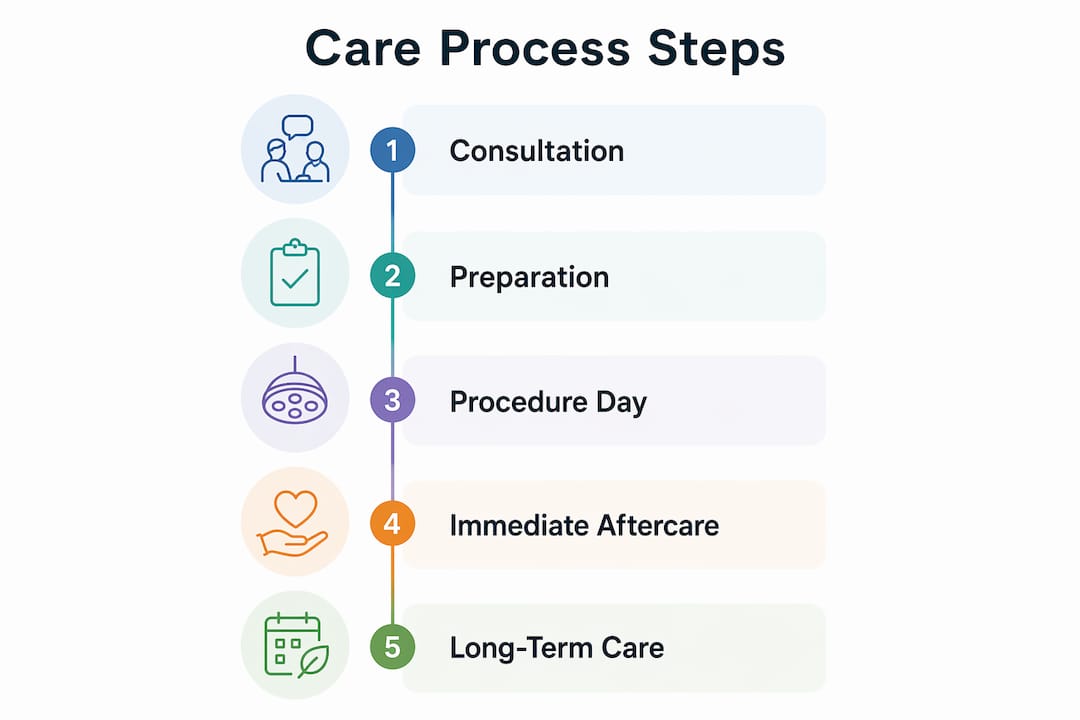
The core stages of a sound care process are:
- Pre-procedure preparation: consultation, informed consent, and lifestyle adjustments
- Day of procedure: arrival protocols, assessments, and clear communication with your practitioner
- Post-procedure recovery: wound care, side effect management, and follow-up appointments
- Complication monitoring: recognising warning signs and knowing when to seek urgent help
- Long-term aftercare: lifestyle adjustments and ongoing skin health maintenance
Theaestheticsroom, based in Knightsbridge and with locations on Harley Street and in Mayfair, applies this evidence-based framework across all its treatments, combining CQC accreditation with practitioner-led consultation and documented aftercare protocols.
Table of Contents
- ## 1. What should you do before your procedure?
- ## 2. What happens on the day of your procedure?
- ## 3. How do you manage aftercare and recovery effectively?
- ## 4. What long-term care do you need after aesthetic treatment?
- ## 5. Expert insights on safe aftercare from Theaestheticsroom
- Theaestheticsroom: professional care from consultation to recovery
- Key takeaways
## 1. What should you do before your procedure?
Preparation is where the before and after care process genuinely begins, and skipping this stage is the most common reason patients experience avoidable complications. A face-to-face consultation with the practitioner who will carry out your treatment is non-negotiable. The NHS advises that you should never pay for a procedure until you have had that consultation and confirmed it is right for you.
During your consultation, ask the following:
- How many times has the practitioner performed this specific procedure?
- What qualifications and training do they hold?
- Are they registered with a recognised professional body?
- What are the most common complications, and how are they managed?
- What aftercare will you receive, and who is responsible for it?
- What happens if something goes wrong, or you are unhappy with the result?
- What are the full costs, including any corrective treatments if needed?
The CQC regulates surgical cosmetic providers, but many non-surgical aesthetic treatments fall outside that oversight. Verifying your practitioner’s registration with the JCCP or another recognised body is therefore your responsibility as a patient. Avoid any practitioner whose primary marketing relies on social media alone, with no verifiable credentials or clinic registration.
Pro Tip: Ask your practitioner for a manufacturer’s leaflet or written product information about whatever will be used in your treatment. This gives you an independent reference point for ingredients, risks, and aftercare requirements.
Before care procedures also include practical lifestyle adjustments. Depending on your treatment, your practitioner may advise you to:
- Avoid blood-thinning medications such as aspirin or ibuprofen for a specified period beforehand
- Refrain from alcohol for at least 24 hours prior to treatment
- Stay well hydrated in the days leading up to your appointment
- Avoid sun exposure or tanning beds in the week before treatment
- Arrive with clean skin, free from make-up or topical products
The CQC recommends a minimum two-week cooling-off period after your initial consultation before proceeding with cosmetic surgery. This safeguard gives you time to reflect, ask further questions, and confirm your decision without commercial pressure. The JCCP Code of Practice reinforces this, stating that the patient, not the practitioner, determines what constitutes adequate time and information before consent is valid.
## 2. What happens on the day of your procedure?
Arriving prepared on the day of your treatment reduces anxiety and helps the process run smoothly. Your practitioner should carry out a brief pre-procedure assessment to confirm your health status has not changed since your consultation. If you were advised to fast beforehand, follow those instructions precisely, as some procedures involving sedation or anaesthetic require an empty stomach for safety.
On the day, expect the following:
- A review of your consent form and an opportunity to ask any final questions
- A check that you still wish to proceed, with no pressure to continue if you have changed your mind
- A brief explanation of the procedure steps and estimated duration
- Discussion of any anaesthetic or numbing agent to be used, and how it will feel
- Clear communication throughout the procedure about what is happening at each stage
Your practitioner should explain immediate post-procedure care before you leave the clinic. This includes what to expect in the first few hours, which activities to avoid, and what normal versus concerning reactions look like. Do not leave without this information, and do not hesitate to ask for it in writing if it has not been provided.
Mentally, it helps to arrive rested and to have arranged transport home if the treatment involves any sedation or significant swelling. Bring a list of any medications you are currently taking, as your practitioner needs this to confirm there are no contraindications with the products being used.

## 3. How do you manage aftercare and recovery effectively?
Post-procedure care is where most patients underestimate the effort required, and where the quality of your outcome is largely decided. The JCCP Code of Practice requires practitioners to provide clear, written aftercare instructions covering side effect management and escalation pathways if complications arise. These instructions should also document the medicines and products used, enabling any other healthcare professional to continue your care if needed.
Key aftercare best practices include:
- Keep the treatment area clean and avoid touching it unnecessarily in the first 24–48 hours
- Apply any prescribed topical products exactly as directed
- Avoid strenuous exercise, heat exposure (saunas, steam rooms, hot baths), and direct sunlight for the period specified by your practitioner
- Do not apply make-up to treated areas until your practitioner confirms it is safe to do so
- Take any prescribed or recommended pain relief as directed, and avoid self-medicating with blood-thinning analgesics unless your practitioner has approved them
- Attend all follow-up appointments, even if you feel your recovery is progressing well
Recovery timelines vary considerably by treatment. Minor non-surgical procedures such as anti-wrinkle injections typically involve minimal downtime, with most redness or swelling resolving within 24–72 hours. Dermal fillers may involve swelling for up to two weeks, particularly in areas with thinner skin such as the lips. More involved procedures carry longer recovery periods, which your practitioner should outline clearly at consultation.
Pro Tip: Keep a simple daily log of how your treatment site looks and feels during the first two weeks. Photographs taken in consistent lighting make it far easier to spot gradual changes and give your practitioner useful information at your follow-up appointment.

The Royal College of Surgeons requires practitioners to confirm that patients have the medicines and equipment needed for self-care after any intervention, and to arrange follow-up appointments where recovery monitoring is warranted. If your clinic does not offer a follow-up appointment as standard, request one. For guidance on filler swelling management, evidence-based techniques such as cold compresses and elevation can reduce discomfort in the first 48 hours.
Signs of infection or complications requiring medical attention
Knowing when to seek help is a critical part of any aftercare plan. Contact your practitioner or seek medical attention if you notice:
- Increasing redness, warmth, or swelling beyond the first 48–72 hours
- Pus or unusual discharge from the treatment site
- Fever or flu-like symptoms
- Skin that appears white, blue, or mottled around the treated area (a potential sign of vascular occlusion)
- Severe or worsening pain that is not responding to standard pain relief
For injectable treatments specifically, symptoms such as drooping eyelids, vision disturbances, difficulty swallowing, or muscle weakness require immediate attention via NHS 111 or your nearest A&E department.
## 4. What long-term care do you need after aesthetic treatment?
Long-term care and lifestyle adjustments are the final, often overlooked, stage of the patient care timeline. Protecting your results and your skin’s health over the months following treatment requires consistent habits rather than occasional effort.
Broad-spectrum SPF 30 or higher sunscreen applied daily is the single most effective step for preserving results from skin treatments and preventing UV-related damage to healing tissue. Hyaluronic acid-based moisturisers support hydration in the skin following filler treatments, while retinol-based products should generally be avoided until the skin has fully healed, as they can increase sensitivity and irritation.
Diet also plays a role in recovery. Anti-inflammatory foods rich in vitamins C and E, such as leafy greens, berries, and oily fish, support collagen production and tissue repair. Alcohol and high-sodium foods can worsen swelling and slow healing, particularly in the first two weeks post-treatment.
Ongoing follow-up care is not just about checking results. It gives your practitioner the opportunity to identify delayed complications, adjust your care plan, and advise on maintenance treatments when appropriate. The GMC’s professional standards for cosmetic interventions make clear that aftercare is active monitoring, not simply a pamphlet handed over at the end of a session.
## 5. Expert insights on safe aftercare from Theaestheticsroom
The professional standards governing aesthetic practice in the UK set a clear expectation: aftercare is a continuation of treatment, not an optional add-on. The GMC, JCCP, and Royal College of Surgeons all require practitioners to monitor patient outcomes actively, maintain open communication about complications, and ensure patients can reach a named contact outside normal clinic hours.
Key standard: The JCCP Code of Practice requires that every patient receives written aftercare instructions with a named emergency contact for out-of-hours support. This is a mandatory standard, not a courtesy.
Informed consent is only valid when patients genuinely understand the risks involved, including post-treatment care requirements. Practitioners must not apply commercial pressure to proceed, and patients retain the right to withdraw consent at any point before treatment begins.
One area where patients are frequently underprepared is delayed complications from injectable treatments. Symptoms from botulinum toxin can appear up to four weeks after treatment. Muscle weakness, drooping eyelids, vision problems, and difficulty breathing are all signs that require urgent medical attention, not a wait-and-see approach. Patients should remain vigilant well beyond the immediate post-treatment period, and practitioners should communicate this timeline clearly at the point of discharge.
Theaestheticsroom’s approach reflects these standards directly. CQC accreditation, membership of the ACE Group for patient safety, and practitioner-led consultations with documented aftercare plans are built into every treatment pathway. The role of aftercare in aesthetics at Theaestheticsroom is treated as an active, monitored process, with follow-up appointments and clear escalation routes for any patient who experiences unexpected symptoms.
Theaestheticsroom: professional care from consultation to recovery
For patients who want the full before and after care process handled by a medically trained team in a CQC-accredited setting, Theaestheticsroom offers exactly that. Based in Knightsbridge, with clinics on Harley Street and in Mayfair, the team delivers treatments including Botox and dermal fillers within a framework that prioritises patient safety at every stage.

Every patient receives a face-to-face consultation with their treating practitioner, written aftercare instructions, and a named contact for post-treatment support. The care plan steps do not end when you leave the clinic. From pre-treatment preparation through to follow-up monitoring, Theaestheticsroom’s practitioners apply the same evidence-based standards required by the GMC, JCCP, and Royal College of Surgeons. If you are considering a cosmetic or aesthetic treatment and want confidence in the quality of care surrounding it, book a consultation with Theaestheticsroom today.
Key takeaways
A thorough before and after care process, grounded in informed consent, written aftercare instructions, and active follow-up monitoring, is the foundation of safe and effective aesthetic treatment.
| Point | Details |
|---|---|
| Consultation is mandatory | A face-to-face consultation with your treating practitioner must happen before any procedure, with time to reflect before committing. |
| CQC cooling-off period | The CQC advises a minimum two-week gap between your surgical consultation and proceeding, protecting against rushed decisions. |
| Written aftercare required | The JCCP requires practitioners to provide written aftercare instructions with a named emergency contact for out-of-hours support. |
| Delayed injectable symptoms | Botulinum toxin side effects may appear days or weeks after treatment; muscle weakness or vision problems need immediate medical attention. |
| Theaestheticsroom’s standard | Theaestheticsroom delivers CQC-accredited, practitioner-led care with documented aftercare plans and follow-up monitoring built into every treatment. |