

TL;DR:
- Face shape analysis classifies facial structure based on four key measurements, guiding styling and cosmetic choices. It emphasizes proportions over absolute size and accounts for hybrid features for personalized treatment planning. Manual measurements are more accurate than AI tools and should be used for aesthetic and clinical decisions.
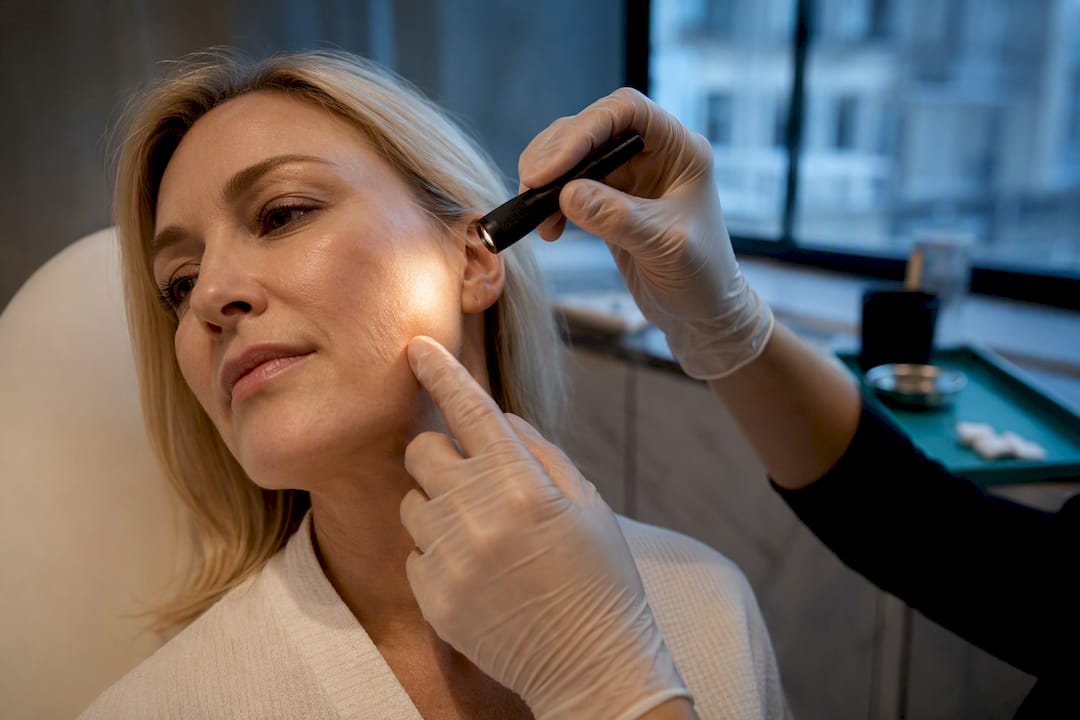
Face shape analysis is the systematic measurement and comparison of facial dimensions to classify facial structure into defined categories such as oval, round, square, heart, diamond, oblong, or triangle. This process uses four key measurements: forehead width, cheekbone width, jawline width, and face length. Understanding these proportions gives you a practical foundation for hairstyle selection, glasses choice, makeup application, and cosmetic treatments. At Theaestheticsroom, face shape analysis informs bespoke treatment planning, ensuring every aesthetic decision works with your natural structure rather than against it.
What are the key measurements in face shape analysis?
Four standard measurements define face shape: forehead width, cheekbone width, jawline width, and face length. Each measurement targets a specific anatomical landmark, and the ratios between them determine your face shape category.
- Forehead width. Measure horizontally across the forehead, from hairline to hairline, at the midpoint between your brows and your hairline.
- Cheekbone width. Place the tape at the outer corner of each eye and measure across to find the widest point of your cheekbones, just below the eyes.
- Jawline width. Measure from your chin to the angle of your jaw on one side, then double that figure. This gives the total jaw width.
- Face length. Measure from the centre of your hairline straight down to the tip of your chin.
Once you have all four figures, compare them. The largest measurement tells you your dominant facial feature. The ratios between all four place you within a specific shape category.
Pro Tip: Pull your hair back completely, stand in front of a well-lit mirror, and use a flexible tape measure. Poor lighting and loose hair are the two most common causes of inaccurate readings.
Manual measurements are generally more accurate than AI tools. AI apps offer convenience, but photo quality and algorithm limitations can skew results. For decisions involving cosmetic treatments, always confirm with a manual measurement or a professional assessment.
How are face shapes classified?
The seven main face shapes are oval, round, square, heart, diamond, oblong, and triangle. Each is defined by the relationship between the four measurements, not by absolute size.

The table below summarises the key proportions and distinctive traits for each category.
| Face shape | Dominant feature | Key proportions | Distinctive trait |
|---|---|---|---|
| Oval | Face length | Length greater than width | Forehead slightly wider than jaw |
| Round | Cheekbone width | Width and length roughly equal | Soft, curved jawline |
| Square | Forehead and jaw | Forehead, cheeks, and jaw roughly equal | Strong, angular jawline |
| Heart | Forehead width | Wide forehead, narrow chin | Pointed or tapered chin |
| Diamond | Cheekbone width | Narrow forehead and jaw, wide cheeks | High, prominent cheekbones |
| Oblong | Face length | Length noticeably greater than width | Forehead, cheeks, and jaw similar in width |
| Triangle | Jawline width | Wide jaw, narrower forehead | Broad lower face |
Proportions, not absolute measurements, define face shape. A person with a large face and a person with a small face can share the same shape category if their ratios match. Many faces are hybrids with blended features, and forcing a mixed face into a single category leads to poor styling choices. If your measurements sit between two categories, treat both sets of recommendations as relevant and combine them.
What are the clinical guidelines behind face shape proportions?
Aesthetic practitioners use two key frameworks to assess facial balance: facial thirds and the rule of fifths. These are reference guides, not rigid standards.
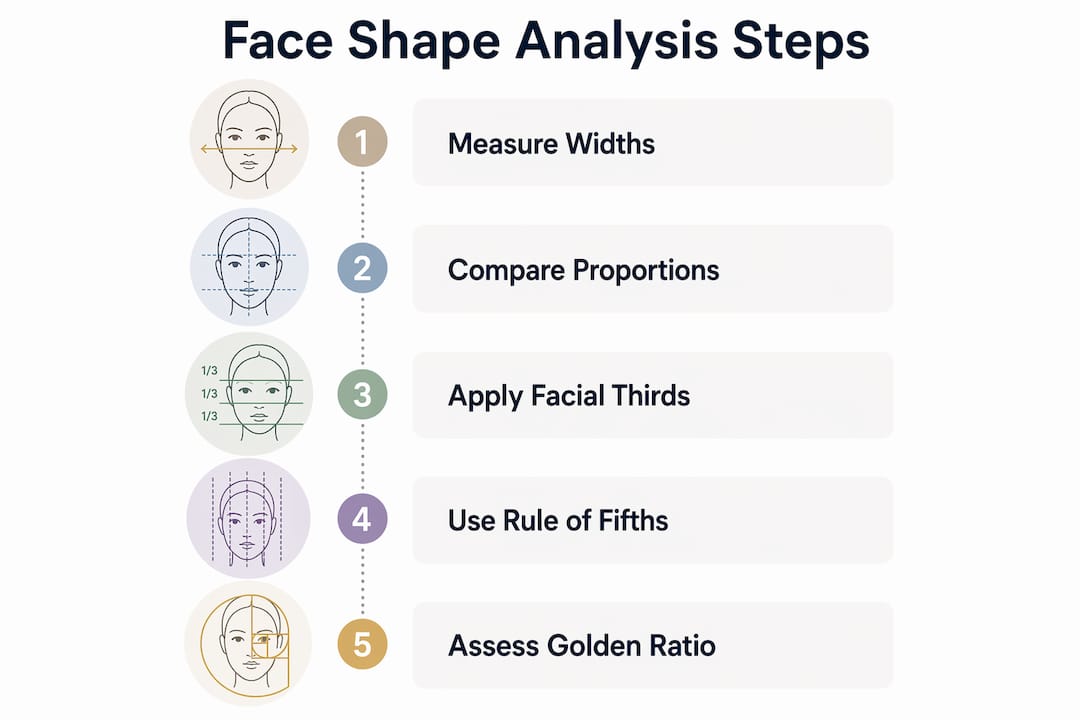
Facial thirds divide the face vertically into three equal segments. The upper third runs from the hairline to the brow. The middle third runs from the brow to the base of the nose. The lower third runs from the nose to the chin. The ideal is a 1:1:1 ratio across all three. In practice, natural variation is common and expected.
The rule of fifths works horizontally. The face is divided into five equal widths, each corresponding to one eye width. This means the distance between the eyes, and the space from each eye to the ear, should each equal one eye width.
A balanced middle-to-lower third ratio falls between 0.95 and 1.05. Ratios outside this range produce a perception of facial elongation or shortening. Practitioners use this figure to assess whether treatments such as chin augmentation or brow lifting would restore visual balance.
The Golden Ratio of approximately 1.618 appears in facial cosmetic surgery as a diagnostic tool, not a prescriptive ideal. Surgeons use it to assess harmony, not to mandate exact measurements. Ethnicity, sex, and natural variation all influence what balanced proportions look like for a given individual. Balanced proportions are culturally influenced and vary between ethnicities and sexes. No universal standard of facial perfection exists.
For a deeper understanding of how these parameters interact, Theaestheticsroom’s guide to advanced facial analysis covers 29 measurement parameters used in bespoke treatment planning.
How can your face shape guide styling and cosmetic choices?
Face shape knowledge guides hairstyle selection, glasses frames, makeup contouring, and cosmetic procedures. The goal in each case is the same: create the visual impression of balanced proportions.
Hairstyles
- Oval faces suit almost any cut. Avoid styles that add excessive volume at the sides, which can widen the appearance.
- Round faces benefit from height at the crown and layers that elongate the face. Blunt bobs that end at the jaw add width and should be avoided.
- Square faces look softer with side-swept fringes and layered cuts that frame the jaw. Blunt, chin-length cuts emphasise the angular jawline.
- Heart faces balance well with volume at the chin, such as lob cuts or waves below the jaw.
- Oblong faces benefit from width-adding styles like waves or curls at the sides.
Glasses frames
Angular frames suit round faces by adding definition. Curved or round frames soften strong jawlines on square faces. Oval and aviator styles complement most face shapes. Diamond faces suit frames with detailing on the upper half to draw attention to the eyes.
Makeup and cosmetic treatments
Contouring and highlighting follow the same logic as hairstyling: add shadow where you want to reduce width, add highlight where you want to draw attention. For square faces, contouring along the jaw corners softens the angle. For heart faces, a touch of highlight on the chin adds visual weight to the lower face.
Cosmetic treatments like Botox and dermal fillers work on the same principle. Jaw slimming with Botox reduces the appearance of a wide or heavy jawline. Chin filler adds projection to a receding chin on a round or heart face. Cheek filler restores volume to a flat mid-face on a diamond or oblong face. Each treatment works best when it is planned against a clear understanding of your facial proportions.
Pro Tip: If your face is a hybrid between two shapes, list the styling recommendations for both and identify the points they share. Apply those shared recommendations first, then personalise from there.
What are the common myths in face shape identification?
Several persistent misconceptions make face shape identification harder than it needs to be.
- Myth: Only a few basic shapes exist. The seven-category system is a framework, not a complete taxonomy. Many faces blend features from two or more categories, and that is entirely normal.
- Myth: You can identify your face shape by looking in the mirror. Visual perception alone misleads because camera angles, lighting, and hair all distort what you see. Measurement removes the guesswork.
- Myth: Your face shape determines how attractive you are. Attractiveness is subjective and not determined by face shape category. The Golden Ratio is a diagnostic tool, not a beauty scorecard.
- Myth: AI tools give accurate results. AI apps provide quick approximations. They are useful for a rough starting point but should not replace manual measurement for styling or clinical decisions.
- Myth: Your face shape is fixed. Facial proportions change with age, weight fluctuation, and cosmetic treatments. Reassess periodically rather than relying on a classification made years ago.
Pro Tip: Take three separate measurements on different days and average the results. Single measurements are prone to small errors that compound into the wrong category.
For a broader perspective on how natural variation and facial features interact, Theaestheticsroom’s guide to facial symmetry is a useful companion read.
Key takeaways
Face shape analysis is a measurement-based process that uses four facial dimensions to classify structure and guide styling, makeup, and cosmetic decisions.
| Point | Details |
|---|---|
| Four measurements define shape | Forehead width, cheekbone width, jawline width, and face length determine your face shape category. |
| Proportions matter more than size | Ratios between measurements, not absolute figures, place you within a shape category. |
| Clinical thirds and fifths guide balance | A middle-to-lower third ratio of 0.95–1.05 is considered aesthetically harmonious by practitioners. |
| Most faces are hybrids | Blended features are common; combining recommendations from two categories produces better results. |
| Manual measurement beats visual guessing | Tape measure and mirror give more reliable results than mirror assessment or AI apps alone. |
Why I think face shape analysis is misunderstood
Face shape analysis gets treated as a rigid sorting system, and that is where most people go wrong. In practice, I have found it works best as a proportional map rather than a label. When I assess a client’s face, the measurements tell me where the visual weight sits and where it is absent. That information is far more useful than knowing someone is “square” or “heart.”
The clinical frameworks, facial thirds, the rule of fifths, the Golden Ratio, are tools for spotting imbalance, not for defining beauty. A face with a 0.90 middle-to-lower third ratio is not flawed. It simply tells me that the lower face appears shorter relative to the middle, and that certain treatments or styling choices will create a more balanced impression if that is what the person wants.
What I find most valuable is combining face shape with other factors: skin quality, bone structure, soft tissue volume, and the person’s own aesthetic goals. Theaestheticsroom’s philosophy is that no single measurement defines a treatment plan. Face shape analysis is one layer of a much richer picture. Use it as empowering knowledge, not as a category that limits your options.
— Vishul
Personalised aesthetic care at Theaestheticsroom
At Theaestheticsroom, face shape analysis is the starting point for every facial treatment plan. Our practitioners at Knightsbridge use precise measurements and clinical proportion guidelines to design treatments that work with your natural structure.

Whether you are considering Botox treatments to refine your jawline or dermal fillers to restore volume and balance, each plan is built around your specific facial proportions. We do not apply one-size-fits-all protocols. Every treatment reflects your measurements, your goals, and your face. Book a consultation at Theaestheticsroom to receive a thorough facial assessment and a treatment plan designed specifically for you.
FAQ
What is face shape analysis?
Face shape analysis is the measurement-based classification of facial structure using four dimensions: forehead width, cheekbone width, jawline width, and face length. The ratios between these measurements determine which of the seven main face shape categories applies.
How do I measure my face shape at home?
Use a flexible tape measure and a well-lit mirror with your hair pulled back. Measure forehead width, cheekbone width, jawline width (one side doubled), and face length from hairline to chin, then compare the four figures.
What are the seven face shape types?
The seven main types are oval, round, square, heart, diamond, oblong, and triangle. Each is defined by the proportional relationship between forehead, cheekbones, jawline, and face length.
Can cosmetic treatments change the appearance of my face shape?
Yes. Treatments such as Botox for jaw slimming, chin filler, and cheek filler alter the visual proportions of the face. Each treatment is most effective when planned against a clear understanding of your existing facial measurements.
Is my face shape fixed for life?
No. Facial proportions change with age, weight changes, and cosmetic treatments. Re-measuring periodically gives a more accurate picture than relying on an older classification.