

TL;DR:
- Ultherapy is a non-invasive ultrasound treatment that lifts and tightens skin by stimulating collagen production at deep tissue layers. It targets the SMAS layer and uses real-time imaging for precise energy delivery, with clinical evidence supporting its safety and effectiveness. Results develop gradually over months and last one to two years, suitable for adults with mild to moderate skin laxity seeking natural improvements.
Ultherapy is a non-invasive, ultrasound-based treatment that lifts and tightens skin by stimulating natural collagen production deep within the tissue. Cleared by the FDA and backed by over 50 clinical studies, it targets the same structural layer addressed in surgical facelifts, known as the SMAS, without any incisions or downtime. Treatment areas include the face, neck, and décolletage, with the newer Ultherapy PRIME upgrade extending coverage to the abdomen and arms. For anyone exploring non-surgical skin tightening options in 2026, this guide covers everything you need to make a confident, informed decision.
How does Ultherapy work to lift and tighten skin?
Ultherapy uses micro-focused ultrasound with visualisation, known clinically as MFU-V, to deliver precise energy to deep skin layers. Unlike radiofrequency or laser treatments, which work at the skin’s surface or just below it, Ultherapy reaches depths of 1.5mm, 3.0mm, and 4.5mm. That deepest depth targets the SMAS layer, the same fibromuscular structure a surgeon lifts during a traditional facelift.
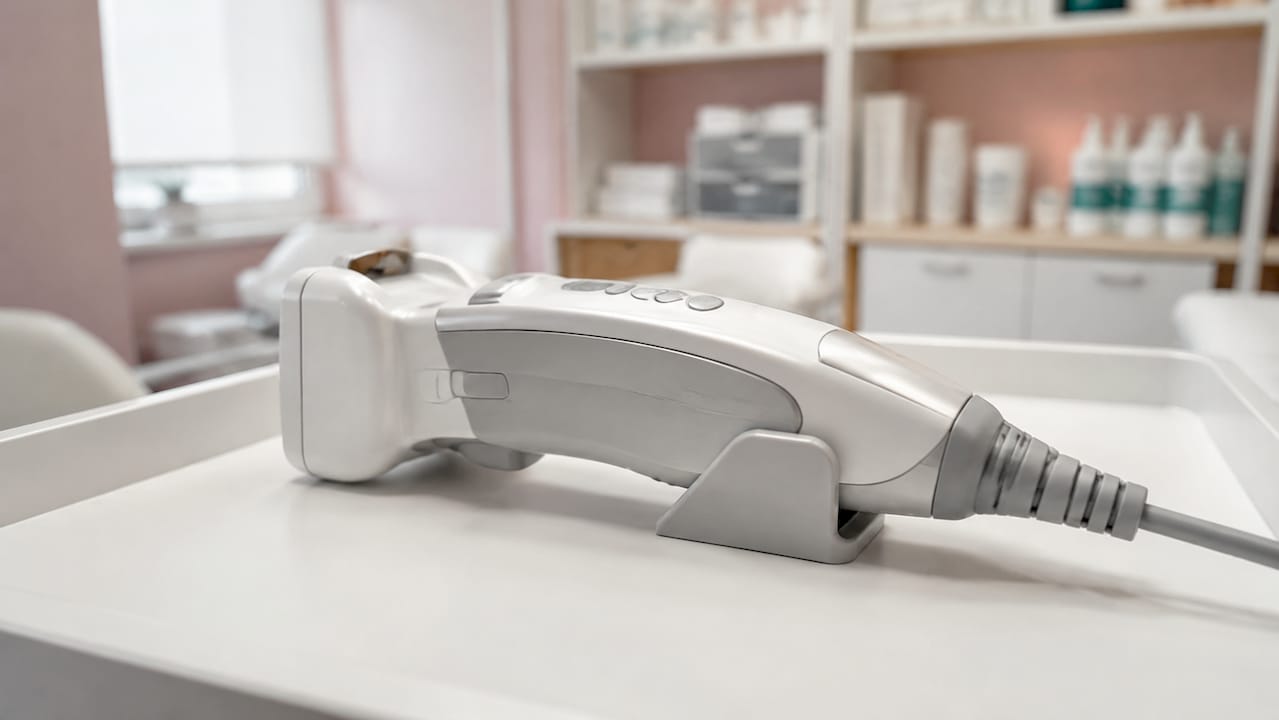
The key mechanism is the creation of thermal coagulation points, or TCPs. These are tiny zones of controlled heat, reaching approximately 65°C, that trigger collagen contraction and kick-start the body’s natural repair process, known as neocollagenesis. The result is a gradual, structural lift that builds over months rather than appearing overnight.
What genuinely sets Ultherapy apart from other energy devices is its built-in real-time ultrasound imaging. The practitioner can visualise tissue anatomy before and during treatment, confirming that energy is placed exactly where it needs to go. This is not a feature found in standard radiofrequency or laser platforms, and it directly reduces the risk of energy being deposited in the wrong tissue layer.
The treatment follows a patterned approach, with passes applied at each depth in sequence. This layered technique mimics the dissection planes used in surgical procedures, which is why the lifting effect can feel structurally meaningful rather than superficial.
Key differences from other energy treatments:
- Radiofrequency (RF): Works primarily at 1.5–3.0mm depths; does not reach the SMAS layer
- Laser resurfacing: Targets the skin surface and epidermis; carries pigmentation risk for darker skin tones
- Ultherapy: Reaches 4.5mm, targets SMAS, uses real-time imaging, and bypasses the skin surface entirely
What does the clinical evidence say about Ultherapy?
Ultherapy’s safety and effectiveness are supported by over 50 clinical studies and 120 peer-reviewed publications. That volume of research is unusual for a non-invasive aesthetic device and gives clinicians a reliable evidence base to draw from when advising patients.
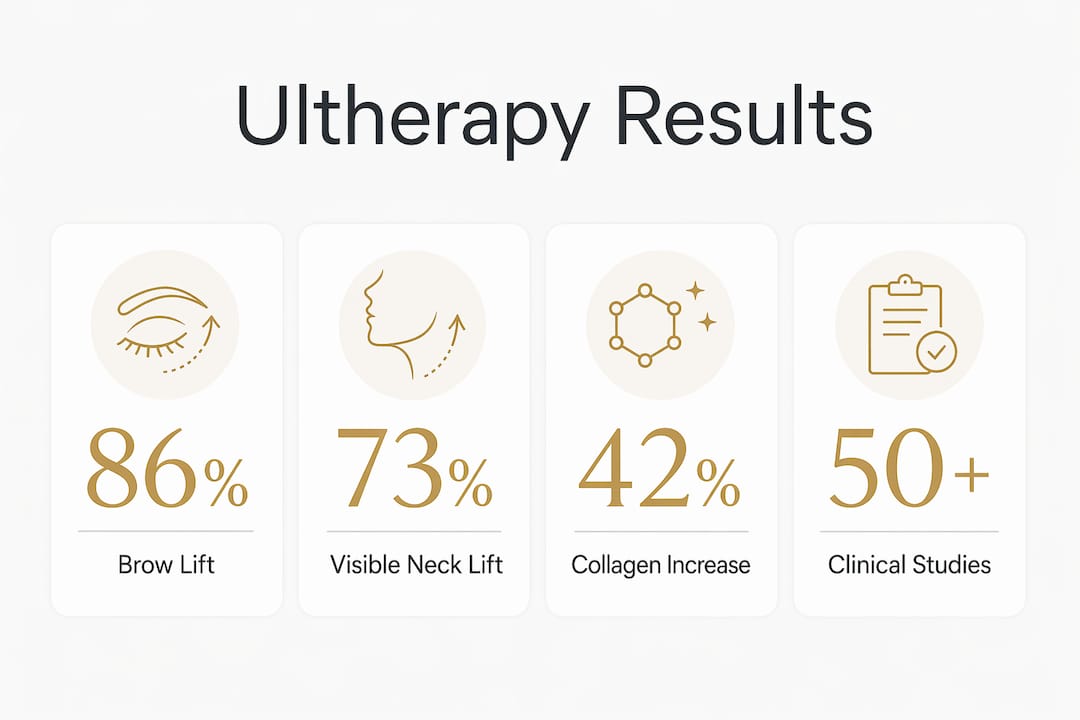
The clinical outcomes are specific and measurable. In neck-treated patients, 72.9% achieved visible tissue lift of 20.0mm² or greater. At the brow, 86% of patients showed significant lift at 90 days post-treatment. Mean eyebrow elevation measured 1.7mm in clinical studies. These are modest but clinically meaningful numbers for a non-surgical procedure.
At the cellular level, Ultherapy stimulates a 42% increase in collagen Types I and III compared to untreated skin. Type I collagen provides structural strength; Type III contributes to skin elasticity. Together, they restore the firmness that naturally declines with age.
| Clinical outcome | Reported result |
|---|---|
| Brow lift at 90 days | 86% of patients showed significant improvement |
| Neck tissue lift | 72.9% achieved ≥20.0mm² visible lift |
| Collagen increase | 42% rise in Types I and III vs. untreated skin |
| Mean brow elevation | 1.7mm measured in clinical studies |
| Results duration | 1–2 years with a single treatment session |
Pain is a genuine consideration. Patients experience discomfort during the heat delivery phase, particularly over bony areas. Pain management options include topical anaesthesia and oral sedation. The Ultherapy PRIME upgrade addresses this directly: it reduces pain scores to less than half those recorded with the legacy system, while maintaining the same FDA-cleared lifting outcomes.
Who is the ideal candidate for Ultherapy?
Ultherapy is best suited to patients with mild-to-moderate skin laxity. The most common causes include natural ageing, hormonal changes such as menopause, and weight fluctuations. Understanding the degree of skin laxity you are dealing with is the first step in determining whether Ultherapy is the right fit.
Patients with severe laxity, significant excess hanging skin, or those who have recently undergone surgical procedures are generally not suitable candidates. For these individuals, a surgical facelift or neck lift is likely to produce more appropriate results. Ultherapy cannot replicate the dramatic, immediate tightening of surgery, and attempting to use it as a surgical substitute leads to disappointment.
Patients who tend to respond well to Ultherapy:
- Adults in their 30s to 60s with early to moderate skin loosening
- Those noticing brow descent, jawline softening, or neck laxity
- Patients who want a natural-looking result without surgical recovery
- Individuals with any skin tone, since Ultherapy bypasses melanin entirely and carries no pigmentation risk
Patients who are not suitable:
- Those with significant excess skin requiring surgical excision
- Patients with active skin infections or open wounds in the treatment area
- Individuals with certain implanted devices near the treatment zone
A thorough consultation is not optional. The practitioner must assess skin anatomy, tissue quality, and patient expectations before recommending treatment. Realistic outcome-setting at this stage is what separates a satisfied patient from a disappointed one.
Pro Tip: Ask your practitioner to show you the ultrasound image of your own tissue during the consultation. Seeing your SMAS layer on screen makes the treatment rationale concrete and helps you understand what the device is actually targeting.
What happens during and after an Ultherapy session?
A single Ultherapy session lasts 20 to 60 minutes depending on the treatment area. The face and neck together typically take around 60 minutes; a focused brow or décolletage treatment can be completed in 20 to 30 minutes. No anaesthetic injection is required, though topical numbing cream is commonly applied beforehand.
The procedure follows a structured sequence:
- Skin preparation: The area is cleansed and a coupling gel is applied to the skin surface.
- Ultrasound imaging: The practitioner views the tissue layers in real time to map the treatment zones.
- Energy delivery: The transducer is moved across the skin in a patterned sequence, delivering ultrasound energy at each target depth.
- Repeat passes: Multiple passes are completed at 1.5mm, 3.0mm, and 4.5mm depths as appropriate for the area.
- Post-treatment review: The practitioner confirms coverage and discusses aftercare.
Results do not appear immediately. Collagen remodelling is a biological process that takes time. Most patients notice gradual improvement over 3 to 6 months, with the full effect visible at around the six-month mark. Results typically last 1 to 2 years, after which a maintenance session is advisable depending on lifestyle and skin ageing rate.
Common side effects include temporary redness, mild swelling, and tingling in the treated area. These typically resolve within a few hours to a few days. There is no downtime, meaning most patients return to normal activities on the same day.
Pro Tip: Schedule your Ultherapy session at least three months before any major event. The gradual collagen response means you will look your best at the six-month mark, not the day after treatment.
Ultherapy vs other skin tightening treatments: how does it compare?
Ultherapy occupies a specific position in the non-invasive treatment landscape. Its ability to reach the SMAS layer and use real-time imaging gives it a structural advantage over most energy-based alternatives. That said, it is not the right choice for every patient or every concern.
| Treatment | Depth reached | Skin surface affected | Suitable for all skin tones | Downtime |
|---|---|---|---|---|
| Ultherapy | Up to 4.5mm (SMAS) | No | Yes | None |
| Radiofrequency (RF) | 1.5–3.0mm | Minimal | Yes | Minimal |
| Laser resurfacing | Surface to 1.0mm | Yes | No (pigmentation risk) | Several days |
| Surgical facelift | Full tissue dissection | Yes | Yes | Weeks |
Radiofrequency treatments such as Thermage work well for skin texture and mild tightening but do not reach the SMAS. Laser resurfacing excels at surface renewal but carries a real pigmentation risk for patients with darker skin tones, a risk that Ultherapy avoids entirely by bypassing the skin surface. Surgical facelifts deliver more dramatic, immediate results but require general anaesthesia, incisions, and weeks of recovery.
Ultherapy works well alongside complementary treatments. Dermal fillers restore volume that lifting alone cannot address, while Botox relaxes dynamic lines that structural tightening does not target. Many patients achieve the most natural-looking outcome through a combined plan rather than relying on a single treatment. For patients who want to explore the full range of non-surgical options in London, understanding how these treatments interact is worth discussing in detail at consultation.
Surgery remains the appropriate choice when laxity is severe. Ultherapy is not a surgical substitute. It is a structural, science-backed treatment for patients who are not yet ready for surgery or who want to maintain results between surgical procedures.
Key takeaways
Ultherapy is the most clinically validated non-invasive ultrasound treatment for skin lifting, with 86% of patients showing measurable brow lift at 90 days and results lasting up to two years from a single session.
| Point | Details |
|---|---|
| Core mechanism | Micro-focused ultrasound creates thermal coagulation points at depths up to 4.5mm to stimulate collagen. |
| Clinical backing | Over 50 studies support its efficacy; 72.9% of neck patients achieved visible tissue lift. |
| Best candidates | Adults with mild-to-moderate laxity due to ageing, menopause, or weight change. |
| Results timeline | Gradual improvement over 3–6 months; results last 1–2 years from a single treatment. |
| Key advantage | Real-time ultrasound imaging and SMAS targeting set it apart from RF and laser alternatives. |
My honest view on Ultherapy after years in aesthetics
The most persistent misconception I encounter is that Ultherapy is completely pain-free. It is not. The heat delivery phase produces a genuine sensation, particularly over the cheekbones and jaw. Clinics that promise a comfortable experience without discussing pain management options are not setting patients up for success. Ultherapy PRIME has meaningfully improved comfort, but patients should still expect to feel something.
The second thing I would stress is operator skill. The outcome depends heavily on the practitioner’s ability to map tissue accurately and apply energy in patterned layers at the correct depths. A poorly executed treatment at the right device is still a poor treatment. When choosing a clinic, ask specifically about the practitioner’s training, how many Ultherapy sessions they perform per month, and whether they use Ultherapy PRIME.
The gradual, natural lift is genuinely one of the treatment’s greatest strengths. Patients who understand that they are investing in a biological process, not an instant result, tend to be the most satisfied. Combined with skin rejuvenation treatments and volume restoration through fillers, Ultherapy can be part of a well-considered, long-term approach to maintaining a refreshed appearance without surgery.
— Vishul
Ultherapy and complementary treatments at Theaestheticsroom
Theaestheticsroom, based in Knightsbridge and with locations on Harley Street and Mayfair, offers Ultherapy and Ultherapy PRIME alongside a full range of complementary aesthetic treatments. Our practitioners are trained to assess your skin anatomy in detail and recommend a personalised plan that may include Ultherapy alongside Botox or dermal fillers for a complete, natural-looking result.
Every consultation at Theaestheticsroom begins with a thorough assessment of your skin, your concerns, and your goals. We are CQC-accredited and members of the ACE Group, which means patient safety sits at the centre of everything we do. Whether you are considering Ultherapy as a standalone treatment or as part of a broader plan, our team will give you an honest, evidence-based recommendation. Book a virtual or in-person consultation today to find out whether Ultherapy is right for you.
FAQ
What is Ultherapy used to treat?
Ultherapy is used to lift and tighten skin on the face, neck, décolletage, abdomen, and arms. It targets mild-to-moderate skin laxity caused by ageing, menopause, or weight fluctuations.
How long does an Ultherapy treatment take?
A single session lasts between 20 and 60 minutes depending on the area treated. No downtime is required, and most patients return to normal activities the same day.
Is Ultherapy safe for darker skin tones?
Yes. Ultherapy bypasses the skin surface and does not target melanin, making it safe for all skin tones with no risk of the pigmentation issues associated with laser treatments.
When will I see results from Ultherapy?
Results develop gradually over 3 to 6 months as new collagen forms. The full effect is typically visible at six months and lasts 1 to 2 years from a single treatment session.
How does Ultherapy PRIME differ from standard Ultherapy?
Ultherapy PRIME delivers the same FDA-cleared lifting results but with pain scores less than half those of the legacy system. It also extends treatment coverage to the abdomen and arms.
Recommended
- Skin tightening options: your 2026 treatment guide – The Aesthetics Room
- What is thread lifting? A clear guide for 2026 – The Aesthetics Room
- Discover the benefits of Hydrafacial for radiant skin in 2026 – The Aesthetics Room
- Master your skin rejuvenation workflow in London 2026 – The Aesthetics Room