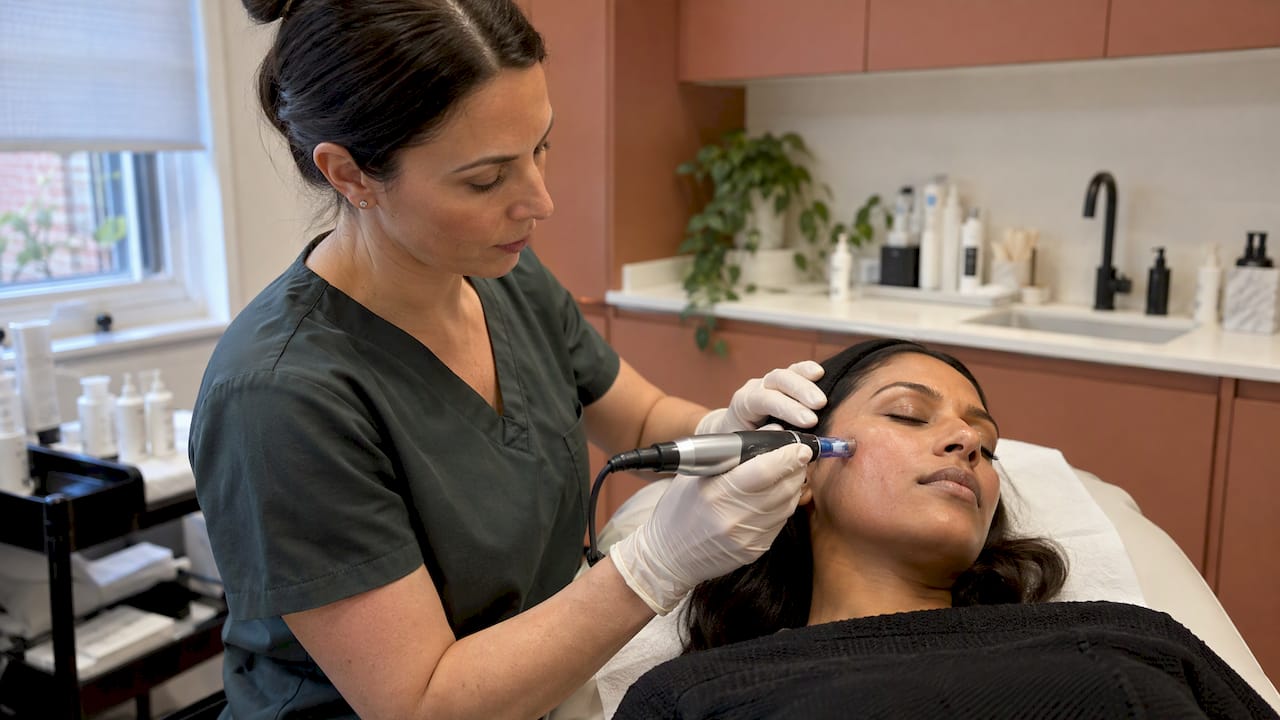
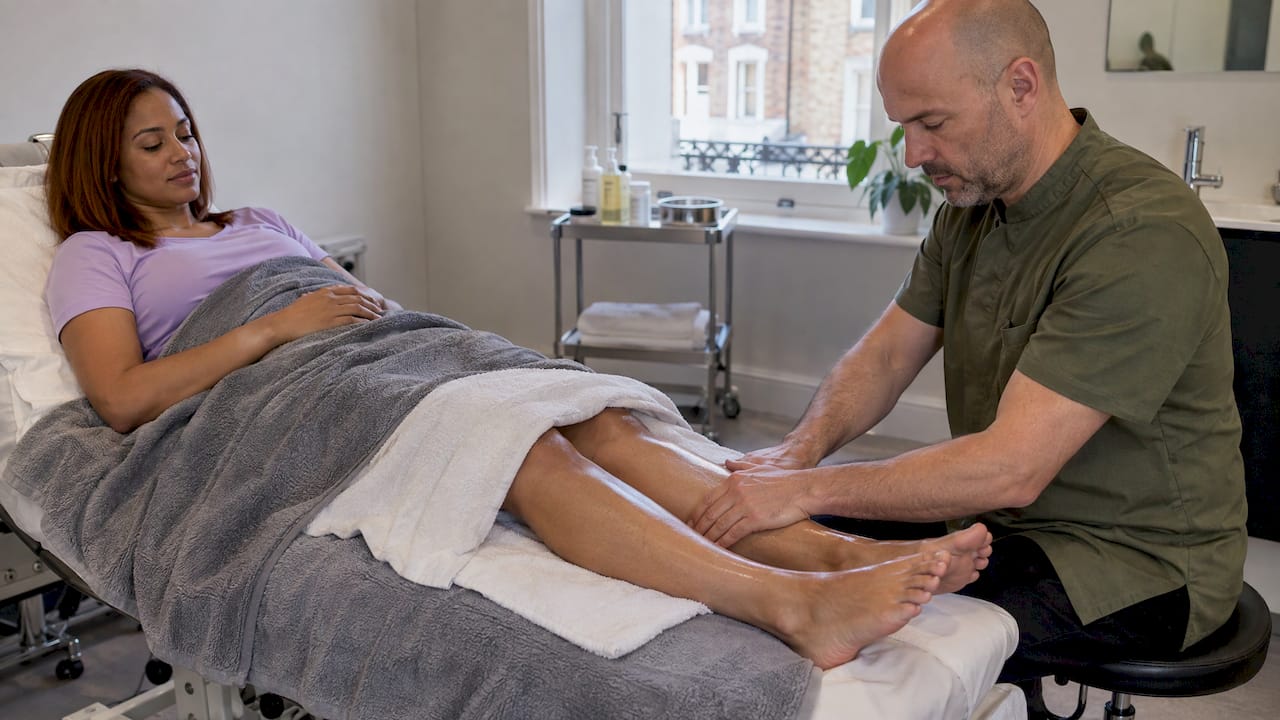

Lymphatic drainage after pregnancy is a very light, slow massage that guides excess fluid towards the body’s lymph nodes. Many new mothers use it to ease the puffy legs, heavy feet and general fluid retention that follow birth. The right time to start depends on how you gave birth and how you are healing, and your GP, midwife or consultant should confirm it first. Once you have that go-ahead, a medically led clinic such as ours can build a gentle plan around your recovery.
This guide is for women in London who want to look after themselves safely after birth. It explains what the treatment does, when to begin, what a session should feel like and which symptoms mean you should see a doctor instead.
TL;DR
- Lymphatic drainage uses feather-light strokes to encourage fluid to move towards the lymph nodes. It should never feel deep or painful.
- The postnatal period is the first 6 to 8 weeks after birth, and the routine GP check happens at weeks 6 to 8. Many people use that check as their natural point to ask about starting.
- After a caesarean, the scar takes about six weeks to heal fully. Nothing should be done near the scar until it is closed with no scabs or open areas.
- One painful, swollen, warm or red leg, chest pain or breathlessness needs urgent medical help, not massage.
- We offer lymphatic drainage in London, with in-person and virtual consultations, delivered by CQC-registered professionals.
Table of Contents
- Why fluid lingers after birth
- What lymphatic drainage after pregnancy involves
- What the research says about benefits
- When can you start after birth?
- Symptoms that need a doctor, not massage
- Gentle ways to support lymph flow in the meantime
- What to expect from a session with us
- Beyond swelling: other postnatal concerns
- Our perspective
- Book your consultation
- FAQ
- Sources
Why fluid lingers after birth
During pregnancy your body produces extra blood and fluid. After delivery, much of that fluid has to be cleared, and in the first days and weeks you may notice swollen ankles, puffy hands or a heavy, tight feeling in the legs. Hormonal shifts, long periods of sitting or feeding, and reduced movement all play a part.
The lymphatic system is the body’s drainage network. Unlike the circulatory system, it has no pump of its own. It relies on muscle contractions, movement and breathing to keep lymph flowing, as a physiotherapist who specialises in cancer rehabilitation explains. After a caesarean in particular, limited movement can let fluid pool in the abdomen and legs. That is the problem manual lymphatic drainage (MLD) is designed to address.
What lymphatic drainage after pregnancy involves
MLD is not a conventional massage. There is no kneading and no pressure into muscle. The therapist uses slow, rhythmic, skin-level movements that stretch the skin gently in the direction of the nearest lymph nodes: the neck, armpits and groin. The same physiotherapist describes very light strokes that follow the natural direction of lymph flow, and notes that fluid should never be pushed out through the incision area.
As a guide, a safe session has these features:
- Pressure is barely more than the weight of the hand. If it hurts or leaves redness, it is too firm.
- Movements are slow and repeated. The skin is moved rather than rubbed.
- The work follows a sequence. It usually starts near the neck and nodes before moving to the limbs, so fluid has somewhere to go.
- The scar is left alone until it is healed. Even after that, the area is approached with care.
- It is paced around you. Feeding times, tiredness and comfort come first.
This is why a trained, medically led practitioner matters. The technique is subtle, and the skill lies in knowing what to do, where to do it and when to hold back. All of our treatments are performed by medically trained professionals, and our clinic is registered with the Care Quality Commission (CQC).
What the research says about benefits
Most research on this technique has been done in pregnant women, with some trials looking at the puerperium, the weeks following birth. The findings are encouraging:
- In a randomised trial of 49 women with gestational oedema, manual lymphatic drainage applied once weekly with very soft, superficial techniques reduced pain intensity compared with perineal massage at 30 weeks, at 36 weeks and at the end of the puerperium.
- In a Brazilian study of 23 pregnant women, 35 drainage sessions were linked with improvements in pain, tingling, heaviness and swelling, both immediately afterwards and two hours later.
- A pilot randomised trial of 30 pregnant women found that lymphatic drainage, with or without functional bandaging, significantly reduced lower-limb oedema, pain and fatigue compared with a control group.
- A systematic review of complementary therapies around birth found that massage reduced pain after caesarean birth within 24 hours and again at 7 days postpartum.
Many women also describe lighter legs, easier movement and a calmer mood after a session. Alongside the physical effects, a gentle, unhurried hour of attention can be a welcome break in the early months.
For how the same principle works in aesthetic care, see our guide on whether lymphatic drainage reduces swelling.
When can you start after birth?
There is no single universal start date. What we can give you are the milestones that guide most decisions.
The 6 to 8 week window
NHS England’s postnatal toolkit defines the postnatal period as the first 6 to 8 weeks after birth, and says a GP completes a maternal postnatal consultation at weeks 6 to 8. That check is a sensible moment to ask whether you can begin lymphatic work. If you have had stitches, a complicated delivery or a health condition, your GP or consultant will tailor the advice.
After a vaginal birth
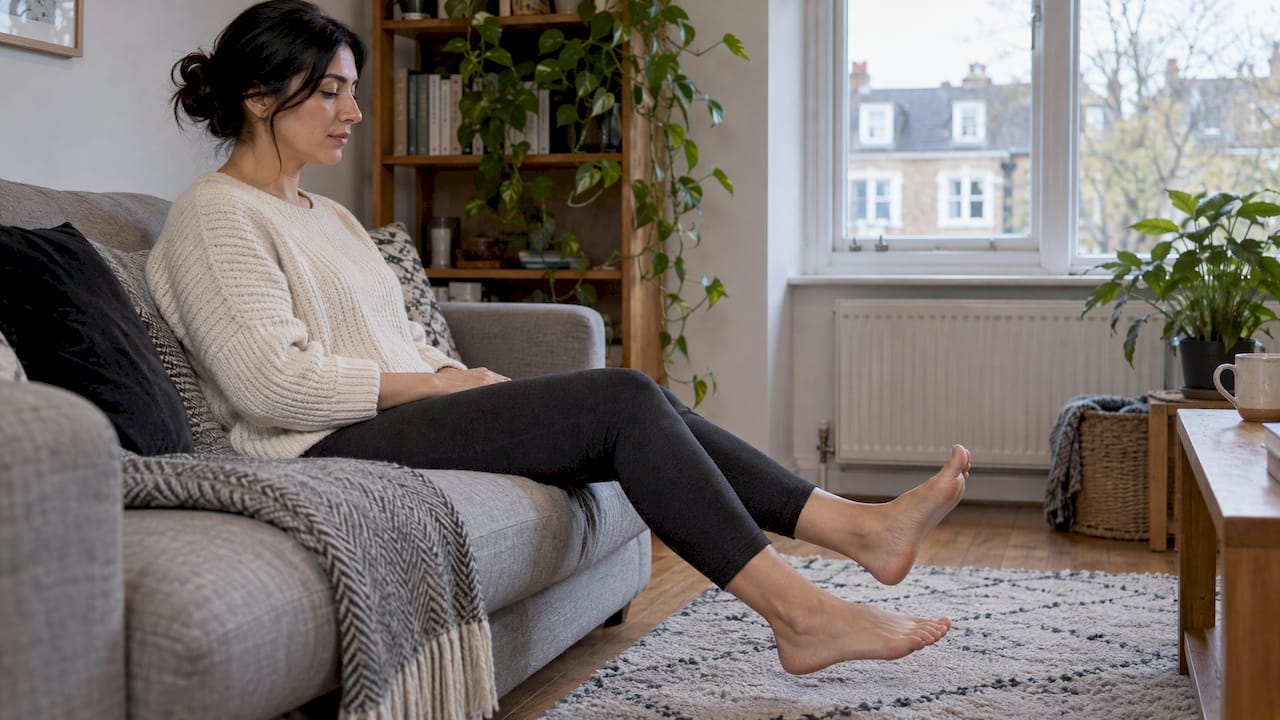
Some women ask about gentle work on the legs earlier than six weeks. Because the risk of blood clots is raised in the early weeks, ask your midwife or GP first, and avoid any deep leg massage. Gentle movement such as ankle pumps is a safer way to support circulation in the meantime (see the movement section below).
After a caesarean
A caesarean scar takes approximately six weeks to heal fully, according to St George’s NHS scar management guidance. Massage near it should only begin once it is fully healed, with no open areas or scabs, and you should check with your GP or consultant first if you are concerned. NHS Lothian’s postnatal physiotherapy advice similarly places scar massage from around 4 to 6 weeks, and only after the scar is healed.
In practice that means a caesarean mother usually waits until at least the six-week point and her clearance, then starts with the limbs and the areas away from the scar.
The early weeks are also when feeding support matters most. If you are breastfeeding, postpartum breastfeeding support can sit alongside your recovery plan, so that comfort, feeding and swelling are looked after together.
Symptoms that need a doctor, not massage
Swelling after birth is common, but some signs are not. Please do not book or continue any lymphatic work and seek medical help if you notice:
- Throbbing pain and swelling in one leg, especially if it is warm or red. The NHS lists pregnancy and the first six weeks after birth as times when deep vein thrombosis (DVT) is more likely. Never massage a leg like this.
- Chest pain or shortness of breath. With leg symptoms this is an emergency: call 999.
- A wound that becomes redder, more painful or more swollen, or any discharge from a caesarean scar.
- Heavy vaginal bleeding, a high temperature or severe pain.
- Swelling in the face or hands, or a severe headache. These can be signs of pre-eclampsia, so contact your midwife or maternity unit the same day.
NICE guidance on postnatal care asks midwives to check for infection, pain, bleeding, thromboembolism, anaemia and pre-eclampsia at each postnatal contact, so mention any swelling at those appointments.
Our page on lymphatic drainage contraindications sets out who should wait or avoid the treatment altogether.
Gentle ways to support lymph flow in the meantime
Because the lymphatic system depends on movement, small habits help while you wait for clearance:
- Ankle pumps. NHS Lothian advises bending the feet and ankles briskly up and down for about 30 seconds every hour after a caesarean, to help prevent DVT and chest infection. Many women find this a handy habit for any postnatal day.
- Early, short walks. The same guidance encourages getting moving within 8 hours of a caesarean, as your team allows.
- Slow, deep breaths. Breathing helps move lymph, and it costs nothing.
- Elevating the legs when you sit to feed.
- Staying hydrated and keeping loose clothing around the waist and legs.
These measures complement lymphatic drainage; they do not replace medical advice.
What to expect from a session with us
We begin with a consultation, available in person or virtually, so that we understand your birth, your healing and your goals. The consultation is where we confirm timing and whether you need to see your GP first. Our approach is bespoke: every treatment plan is built for the individual rather than from a fixed template, and all treatments are carried out by medically trained professionals.
We suggest you bring:
- The date and type of your birth, and any complications.
- Details of your scar and whether your GP or consultant has cleared you.
- Any medicines, supplements or conditions we should know about.
- Your questions about timing, comfort and feeding schedules.
If you are planning other aesthetic care after birth, our guide to London aesthetic consultations explains how a first appointment works.
Beyond swelling: other postnatal concerns
Many mothers notice more than fluid retention in the months after birth. Hair shedding is among the most common concerns, and we have a separate guide on postpartum hair loss and PRP explaining when treatment helps and when it is best to wait. Skin that feels tired or dull can often be addressed with gentle treatments once you are well into recovery, and we can build these into one coherent plan so that you do not need to piece together separate appointments.
Our perspective
Postnatal recovery is not one event. It is a sequence: your body heals, your fluid balance settles, your energy returns and you start to feel like yourself again. We think treatment should follow that order.
That is why we start with a conversation, not a treatment. We ask about your birth, your scar and your GP’s advice, and we only begin when the timing is right. Lymphatic drainage suits this approach because it is gentle by design, and because it fits into a wider, medically led plan that looks at the whole person, inside and out.
Safety is the reason people come to us. Our clinic is CQC-registered and we are members of the ACE Group, which is dedicated to patient safety. For a new mother, that means every decision about timing and technique is made by trained professionals who put your recovery first.
Vishul
Book your consultation
If you are past your postnatal check, or want to plan ahead, we would be glad to talk through your recovery. We offer lymphatic drainage in London, with consultations either in person or online, and our team can explain what suits your stage of recovery. Our published treatments and prices are on our price list, and you can book through The Aesthetics Room.
We practise from Knightsbridge, with Harley Street and Mayfair locations also available, so you can choose the setting most convenient for you and your baby’s routine.
FAQ
How soon after giving birth can I have lymphatic drainage?
There is no fixed date that suits everyone. Many women wait until their GP check at 6 to 8 weeks, and after a caesarean the scar needs about six weeks to heal first. Ask your GP, midwife or consultant, then book a consultation with us to plan the first session.
Is postnatal lymphatic massage safe after a caesarean?
It can be, once your doctor approves and the incision has fully healed with no scabs or open areas. The technique should be very light, and fluid is never directed through the scar area. If the scar is red, painful or swollen, see your doctor before any treatment.
Will lymphatic drainage help with swollen legs after pregnancy?
Trials of manual lymphatic drainage in pregnant women have reported reductions in swelling, heaviness and pain. Individual results vary, so we discuss what to expect at your consultation. Swelling in one leg only, especially if painful or warm, needs urgent medical review, not massage.
Can I have a virtual consultation first?
Yes. We offer both virtual and in-person consultations, which can be convenient when you have a newborn at home. We will go through your birth, your healing and your goals, and advise on timing.
Sources
- Lymphatic Drainage Massage After C-Section for Swelling
- Effectiveness of manual lymphatic drainage vs. perineal massage in gestational oedema
- Impact of manual lymphatic drainage on symptoms related to pregnancy
- Effectiveness of manual lymphatic drainage with or without functional bandaging
- The effectiveness and safety of complementary health approaches
- NHS England: Improving postnatal care toolkit
- St George’s NHS: Scar Tissue Management
- NHS Lothian: Postnatal physiotherapy advice and rehabilitation
- Postpartum Massage and Recovery
- NICE: Postnatal care recommendations
- Postpartum breastfeeding support