
TL;DR:
- Eyebrow microblading is a semi-permanent tattooing technique that creates natural hair-like strokes lasting one to three years. The process involves detailed brow mapping, pigment implantation with a handheld tool, and a required touch-up after six to eight weeks. It suits clients with normal or dry skin and sparse brows but is less effective on oily or mature skin types, which benefit from microshading instead.
Eyebrow microblading is defined as a semi-permanent cosmetic tattooing technique that uses a manual blade to implant pigment into the upper layers of the skin in fine, hair-like strokes. The result is the appearance of fuller, naturally shaped brows without daily make-up. Unlike a conventional tattoo, microblading fades gradually over time, with results typically lasting 1–3 years and visible softening beginning around 6–12 months after treatment. For anyone exploring cosmetic enhancement options, understanding the technique, the process, and what to realistically expect is the most important first step.
How does eyebrow microblading work, step by step?
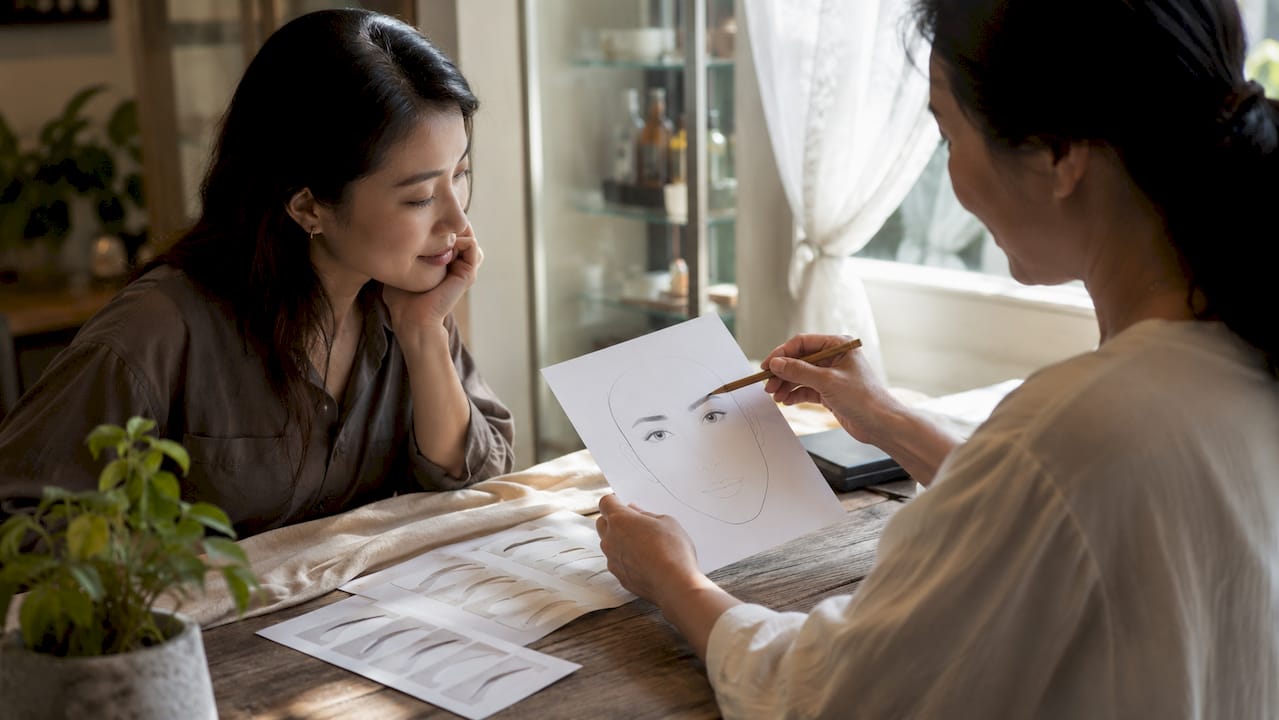
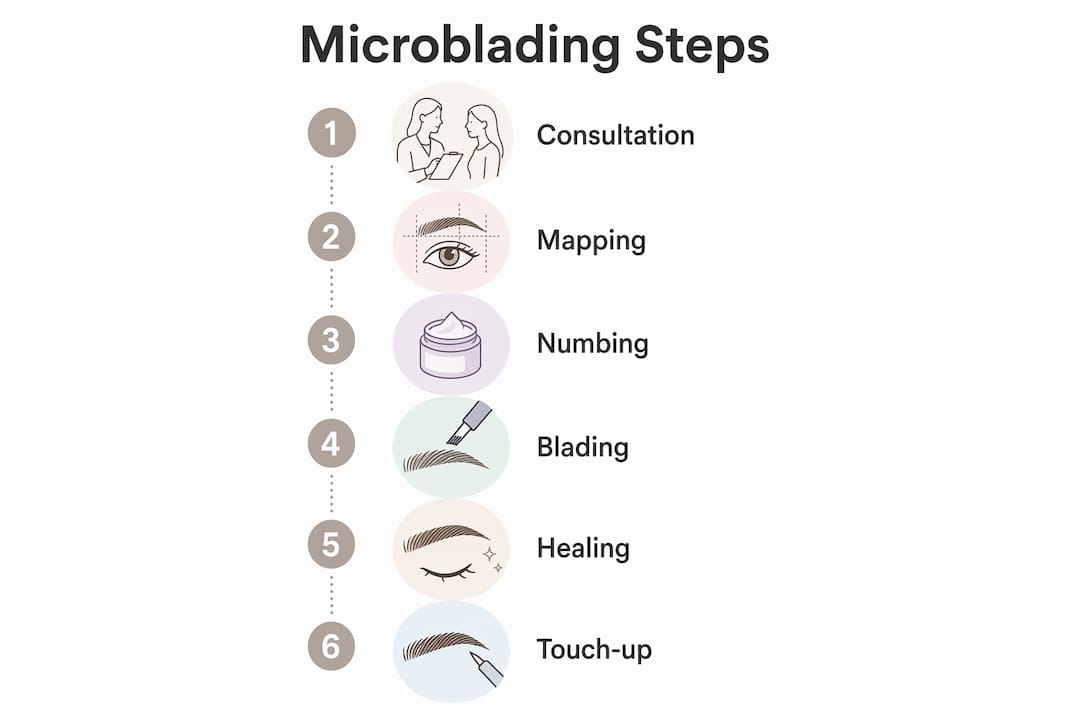
Microblading begins well before any pigment touches your skin. A thorough consultation maps the brow shape using Golden Ratio principles to achieve facial symmetry, taking into account your bone structure, existing brow hair, and personal preferences. This design stage is arguably the most critical part of the entire process.
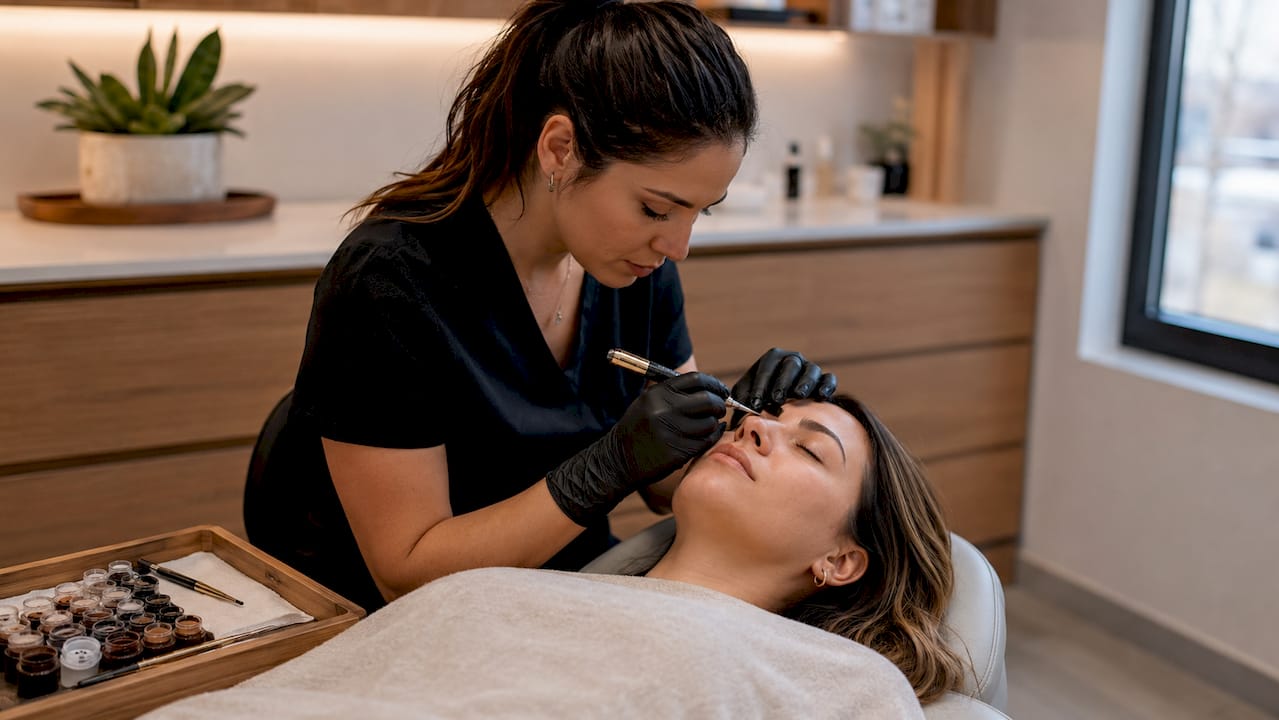
Once the shape is agreed, a topical numbing cream is applied to the brow area. Experienced practitioners typically make the initial incisions first, then apply numbing for better absorption and client comfort. The microblading tool itself is a small, handheld device fitted with a row of fine needles arranged in a blade formation. The technician uses this to create shallow cuts in the skin, depositing pigment simultaneously to mimic individual brow hairs.
A standard appointment takes approximately 2 hours in total, including consultation, mapping, and the procedure itself. The actual microblading element lasts around 30–45 minutes. The process uses a two-pass technique: the first pass establishes the stroke pattern and shape, while the second ensures consistent pigment saturation and depth.
A follow-up appointment is scheduled 6–8 weeks later. This touch-up corrects any areas where pigment has not retained evenly and refines the final result. Skipping this step is one of the most common reasons clients are disappointed with their long-term outcome.
| Stage | Activity | Approximate time |
|---|---|---|
| Consultation and mapping | Brow design using Golden Ratio | 30–45 minutes |
| Numbing | Topical anaesthetic application | 15–20 minutes |
| Microblading | Two-pass pigment implantation | 30–45 minutes |
| Review and aftercare briefing | Final check and instructions | 10–15 minutes |
| Touch-up appointment | Pigment correction and refinement | 6–8 weeks later |
Pro Tip: Always verify that your technician holds a recognised qualification in semi-permanent make-up and works in a CQC-registered or equivalent regulated environment. Depth control is a skill that takes considerable training to master, and incorrect pigment depth can cause permanent scarring or a blue-grey discolouration that is very difficult to correct.
Who is a good candidate for microblading, and who should avoid it?
Microblading produces the best results on clients with normal skin and small pores. These skin types hold pigment cleanly, allowing strokes to heal with definition and clarity. If you have sparse brows, uneven growth, or gaps caused by over-plucking, microblading is particularly effective at restoring a natural-looking shape.
Oily or mature skin presents a genuine challenge. Pigment is significantly more likely to blur on oily or mature skin, as excess sebum causes the deposited colour to spread beyond the original stroke. For these skin types, microshading is the more reliable option. Microshading uses a dotting technique rather than strokes to create a powdery, filled-in finish that holds better on oilier complexions.
Microblading is generally well-suited for you if:
- Your skin is normal to dry with small to medium pores
- You have sparse, thin, or asymmetrical brows
- You want a natural, hair-stroke appearance rather than a filled-in look
- You are not pregnant or breastfeeding
- You have no active skin conditions such as eczema or psoriasis in the brow area
- You are not currently using Accutane or prescription retinoids
Microblading is not recommended if you:
- Have very oily skin or enlarged pores (microshading is a better fit)
- Are prone to keloid scarring
- Have a compromised immune system or are undergoing chemotherapy
- Have had recent cosmetic procedures in the brow area
- Are sensitive to topical anaesthetics or certain pigment ingredients
Choosing the right technique for your skin type is not a minor detail. It directly determines how long your results last and how natural they look once fully healed.
What are the benefits and realistic results of microblading?
Microblading creates visual eyebrow structure. It does not stimulate biological hair growth, and it is not a treatment for alopecia or medical hair loss. Understanding this distinction matters, because the technique mimics hair appearance through cosmetic pigment rather than follicle stimulation. The benefit is aesthetic coverage, not regrowth.
When performed well, the results are remarkably natural. Fine, individually placed strokes follow the direction of your existing brow hairs, creating depth and definition that pencils and powders cannot replicate with the same consistency. The shape is customised to your face, and the pigment colour is matched to your natural hair tone.
Colour appears darker immediately after the procedure and softens considerably as the skin heals over the following weeks. This is one of the most misunderstood aspects of microblading. Clients who judge their results in the first few days often panic unnecessarily. The healed result, visible at around 4–6 weeks, is the true outcome.
| Feature | Microblading | Eyebrow tinting | Eyebrow lamination |
|---|---|---|---|
| Duration | 1–3 years | 3–6 weeks | 6–8 weeks |
| Technique | Pigment implanted in skin | Dye applied to existing hairs | Hairs set in upward position |
| Best for | Sparse or thin brows | Pale or light brows | Unruly or flat brows |
| Downtime | 7–14 days healing | None | None |
| Natural hair required | No | Yes | Yes |
Pro Tip: Book your touch-up appointment at the same time as your initial treatment. The 6–8 week follow-up is not optional. It is where the final, polished result is achieved, and it is included in most reputable practitioners’ pricing.
What aftercare is required after eyebrow microblading?
Aftercare directly determines how well your pigment retains and how cleanly your strokes heal. Neglecting aftercare is the single most common reason results fade faster than expected or heal unevenly. Your technician will provide specific written instructions, and following them precisely is non-negotiable.
The healing process unfolds in stages. In the first 1–3 days, brows appear bold and slightly swollen. Between days 3–7, light scabbing or flaking occurs as the skin begins to shed. By weeks 2–4, the colour may appear to fade dramatically, which is normal. The final healed colour settles at around 4–6 weeks, softer and more natural than the initial result.
Post-procedure do’s and don’ts:
- Do keep brows dry for the first 7–10 days. Water softens the healing skin and can draw pigment out.
- Do apply any healing balm recommended by your technician in thin layers only.
- Do protect healed brows from direct sun exposure with SPF. UV light accelerates fading.
- Don’t pick, scratch, or rub the brow area during healing. This pulls pigment out and risks scarring.
- Don’t apply make-up directly over the brows until fully healed.
- Don’t swim, use saunas, or exercise heavily for at least 10 days post-treatment.
- Don’t use retinol, glycolic acid, or exfoliating products near the brow area during healing.
Preparation also plays a role in the quality of your result. Avoiding aspirin, alcohol, and retinol for 7 days before your appointment reduces bleeding during the procedure. Less bleeding means a cleaner workspace for pigment implantation and better colour retention long term.
Key takeaways
Eyebrow microblading is a semi-permanent technique that creates natural-looking brows through pigment implantation, with results lasting 1–3 years and outcomes determined by skin type, technician skill, and aftercare.
| Point | Details |
|---|---|
| Definition and longevity | Microblading implants pigment in hair-like strokes; results last 1–3 years with fading from 6–12 months. |
| Procedure stages | A full appointment takes around 2 hours, with a mandatory touch-up at 6–8 weeks. |
| Candidate suitability | Normal or dry skin types retain pigment best; oily or mature skin suits microshading instead. |
| Realistic results | Colour darkens immediately post-treatment and softens to its true healed appearance at 4–6 weeks. |
| Aftercare impact | Keeping brows dry, avoiding UV exposure, and skipping retinoids during healing protects pigment retention. |
What I have learnt from watching microblading results over time
The most common misconception I encounter is that microblading is a permanent fix. Clients arrive expecting results that last indefinitely, and they are genuinely surprised when fading begins within the first year. The semi-permanent nature of the technique is actually one of its greatest strengths. It allows for adjustments as your face changes, your preferences evolve, or brow trends shift. Locking in a shape permanently would be far riskier.
The second thing I have observed is how dramatically healed results differ from fresh ones. Clients who see their brows immediately after treatment sometimes feel alarmed by the intensity of the colour. That initial boldness is misleading. The true result only reveals itself once the skin has fully healed, which takes patience most people underestimate.
Depth control is where the real skill lies. A technician who works too deep creates permanent scarring and discolouration that no touch-up can correct. A technician who works too shallow produces strokes that fade within months. The difference between these outcomes is not the equipment. It is the hours of practice and the understanding of how different skin types respond to pigment. This is why the consultation and safety process matters as much as the procedure itself.
My honest advice: spend more time researching your technician than you spend choosing the brow shape. A skilled artist working with a simple design will always outperform an inexperienced one attempting something complex.
— Vishul
Eyebrow microblading and complementary treatments at Theaestheticsroom
Theaestheticsroom, based in Knightsbridge and with locations on Harley Street and in Mayfair, offers expert guidance on semi-permanent make-up alongside a full range of medical aesthetic treatments. Whether you are considering microblading to restore sparse brows or exploring complementary facial treatments to enhance your overall appearance, our team of trained specialists provides personalised consultations tailored to your skin type and aesthetic goals.
For clients interested in facial rejuvenation beyond the brow area, Theaestheticsroom also offers dermal filler treatments and Botox administered by medical practitioners in a CQC-accredited environment. Every treatment plan is built around your individual anatomy, safety, and desired outcome. Book a consultation today to discuss which treatments are right for you.
FAQ
How long does eyebrow microblading last?
Microblading results last between 1 and 3 years, with fading typically becoming noticeable from 6–12 months onwards. Longevity depends on skin type, sun exposure, and how consistently aftercare guidance is followed.
Is microblading the same as an eyebrow tattoo?
Microblading and conventional eyebrow tattooing both implant pigment into the skin, but they differ in depth and permanence. Microblading targets the upper epidermis for a soft, natural fade, whereas traditional tattooing goes deeper and is intended to be permanent.
Does eyebrow microblading hurt?
Most clients describe the sensation as mild scratching or pressure rather than sharp pain. A topical numbing cream is applied before and during the procedure to manage discomfort, making the experience tolerable for the majority of people.
Who should avoid microblading?
Microblading is not suitable for those with very oily skin, keloid scarring tendencies, active skin conditions in the brow area, or those who are pregnant or breastfeeding. Clients on Accutane or prescription retinoids should also wait until their course of treatment is complete.
How do I maintain my microbladed brows long term?
Avoid prolonged sun exposure and apply SPF to healed brows daily, as UV light is the primary cause of premature fading. Annual or biannual colour refresh appointments help maintain definition and keep the shape looking its best.