

TL;DR:
- Combining aesthetic treatments targets multiple facial ageing layers simultaneously, producing more natural and balanced results.
- A strategic sequence of procedures, spaced appropriately, ensures safety and enhances overall effectiveness.
Combining aesthetic treatments is defined as using two or more cosmetic procedures together to target multiple aspects of facial ageing simultaneously, producing results that no single treatment can achieve alone. This approach, formally known as combination therapy, is the standard of care in modern medical aesthetics. Procedures such as botulinum toxin (Botox), dermal fillers, lasers, and skin boosters each address different anatomical layers. When you understand why combine treatments matters, you see that the real power lies in synergy: each procedure reinforces the others, creating a more balanced and natural outcome.
Why combine treatments: the science of synergy
Facial ageing is not a single problem. Ageing affects five anatomical layers: the skeleton, ligaments, muscles, adipose tissue, and skin. Each layer changes at a different rate and responds to different interventions. No single technology targets all five layers effectively. This is the fundamental reason why multi-treatment approaches exist.
Treatment synergy means that two procedures used together produce a result greater than either would alone. Think of botulinum toxin relaxing the muscles that pull the face downward, while hyaluronic acid fillers restore lost volume in the fat compartments beneath. The muscle relaxation prevents the filler from being displaced, and the restored volume gives the overlying skin a smoother surface to rest on. Neither treatment is working against the other. They are working in concert.
Synergistic combinations create therapeutic harmony rather than simply adding separate effects side by side. This distinction matters. Additive effects mean two treatments each do their own job. Synergistic effects mean each treatment makes the other more effective. The outcome is a more natural, balanced appearance rather than a collection of isolated corrections.
Here is how the five ageing layers map to common treatments:
- Skeleton and ligaments: Calcium hydroxyapatite fillers and structural hyaluronic acid fillers restore bony support and reposition descended ligaments.
- Muscles: Botulinum toxin reduces hyperactive muscle movement that deepens lines over time.
- Adipose tissue: Hyaluronic acid fillers and fat dissolving injections address volume loss and unwanted localised fat.
- Skin surface: Lasers, chemical peels, PRP (platelet-rich plasma), and skin boosters improve texture, tone, and collagen production.
Pro Tip: Ask your practitioner to explain which anatomical layer each proposed treatment targets. If two treatments address the same layer without clear rationale, question whether both are necessary.
What are the benefits of combining aesthetic treatments vs monotherapy?
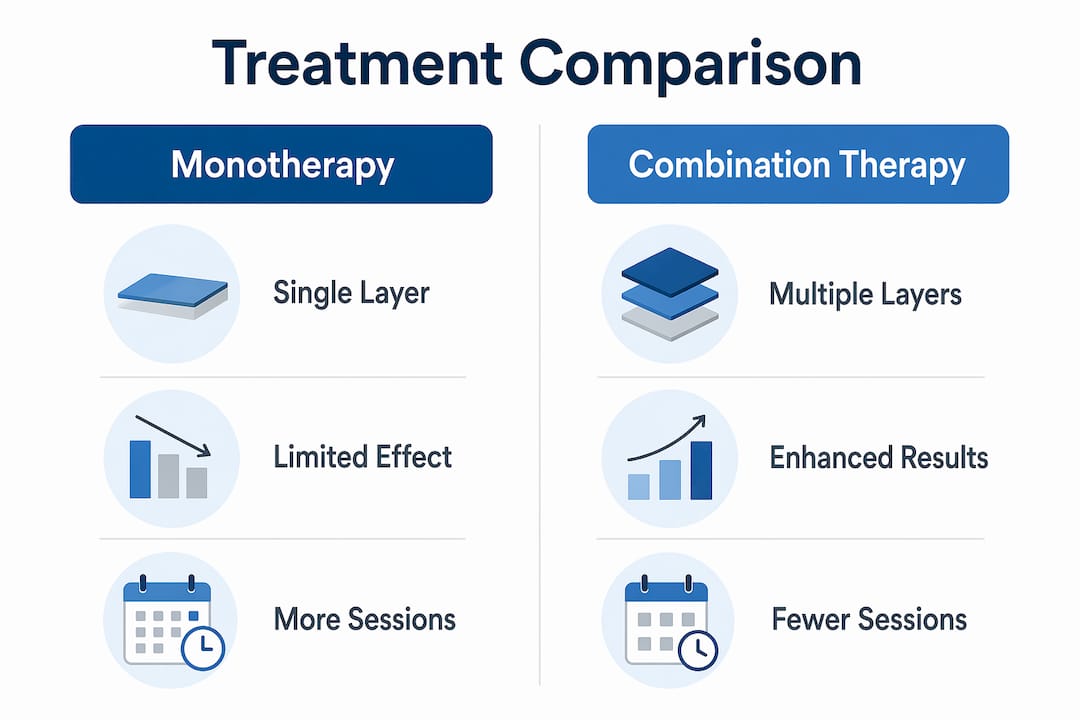
Single treatments, known as monotherapy, have a ceiling. Botulinum toxin alone softens dynamic lines but cannot restore volume. Fillers alone add volume but cannot address skin texture or muscle movement. Combination therapy yields higher patient satisfaction and improved aesthetic outcomes compared to monotherapy, a position endorsed by the American Society for Laser Medicine and Surgery (ASLMS).

The table below compares the two approaches across the most relevant clinical factors.
| Factor | Monotherapy | Combination therapy |
|---|---|---|
| Anatomical layers addressed | One or two | Multiple simultaneously |
| Result quality | Partial correction | Comprehensive rejuvenation |
| Patient satisfaction | Moderate | Higher |
| Treatment sessions needed | More over time | Fewer for equivalent results |
| Natural appearance | Variable | More balanced and harmonious |
| Risk of over-treatment | Lower per session | Requires careful planning |
The reduction in total treatment sessions is a practical advantage that clients often overlook. Addressing volume loss, skin texture, and muscle activity in a planned sequence means fewer clinic visits over a 12-month period compared to treating each concern separately and reactively.
That said, the benefits of combining treatments come with a responsibility. Stacking treatments without strategic rationale can cause over-treatment, increased inflammation, longer downtime, and can mask complications. More procedures do not automatically mean better results. Clinical judgement is the deciding factor between a plan that works and one that overwhelms the tissue.
Pro Tip: A well-constructed combination plan should feel like less, not more. If a consultation results in five or six treatments being recommended at once, ask for a phased approach with clear rationale for each step.
Which treatment combinations are considered safe and effective?
Safety in combination aesthetics comes down to sequencing and timing. The order in which treatments are performed, and the interval between them, determines whether they reinforce or interfere with each other. Energy-based devices like lasers should precede fillers with sufficient recovery time to avoid filler degradation and maximise efficacy.
The following numbered sequence reflects best-practice clinical logic for common combination protocols:
- Skin quality first. Begin with regenerative treatments such as PRP, polynucleotides, or skin boosters. These improve the skin’s capacity to heal and respond to subsequent procedures.
- Energy-based treatments second. Laser resurfacing, radiofrequency, or ultrasound treatments stimulate collagen and address pigmentation. These should be completed before any filler is placed.
- Allow a 4–6 week interval. Laser energy can degrade hyaluronic acid fillers if applied after placement. Thermal injury from laser may affect previously placed fillers if done the same day. A 4–6 week gap protects filler integrity.
- Structural fillers third. Once the skin is prepared and energy treatments have settled, hyaluronic acid or calcium hydroxyapatite fillers restore volume and contour with greater precision.
- Botulinum toxin last or concurrent with fillers. Botulinum toxin can typically be administered in the same session as fillers, as the two do not interfere with each other at the tissue level.
- Maintenance and review. Schedule a follow-up at 4–6 weeks to assess results and identify any refinements needed before the next phase.
Anatomical logic underpins treatment pairing choices. Treatments grouped by facial subunit, such as the periorbital area or the lower face, produce balanced results. Treating one subunit in isolation while ignoring adjacent areas can create asymmetry. Understanding facial anatomy for injectables is therefore not optional. It is the foundation of every safe combination plan.
Treatments that should not be combined in the same session include laser resurfacing with freshly placed fillers, and any two energy-based devices applied to the same area without adequate recovery. Treatment stacking risks are real: too many procedures simultaneously can overwhelm tissue healing capacity, increasing downtime and the risk of complications.
How to plan a personalised combination treatment regime
A bespoke treatment plan begins with a thorough assessment of your individual anatomy and ageing concerns. No two faces age identically. Volume loss may be the dominant concern for one person, while skin texture and pigmentation are the priority for another. A skilled practitioner maps these concerns to specific anatomical layers before recommending any procedure.
The planning process at a reputable clinic typically covers the following:
- Baseline assessment. Photographs, skin analysis, and a detailed consultation to identify which layers are most affected and in what order.
- Goal alignment. Your aesthetic goals are balanced against what the science supports. Natural results come from correcting what has changed, not from adding what was never there.
- Sequencing for minimal downtime. A regenerative-first approach that prioritises skin quality treatments before structural work promotes better healing and long-term outcomes. Skin boosters and PRP prepare the tissue to respond more effectively to fillers and energy devices.
- Phased delivery. Spreading treatments across multiple appointments reduces the cumulative burden on tissue and allows each treatment to settle before the next is introduced.
- Common protocols by concern. For wrinkles: botulinum toxin plus skin boosters. For volume loss: structural fillers plus PRP. For pigmentation: laser or chemical peel plus antioxidant skin care. For skin laxity: radiofrequency or ultrasound plus collagen-stimulating fillers.
The examples of facial treatments available today cover every layer of the ageing face. The skill lies in selecting the right combination for your specific anatomy, not in applying every available option. Practitioners who understand facial rejuvenation at a structural level will always produce more natural results than those who treat symptoms in isolation.
Combination therapy improves outcomes across medical fields, from oncology to aesthetics, by exploiting the non-overlapping benefits of each intervention. In aesthetics, this means each treatment fills a gap the others cannot. The result is a face that looks refreshed rather than treated.
Key takeaways
Combining aesthetic treatments works because ageing affects multiple anatomical layers simultaneously, and no single procedure can address all of them effectively.
| Point | Details |
|---|---|
| Multi-layer ageing requires multi-layer treatment | Ageing impacts five layers: skeleton, ligaments, muscles, fat, and skin. |
| Synergy outperforms single treatments | Combination therapy yields higher satisfaction and more natural results than monotherapy. |
| Sequencing determines safety | Lasers should precede fillers by 4–6 weeks to prevent filler degradation. |
| Regenerative treatments come first | Skin boosters and PRP prepare tissue for better response to structural procedures. |
| Clinical judgement is non-negotiable | Strategic rationale, not volume of treatments, determines whether a plan succeeds. |
My view on combining treatments thoughtfully
I have seen the full spectrum of combination treatment outcomes, from genuinely transformative to deeply counterproductive. The difference almost always comes down to one thing: whether the plan was built around the patient’s anatomy or around a menu of available services.
The most common misconception I encounter is that more treatments equal better results. They do not. A well-chosen pair of complementary procedures, timed correctly and delivered by a practitioner who understands the underlying anatomy, will consistently outperform a crowded treatment schedule. The face is not a collection of isolated problems. It is a system. Treating it as one produces results that look natural because they are natural, in the sense that they restore what was lost rather than impose something new.
I am also cautious about the trend toward same-day combination treatments. Some pairings are genuinely safe to perform together. Others require an interval that protects both the tissue and the investment the patient has made. Rushing the sequence to reduce the number of appointments is a false economy. The 4–6 week gap between laser and filler placement exists for a biological reason, not a commercial one.
My advice is straightforward. Seek a practitioner who can explain, in plain language, which anatomical layer each proposed treatment targets and why the sequence is planned as it is. If the answer is vague, the plan probably is too. The benefits of injectables are real and well-evidenced. They are best realised within a structured, phased plan that respects both the science and your individual face.
— Vishul
Discover combination treatments at Theaestheticsroom
Theaestheticsroom, based in Knightsbridge and Harley Street, London, designs bespoke combination treatment plans for clients seeking natural, lasting results. Our clinicians are trained to assess your anatomy across all five ageing layers and build a sequenced plan that delivers genuine synergy.
Whether you are considering Botox to address dynamic lines, dermal fillers to restore volume, or a phased programme combining both with skin quality treatments, we will guide you through every step. Theaestheticsroom is CQC-accredited and a member of the ACE Group, committed to patient safety and clinical excellence. Book a consultation today to find out which combination approach is right for you.
FAQ
Why combine treatments rather than use one at a time?
Facial ageing affects five anatomical layers simultaneously, and no single treatment addresses all of them. Combining procedures targets each layer in sequence, producing more complete and longer-lasting results.
Is combination therapy safe for aesthetic treatments?
Yes, when planned correctly. The key is sequencing: energy-based treatments like lasers should precede fillers by 4–6 weeks to prevent filler degradation and protect tissue integrity.
Which treatments can safely be done in the same session?
Botulinum toxin and dermal fillers can typically be administered together, as they do not interfere at the tissue level. Laser treatments and fillers should not be combined in the same session.
How many treatments should a combination plan include?
A well-designed plan uses the minimum number of treatments needed to address your specific concerns. Clinical guidance endorses strategic rationale over volume; over-treatment increases inflammation and downtime without improving results.
How does a regenerative-first approach improve outcomes?
Starting with skin quality treatments such as PRP or skin boosters prepares the tissue to heal more effectively and respond better to subsequent structural procedures like fillers, producing more natural and durable results.