
TL;DR:
- Most visible skin aging is caused by cumulative UV exposure rather than natural aging.
- Treating sun damage can improve appearance and prevent serious skin health issues like cancer.
- Combining treatments with ongoing sun protection is essential for optimal long-term results.
Sun damage is far more than a cosmetic inconvenience. Research shows that 80 to 90% of facial ageing is driven by UV exposure rather than the natural ageing process itself. That means the fine lines, uneven skin tone, and loss of firmness you notice in the mirror are largely the result of cumulative sun exposure over the years. Many people assume treating sun damage is purely about vanity, but the reality is quite different. Left unaddressed, sun damage can progress into serious skin health concerns. Understanding why treatment matters is the first step towards protecting both your appearance and your long-term wellbeing.
Table of Contents
- What is sun damage and its effects on your skin?
- Why treat sun damage? Health and cosmetic benefits
- What really works? Treatment options and their results
- Risks, special considerations, and prevention tips
- The uncomfortable truth: Sun damage never truly disappears
- Enhance your results with expert cosmetic treatments
- Frequently asked questions
Key Takeaways
| Point | Details |
|---|---|
| Sun damage drives ageing | Most signs of facial ageing are caused by sun exposure, not just getting older. |
| Treatment is about health and beauty | Addressing sun damage improves your skin’s look and greatly reduces health risks such as skin cancer. |
| Results demand evidence-based care | Proven treatments such as retinoids, lasers, and professional peels offer real improvement when tailored to your skin. |
| Prevention is an ongoing must | Even after treatment, consistent sun protection and skin checks are essential for lasting results. |
What is sun damage and its effects on your skin?
Sun damage, clinically known as photoageing, refers to the long-term structural changes that occur in the skin as a result of repeated ultraviolet (UV) radiation exposure. Unlike the natural ageing process, which unfolds slowly over decades, photoageing can accelerate visible skin changes significantly, even during your thirties and forties. It affects the deeper layers of the skin, breaking down collagen (the protein responsible for firmness and elasticity) and disrupting melanin production, which controls skin colour and tone.
The effects of sun on skin ageing are both visible and hidden. On the surface, you may notice:
- Wrinkles and fine lines, particularly around the eyes, mouth, and forehead
- Age spots and hyperpigmentation, appearing as flat, darkened patches
- Loose, sagging skin caused by collagen and elastin breakdown
- Blotchiness and redness, including broken capillaries
- Rough or leathery skin texture from thickened, damaged cells
Beneath the surface, the damage is often more serious. UV radiation causes DNA mutations in skin cells, which can lead to actinic keratoses (rough, scaly patches that are considered precancerous). If left untreated, these lesions can progress to squamous cell carcinoma, a form of skin cancer. Sun damage causes wrinkles, age spots, loose skin, blotchiness, and precancerous lesions, making early intervention essential.
“Most of what we attribute to ‘getting older’ is actually the result of decades of UV exposure accumulating in the skin. The good news is that this means much of it is treatable.”
Understanding sunscreen and skin health is also central to this picture. Daily UV protection is not just a preventive measure; it is an active part of managing and slowing existing damage. Without it, even the most effective treatments will struggle to maintain their results over time.
It is worth noting that photoageing does not discriminate by age. Cumulative UV exposure from your teens and twenties often does not become visibly apparent until your thirties or forties, which is why proactive treatment is so valuable regardless of when you start.
Why treat sun damage? Health and cosmetic benefits
Understanding the consequences leads to the critical question: why should you treat sun damage at all? Here is what you gain.
The motivation to treat sun damage falls into two distinct but equally important categories: medical and cosmetic. On the medical side, treating actinic keratoses and other UV-induced lesions can prevent them from progressing into skin cancer. This is not a theoretical risk. Dermatologists consistently recommend early intervention precisely because the window between a precancerous lesion and a malignant one can be narrow.
On the cosmetic side, the benefits are equally compelling. Treating sun damage can reverse signs of ageing and prevent precancerous changes, giving you both a healthier and more youthful appearance. Treatments stimulate collagen production, improve skin texture, reduce pigmentation, and restore a more even, radiant skin tone.
Here is what effective treatment can deliver:
- Smoother skin texture through renewed cell turnover
- Reduced pigmentation and a more even skin tone
- Firmer, more lifted appearance as collagen production is stimulated
- Reduced risk of skin cancer by addressing precancerous lesions early
- Improved confidence and satisfaction with your skin’s overall appearance
The psychological benefit is real and significant. Feeling comfortable and confident in your skin has a measurable impact on quality of life, and for many of our clients, treating visible sun damage is transformative in ways that go well beyond aesthetics.

Pro Tip: Do not wait for visible signs to worsen before seeking treatment. Advanced sun damage treatments are most effective when started early, before damage becomes deeply embedded in the skin’s structure.
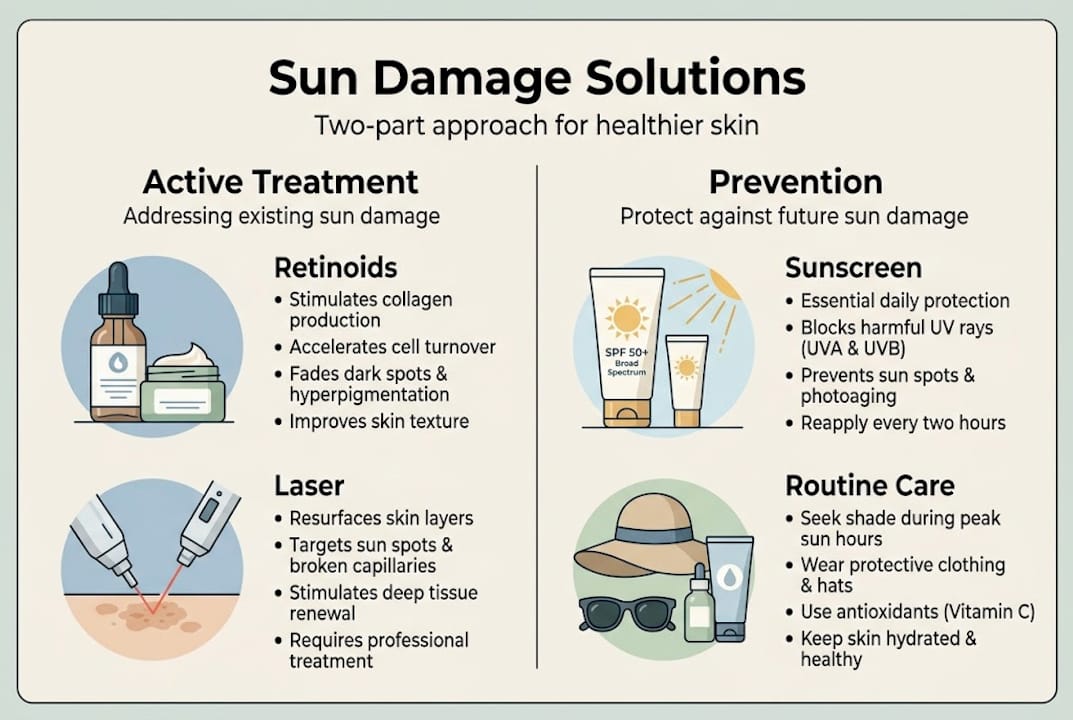
The most effective strategy combines active treatment with ongoing prevention. Think of it as a two-part approach: repair what has already occurred, and protect against further damage. SPF use, antioxidant-rich skincare, and regular professional skin assessments all play a role in locking in the results of any treatment you undertake.
Key insight: UV damage accumulates silently. You may not see the full extent of today’s sun exposure for another ten years, which makes the treat-and-protect approach not just smart, but essential.
What really works? Treatment options and their results
If you are motivated to take action, let us examine which treatments actually deliver and how to choose the best one for your needs.
The landscape of sun damage treatments has advanced considerably. Today, there are several evidence-based options, each suited to different skin types, concerns, and levels of damage. Topical retinoids, lasers, peels, and photodynamic therapy each have proven results for reversing sun damage, and choosing the right one depends on your specific skin profile.
The main treatment options
- Topical retinoids (vitamin A derivatives): These work by accelerating cell turnover and stimulating collagen production. They are often the first-line recommendation for mild to moderate photoageing. Retinoids show significant spot reduction of 20 to 30% within 12 weeks, with isotretinoin performing best for fine wrinkles and tretinoin offering a strong balance of efficacy and tolerability. Understanding choosing the right retinoid for your skin type is key to getting results without unnecessary irritation.
- Laser resurfacing: Fractional and ablative lasers target damaged skin cells with precision, promoting new collagen growth and reducing pigmentation. Laser results for wrinkles are well documented, with improvements typically visible within four to six weeks of treatment.
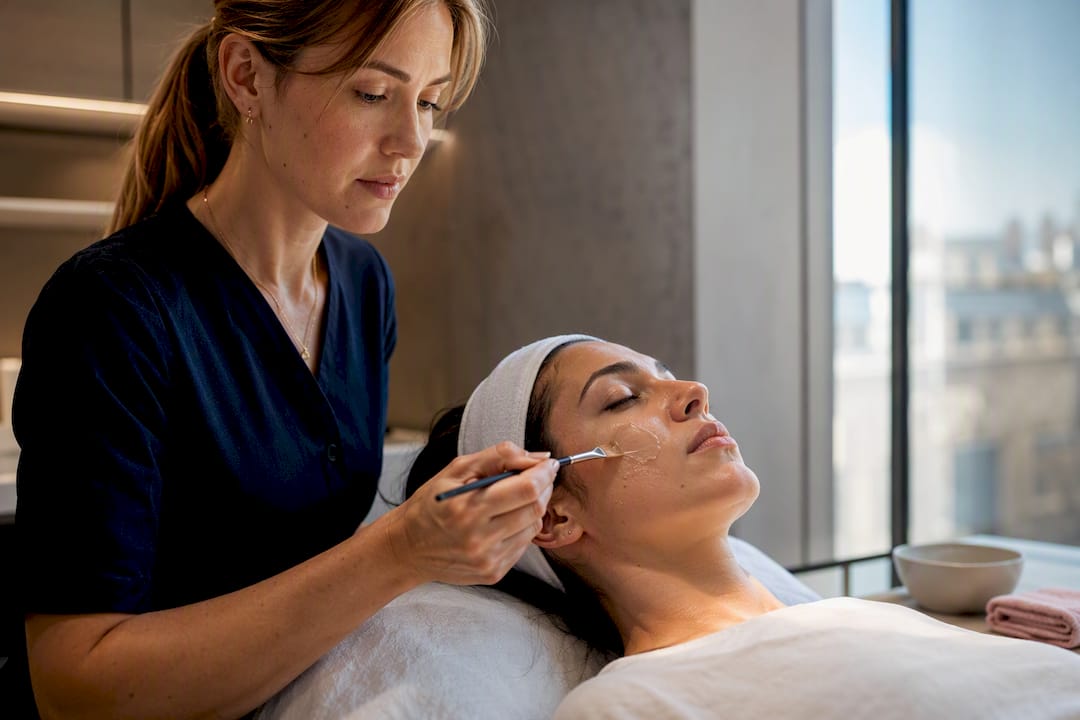
- Chemical peels: Glycolic, salicylic, and trichloroacetic acid (TCA) peels remove the outer layers of damaged skin, revealing fresher, more even skin beneath. Peels vary in depth and intensity, making them adaptable to a wide range of skin types and concerns.
- Photodynamic therapy (PDT): PDT uses a light-sensitising agent applied to the skin, which is then activated by a specific wavelength of light. It is particularly effective for actinic keratoses. Photodynamic therapy clears up to 75% of actinic keratosis lesions, making it one of the most powerful tools for addressing precancerous sun damage.
Treatment comparison
| Treatment | Best for | Downtime | Efficacy |
|---|---|---|---|
| Topical retinoids | Mild photoageing, spots | None | Moderate (20-30% improvement) |
| Laser resurfacing | Wrinkles, texture, pigmentation | 5-10 days | High |
| Chemical peels | Uneven tone, surface damage | 3-7 days | Moderate to high |
| Photodynamic therapy | Actinic keratoses, precancerous lesions | 1-3 days | High (up to 75% clearance) |
For skin rejuvenation guidance tailored to your specific concerns, a professional consultation is always the most reliable starting point. No two skin profiles are identical, and the best results come from a personalised plan.
Pro Tip: Combining treatments often yields superior results. For example, a course of retinoids followed by a professional peel can address both surface pigmentation and deeper collagen loss simultaneously.
Risks, special considerations, and prevention tips
Of course, every treatment has potential risks. Here is what to watch for, and how to prevent problems before, during, and after treatment.
No treatment is without side effects, and being well-informed is part of making a safe, confident choice. Topical retinoids can cause irritation, dryness, and peeling, particularly in the early weeks of use. Lasers and PDT carry additional risks, especially for individuals with darker skin tones, where there is a higher risk of post-inflammatory hyperpigmentation (darkening of the skin following inflammation).
Key risks by treatment type
| Treatment | Common side effects | Higher risk groups |
|---|---|---|
| Retinoids | Dryness, redness, peeling | Sensitive skin, rosacea |
| Laser resurfacing | Redness, swelling, pigmentation changes | Darker skin types |
| Chemical peels | Irritation, temporary darkening | Sensitive or darker skin |
| Photodynamic therapy | Redness, crusting, light sensitivity | Darker complexions, outdoor workers |
For those with darker skin tones, the good news is that options are expanding. Photolyase sunscreens can help reduce actinic keratoses in darker skin types, offering a gentler preventive and adjunctive approach alongside professional treatments.
Prevention remains essential even after treatment. Here are the core habits to protect your investment:
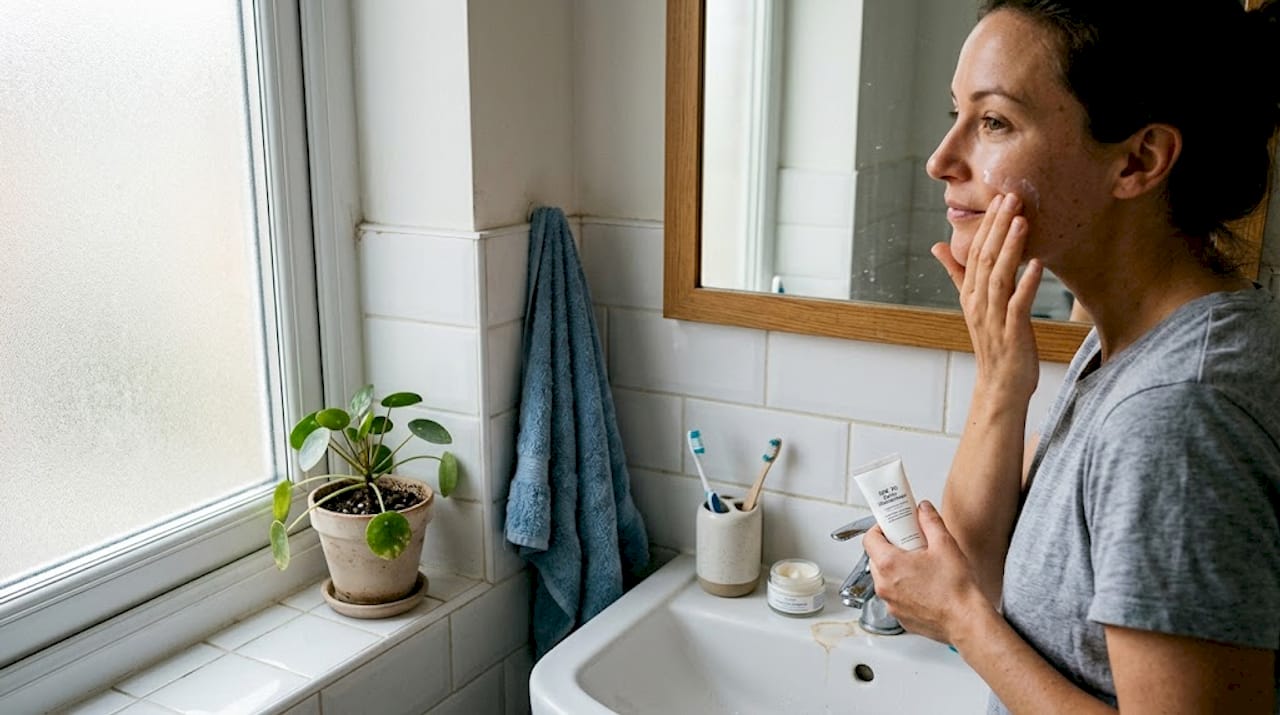
- Apply a broad-spectrum SPF 30 or higher every single day, including in winter. Understanding SPF importance all year is non-negotiable for maintaining results.
- Reapply sunscreen every two hours when outdoors
- Wear protective clothing and seek shade during peak UV hours (10am to 4pm)
- Use antioxidant serums containing vitamin C to neutralise free radical damage
- Schedule regular skin health reviews with a qualified practitioner
For a structured approach to ongoing skin care, our skin health checklist provides a practical framework for maintaining healthy, protected skin throughout the year. Transplant patients and those on immunosuppressant medications are at particularly elevated risk and should seek specialist advice before undertaking any treatment.
The uncomfortable truth: Sun damage never truly disappears
After all the evidence and options, here is what we at The Aesthetics Room want you to understand before you invest in any treatment.
Full reversal of sun damage is not possible, though significant visible improvement absolutely is. This is not a reason for pessimism. It is a reason for realistic, committed action. Treatments can restore a great deal of what has been lost, but they work best when paired with consistent daily habits.
What surprises many of our London clients is the extent to which they underestimate ongoing UV exposure. Even on overcast days, up to 80% of UV radiation penetrates cloud cover. London’s grey skies are not a shield. This means that without daily SPF and a considered anti-ageing strategies approach, new damage accumulates even as you treat existing concerns.
The most transformative outcomes we see are not from single procedures. They come from clients who commit to a sustained programme of treatment and prevention. One professional peel will not undo years of sun exposure, but a structured, ongoing plan absolutely can shift the trajectory of your skin’s health and appearance in a meaningful way.
Enhance your results with expert cosmetic treatments
If you are ready to take the next step towards clearer, healthier skin, professional guidance makes all the difference. Generic skincare routines can only go so far. What truly restores and revitalises sun-damaged skin is a bespoke treatment plan, designed around your unique skin profile and goals.

At The Aesthetics Room, our specialists in Knightsbridge offer tailored solutions including local skin rejuvenation expertise and dermal fillers solutions to restore volume and smooth the visible effects of photoageing. Whether you are addressing pigmentation, loss of firmness, or early precancerous changes, we create personalised plans that combine the most effective treatments with ongoing prevention strategies. Book a consultation today and take confident, informed action towards your healthiest skin yet.
Frequently asked questions
Can sun damage be completely reversed?
Full reversal is not possible, but treatments can significantly improve skin texture, reduce pigmentation, and restore a more youthful appearance with consistent effort.
What is the best treatment for sun damage?
Retinoids and advanced procedures such as lasers and chemical peels are the most proven options, with the ideal choice depending on your skin type and the severity of damage.
How quickly will I see results after treatment?
Most clients see measurable improvements in pigmentation and texture within 12 weeks, with 20 to 30% spot reduction achievable through consistent retinoid use alone.
Is treatment safe for dark skin types?
Yes, with appropriate adjustments. Photolyase sunscreens help reduce actinic keratoses in darker skin types, and a qualified practitioner will tailor any laser or PDT treatment to minimise pigmentation risks.