
Smooth, radiant skin is a source of confidence, yet many women notice those stubborn dimpled areas on their thighs or buttocks that seem immune to creams and exercise. This distinctive orange peel texture, known as cellulite, is a common cosmetic concern and not a medical condition. With so many non-invasive treatments available in London promising smoother contours without downtime, understanding how and why cellulite develops is the first step towards making empowered choices for your body.
Table of Contents
- What Is Cellulite And Why It Occurs
- Different Types Of Cellulite Treatments Available
- How Non-Invasive Treatments Work Safely
- Evaluating Effectiveness And Expected Results
- Risks, Costs, And Choosing A Provider
Key Takeaways
| Point | Details |
|---|---|
| Understanding Cellulite | Cellulite is a prevalent skin condition affecting approximately 85% of post-pubertal women, influenced by hormonal, genetic, and structural factors. |
| Treatment Options | There are multiple non-invasive treatment categories available, including topical treatments, technology-based solutions, and physical interventions for cellulite reduction. |
| Effectiveness and Expectations | Treatment effectiveness varies and requires realistic expectations; no single method offers a permanent solution. |
| Risks and Provider Selection | Understanding treatment risks and choosing a qualified provider are essential for safe and effective cellulite management. |
What Is Cellulite And Why It Occurs
Cellulite is a complex skin condition affecting a significant proportion of women, creating a distinctive dimpled appearance that resembles an orange peel. Skin alteration affects approximately 85% of post-pubertal women, making it a nearly universal aesthetic concern.
The condition occurs due to intricate interactions between fat cells, connective tissue, and skin structure. Specifically, small protrusions of fat push through weakened connective tissue bands in areas like thighs and buttocks, creating the characteristic bumpy texture. Unlike traditional medical conditions, cellulite represents a cosmetic challenge primarily influenced by several key factors:
- Hormonal changes
- Genetic predisposition
- Age-related skin elasticity reduction
- Body fat percentage
- Connective tissue structure
Anatomical differences play a crucial role in cellulite development. Women’s connective tissue has a vertical arrangement that allows fat to protrude more easily, whereas men’s tissue has a criss-cross pattern that prevents similar visible dimpling. This structural variation explains why cellulite predominantly affects females.
Physiological mechanisms remain not fully understood, but researchers agree that hormonal fluctuations significantly contribute to its appearance. Oestrogen, insulin, and thyroid hormones can influence fat distribution and connective tissue integrity.
Pro tip: Understanding your individual cellulite factors can help you develop more targeted treatment approaches.
Different Types Of Cellulite Treatments Available
Cellulite treatment technologies have evolved significantly, offering multiple non-invasive options for individuals seeking smoother skin texture. Emerging therapies focus on innovative non-invasive approaches that aim to address the underlying structural challenges causing dimpled skin.
The primary cellulite treatment categories include:
- Topical Treatments
- Over-the-counter creams
- Prescription retinoid formulations
- Caffeine-based products
- Technology-Based Solutions
- Laser therapies
- Radiofrequency treatments
- Ultrasound techniques
- Physical Interventions
- Mechanical massage
- Endermologie
- Subcision procedures
Weight loss and muscle toning can contribute to cellulite reduction, though they do not completely eliminate the condition. Fat freezing and targeted laser treatments provide temporary improvements by disrupting fat cell structures and stimulating collagen production.

Advanced clinical treatments like radiofrequency microneedling and lymphatic drainage massage offer more sophisticated approaches. These methods target both fat distribution and connective tissue integrity, providing more comprehensive cellulite management strategies.
Pro tip: Consult a professional aesthetician to develop a personalised treatment plan tailored to your specific cellulite characteristics and skin type.
Here is a summary comparing popular cellulite treatment categories and their expected suitability:
| Treatment Type | Best For | Typical Cost Range |
|---|---|---|
| Topical Treatments | Mild surface dimpling | £20 to £150 |
| Technology-Based | Moderate to severe cases | £250 to £1,500 |
| Physical Interventions | Early-stage cellulite | £50 to £350 |
How Non-Invasive Treatments Work Safely
Non-invasive cellulite treatments target skin irregularities through sophisticated technological approaches that minimise physical intervention and maximise patient comfort. These advanced methods focus on disrupting fat cell structures and stimulating natural skin regeneration processes without surgical incisions.
The primary mechanisms of non-invasive cellulite treatments include:
- Heat-Based Technologies
- Radiofrequency energy delivery
- Targeted thermal disruption
- Controlled tissue warming
- Mechanical Interventions
- Ultrasound wave transmission
- Lymphatic drainage techniques
- Mechanical tissue manipulation
- Collagen Stimulation Approaches
- Micro-targeted energy release
- Cellular restructuring
- Connective tissue remodelling
Radiofrequency body contouring techniques deliver precise heat energy deep into dermal layers, breaking down fat cells while simultaneously stimulating collagen production. This dual-action approach helps tighten skin and reduce the appearance of cellulite with minimal discomfort.
Patients typically experience mild warmth and temporary skin responses during treatment, with most procedures lasting between 30-60 minutes. The non-invasive nature means zero downtime, allowing individuals to return to daily activities immediately after their session.
Pro tip: Always consult a qualified medical professional to determine the most appropriate non-invasive treatment for your specific skin condition and aesthetic goals.
Evaluating Effectiveness And Expected Results
Cellulite treatment effectiveness varies significantly across different interventions, requiring patients to maintain realistic expectations about potential outcomes. The complexity of cellulite means no single treatment offers a permanent solution, but strategic approaches can produce noticeable improvements.
Key factors influencing treatment effectiveness include:
- Individual Biological Factors
- Genetic predisposition
- Skin elasticity
- Hormonal balance
- Age and metabolism
- Treatment-Specific Variables
- Technology type
- Number of sessions
- Practitioner expertise
- Individual response rate
- Maintenance Requirements
- Consistent follow-up treatments
- Lifestyle modifications
- Skincare regimen
Visible improvements often include temporary skin tightening and reduced surface dimpling. Most patients experience subtle changes rather than complete cellulite elimination, with results typically lasting several months before requiring additional interventions.
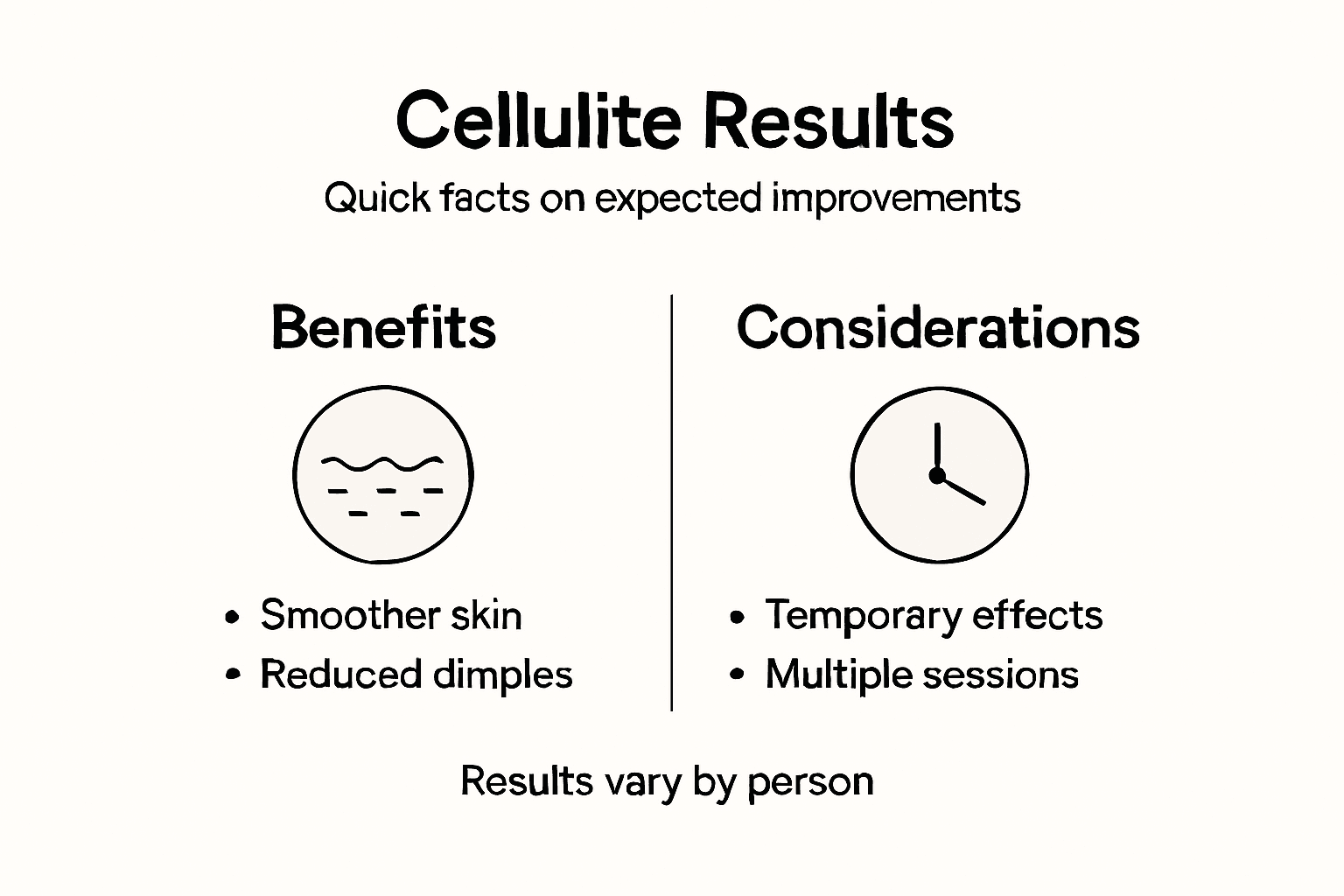
Professional assessment remains crucial in determining potential outcomes. Experienced practitioners can provide personalised predictions based on comprehensive skin analysis, helping patients understand realistic expectations and develop tailored treatment strategies.
Pro tip: Document your treatment progress through consistent photography to objectively track subtle improvements and discuss nuanced results with your aesthetician.
Risks, Costs, And Choosing A Provider
Treatment risks require careful consideration before pursuing any cellulite intervention. Understanding potential complications and financial implications helps patients make informed decisions about their aesthetic journey.
Key risks and considerations include:
- Clinical Risks
- Temporary skin swelling
- Minor discomfort during procedure
- Potential infection
- Uneven treatment results
- Financial Considerations
- Treatment cost variations
- Multiple session requirements
- Potential maintenance expenses
- Provider Selection Criteria
- Professional qualifications
- Clinical experience
- Treatment specialisation
- Patient review history
Cost structures vary significantly across different treatment modalities, with prices typically ranging from £150 to £1,500 per session depending on the technology and clinic reputation. Patients should budget for potential multiple treatments and understand that most cellulite interventions are considered cosmetic procedures, rarely covered by standard health insurance.
Choosing a qualified provider involves thorough research, including verifying medical credentials, reviewing professional memberships, and examining before-and-after portfolios. Practitioners specialising in aesthetic medicine with specific cellulite treatment expertise offer the most reliable outcomes.
This table highlights important factors to consider when selecting a cellulite treatment provider:
| Selection Criterion | Why It Matters | What to Look For |
|---|---|---|
| Professional Training | Ensures medical safety and expertise | Accredited certifications |
| Clinical Experience | Improves treatment reliability | Years practising aesthetic medicine |
| Technology Access | Broadens individualised care options | Latest equipment offered |
| Patient Reviews | Indicates typical satisfaction and trust | Consistent positive feedback |
Pro tip: Request comprehensive consultations with multiple clinics, comparing their approach, technology, and transparent pricing before committing to a specific treatment plan.
Discover Effective Non-Surgical Solutions for Cellulite at The Aesthetics Room
Struggling with the frustrating appearance of cellulite and seeking a safe way to enhance your skin’s texture and tone? At The Aesthetics Room, we understand that hormonal fluctuations, connective tissue changes, and stubborn fat deposits can affect confidence. Our tailored approach addresses key factors like skin elasticity and fat distribution through advanced non-invasive treatments designed to reduce dimpling and stimulate collagen production.

Explore our range of expertly delivered Skin Treatments and innovative Fat Dissolving therapies. Benefit from personalised care in London’s prestigious Knightsbridge location, where every plan is crafted to fit your unique cellulite profile. Take the first step today by visiting The Aesthetics Room to book your consultation and start your journey to smoother, more confident skin.
Frequently Asked Questions
What is cellulite and what causes it?
Cellulite is a skin condition that creates a dimpled appearance, primarily affecting women. It occurs due to the interplay between fat cells, connective tissue, and skin structure. Hormonal changes, genetic factors, and age-related changes in skin elasticity can all contribute to its development.
What are the different types of cellulite treatments available?
There are several cellulite treatment options, including topical treatments (creams and retinoids), technology-based solutions (laser and radiofrequency therapies), and physical interventions (mechanical massage and subcision procedures). Each type targets different aspects of the condition.
How do non-invasive cellulite treatments work?
Non-invasive treatments aim to reduce the appearance of cellulite by using technologies that disrupt fat cell structures and stimulate collagen production without needing surgery. Methods include heat-based technologies, ultrasound, and collagen stimulation approaches, all designed to enhance skin texture safely.
What should I consider when choosing a cellulite treatment provider?
When selecting a cellulite treatment provider, consider their professional qualifications, clinical experience, technology access, and patient reviews. Ensuring the practitioner specialises in aesthetic medicine and has expertise in cellulite treatments is crucial for optimal results.