
The most reliable way to soften nasolabial folds is a medical assessment of your whole midface, followed by a plan built around what is causing your folds. For most people, that means hyaluronic acid dermal filler, sometimes combined with skin-quality treatments. The folds are the creases running from the sides of your nose to the corners of your mouth. They are not always a problem in themselves, but they are often the visible sign of volume lost higher up the face. At The Aesthetics Room, our medically trained practitioners, CQC-registered and members of the ACE Group, plan treatment around that principle.
TL;DR
- Nasolabial folds deepen with age, sun damage, smoking and weight change, and they have more than one anatomical cause, so the right treatment depends on which cause dominates in your face.
- Hyaluronic acid filler is the best-evidenced non-surgical option. Effects typically last six months to a year, with a visible result straight away.
- Treating the midface volume above the fold can give a more natural, balanced result than filling the crease alone.
- Choose a qualified practitioner with a full medical history consultation, and be wary of suspiciously cheap offers.
- Skin-quality treatments such as Profhilo, micro-needling and peels can sit alongside filler as part of a bespoke plan.
Table of Contents
- What nasolabial folds are, and why they deepen
- Your treatment options
- Which treatment fits which fold
- What the treatment is like
- How long results last
- Choosing a London clinic you can trust
- Our perspective
- Book your assessment
- FAQ
- Sources
What nasolabial folds are, and why they deepen
Nasolabial folds, often called smile lines, are creases that run from each side of the nose to the corners of the mouth. Cleveland Clinic notes that they can become prominent and permanent with age, and that smoking, sun exposure and weight loss or gain all contribute.
There is also an anatomical explanation. A 2024 peer-reviewed anatomical review describes three mechanisms behind the fold:
- Volume deficiency: the bone beneath the cheek (the maxilla) recedes with age and removes support.
- Fat pad descent: the anterior buccal fat pad, a pocket of fat in the cheek, attaches to the skin and sags.
- Muscle traction: the muscles that lift the upper lip pull on the skin and crease it.
This matters because two people with similar-looking folds may need different treatment. One may be losing cheek support. Another may have skin that has lost firmness. Most have a mix. A good consultation works out which.
Your treatment options
The main routes to softer folds fall into a few groups. Cleveland Clinic lists botulinum toxin, dermal fillers, topical retinoids, laser, ultrasound and radio-wave tightening, and surgery such as a cheek lift or facelift. The same page notes there is no way to prevent folds permanently, though treatments can work for months or even years.
For most adults who want a refreshed look without surgery or downtime, the choice comes down to filler, skin-quality treatments, or a combination.
Hyaluronic acid dermal filler
Hyaluronic acid is a substance the skin naturally contains, which holds water and gives volume. Filler made from it is injected to restore support. A 2024 network meta-analysis of randomised controlled trials compared filler types for nasolabial fold correction and confirmed hyaluronic acid-based products as the evidence-backed standard for this area.
The results are well documented. A 2021 systematic review pooled wrinkle severity scores for nasolabial fold filler treatment. The average score fell from 3.23 at baseline to 1.79 at one month, 2.02 at six months and 2.46 at 12 months. The authors describe the improvement as satisfying and sustainable, lasting up to a year.
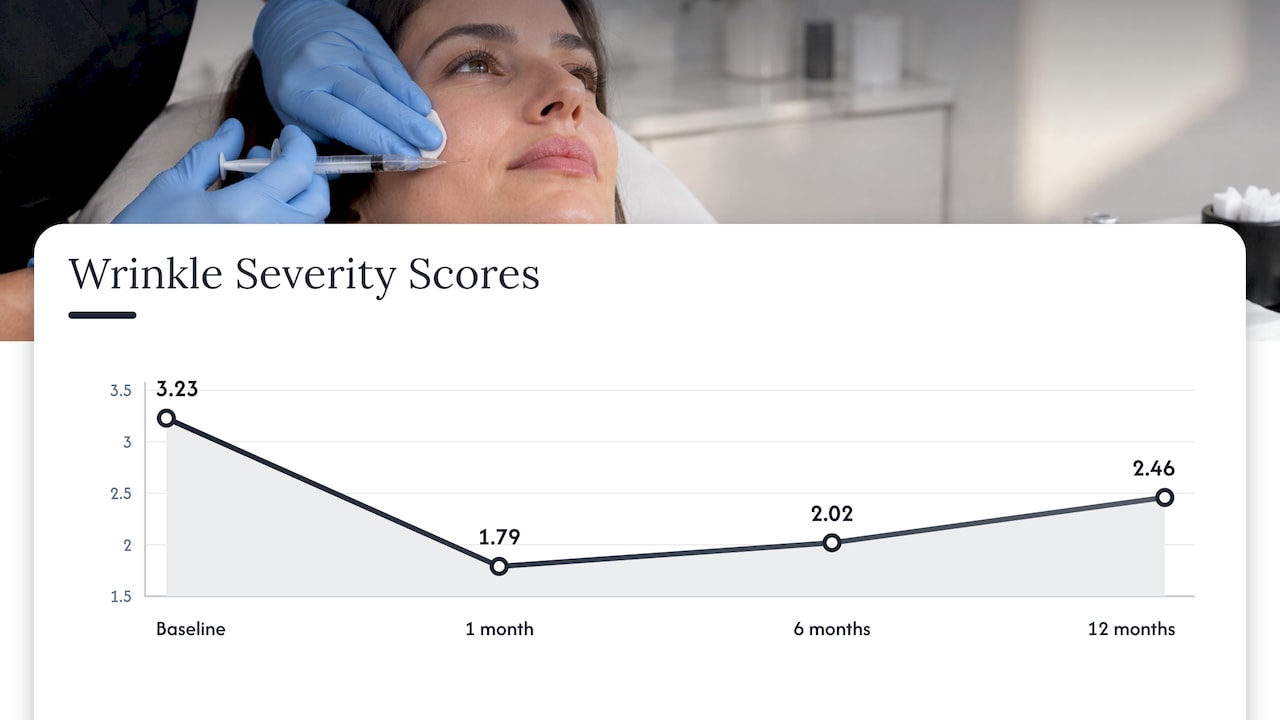
That gradual return towards baseline is why maintenance planning matters. Our guide to maintaining filler results for longer and the filler breakdown timeline show what to expect month by month.
Treating the midface, not only the crease
If the fold is partly a symptom of lost cheek support, filling the crease on its own treats the shadow rather than its source. A UK clinical article in Aesthetic Nursing explains that modern technique can address age-related bone and fat volume loss in the midface instead of injecting directly into the fold. This can produce a more natural, balanced result with longer-lasting rejuvenation.
In practice, the aim is a face that looks rested, not one that looks treated. If you want to see what cheek support can do, our page on cheek filler before and after shows the kind of change to expect.
Anti-wrinkle injections
Botulinum toxin relaxes muscles. Cleveland Clinic says it can reduce the appearance of the folds for a few months. It plays a supporting role here, because the fold is mainly a volume and skin-support issue, and is often used for expression lines elsewhere on the face. Our anti-wrinkle treatment is listed at £200-£358 on the price list, and our guide to where Botox works on the face shows which areas it suits.
Skin-quality treatments
Folds look deeper when the skin around them is thin, dull or crepey. Treatments that work on skin quality can complement filler. From our published price list:
| Treatment | What it is for | Price |
|---|---|---|
| Profhilo | Skin hydration and firmness | £350 |
| Sunekos | Skin rejuvenation and collagen support | £450 |
| Micro-needling | Texture and collagen stimulation | £300 |
| Mild skin peel | Tone and surface refresh | £120 |
| Medium / deep peel | Deeper resurfacing | £350 |
| Medical skincare prescription | Home care to support results | £50 |
Prices are from our price list, which is the place to check current figures. Which of these suits you, and in what order, is decided at consultation.
Which treatment fits which fold
A simple guide to how the cause shapes the plan:
| What you notice | Likely driver | Typical direction |
|---|---|---|
| Hollowing under the eyes and flat cheeks, with the fold deepening | Midface volume loss | Cheek and midface support, sometimes with fold refinement |
| A crisp, defined crease with good skin quality | Fold depth and local volume | Targeted filler |
| Fine lines and slack skin around the fold | Skin quality | Skin boosters, micro-needling or peels, with or without filler |
| Muscle pull when you smile or talk | Dynamic movement | Filler, with anti-wrinkle treatment elsewhere if it suits you |
This is a starting point, not a diagnosis. Your age, bone structure, skin type and goals all change the plan.
What the treatment is like
Filler is a short in-clinic appointment. Results are visible straight away, with final settling over one to two weeks, according to the British Cosmetic Dermatology Group. A 2017 postmarket study of 70 people with moderate-to-severe folds found significant improvement maintained at 12 months. 82.1% needed less than 24 hours to return to normal activities.
A typical journey looks like this:
- Consultation. Your practitioner takes a full medical history, assesses your face at rest and in movement, and talks through goals. We offer in-person and virtual consultations. Our guide to London aesthetic consultations explains what to bring and ask.
- Treatment planning. Your plan sets out which areas are treated and in what order, so that the result looks balanced.
- Injection. Filler is placed with fine needles or cannulas (blunt-tipped tubes) following your plan.
- Aftercare. You are given instructions for the first days, and a follow-up approach for topping up.
Normal effects and how to settle them
Common temporary effects include redness, swelling, bruising, tenderness, itching, lumps and asymmetry. The British Cosmetic Dermatology Group says these mostly settle within days to weeks. The 2021 systematic review lists lumpiness, tenderness, swelling and bruising as the most common, and describes complications as relatively mild and subsiding in time. Our filler bruising timeline walks through it day by day.
For safe aftercare:
- Avoid strenuous exercise, heavy alcohol and heat (hot baths, saunas, intense sun) for 24 to 48 hours, as the British Cosmetic Dermatology Group advises. Our page on alcohol after fillers explains the reasoning.
- Follow your practitioner’s aftercare instructions for the following days. If you are interested in supporting recovery from swelling, see our article on whether lymphatic drainage reduces swelling.
Who should wait
Filler is not suitable with an active local infection, a known allergy to the filler, or an uncontrolled medical condition. It is generally deferred during pregnancy and breastfeeding, according to the British Cosmetic Dermatology Group. This is why a full medical history comes first at your consultation.
When to seek urgent help
In rare cases filler can block a blood vessel (vascular occlusion). Contact your practitioner or emergency services straight away if you have severe or increasing pain, skin that turns pale or dusky, or any sudden change in vision. The British Cosmetic Dermatology Group lists these as signs needing urgent medical attention. The ACE Group’s UK safety guideline on visual loss notes that hyaluronidase is the emergency antidote for hyaluronic acid filler. That is one reason hyaluronic acid products and a practitioner trained to manage complications make up the safest approach.
How long results last
Cleveland Clinic puts filler effects at six months to a year, and anti-wrinkle injections at a few months. The figures in the research vary by product, by how much is placed and by your own metabolism. The average pooled score in the 2021 review was still better than baseline at 12 months, which is why many patients plan a top-up before the effect has fully faded rather than after.
Planning ahead keeps the result steady and often means less product per visit. See our filler myths article for answers to common worries about longevity.
Choosing a London clinic you can trust
Treatment of nasolabial folds is private, and the first step is choosing a regulated practitioner. GOV.UK urges patients to check a provider’s qualifications and insurance and to avoid suspiciously cheap treatments. The government announced in August 2025 that lower-risk treatments, including Botox, lip fillers and facial dermal fillers, will come under a new local authority licensing system with safety, training and insurance standards.
Until rules change, you are the one who checks. Use this list:
- Is the practitioner medically trained, and can they tell you their qualifications and insurance?
- Do they take a full medical history and examine your face before agreeing a plan?
- Do they explain what product they use and why, and what you can expect to see?
- Is the clinic registered with the Care Quality Commission, England’s health and social care regulator?
- Does the price look realistic against the market?
- Do they explain what to do if something goes wrong?
Our guide on choosing top central London skin clinics goes further. For a view of the cost side, see our Harley Street dermal filler price guide.
Our perspective
Nasolabial folds are one of the most common reasons people ask us about filler, and one of the easiest to get wrong if the fold is treated in isolation.
Our approach is medically led and bespoke. We look at the whole face, because the fold is usually part of a wider change in volume and skin quality. Every treatment is performed by a medically trained professional, with the aim of natural, personalised results rather than a changed face.
Safety sits at the centre of how we work. The Aesthetics Room is CQC-registered and a member of the ACE Group, which is dedicated to patient safety. Patients can choose a virtual or in-person consultation to start, and treatment plans can combine filler with skin-quality options such as Profhilo, Sunekos, micro-needling and peels, so the skin around the fold looks as refreshed as the fold itself.
If you have been unsure whether your folds need filler, skin treatment or simply a better plan, the consultation is the place to find out.
Vishul
Book your assessment
If you would like your nasolabial folds assessed, we offer consultations, either virtual or in person, at our London clinics in Knightsbridge, Harley Street and Mayfair. We will review your medical history, talk through your goals and map out which treatments suit your face. You can see our current treatment prices on the price list, or start at theaestheticsroom.co.uk to book.

We also publish plain-English guides to the treatments mentioned above, so you can arrive at your consultation informed.
FAQ
How do you get rid of nasolabial folds?
There is no way to remove them permanently, but they can be softened considerably. Hyaluronic acid filler is the best-evidenced non-surgical option, and it works best when the cause of your folds, such as midface volume loss, is assessed first. Skin-quality treatments can support the result.
What is the best treatment for nasolabial folds?
For most adults, the best treatment is hyaluronic acid filler, planned around your anatomy. A network meta-analysis confirmed hyaluronic acid fillers as the standard for this area. Your consultation decides whether to treat the fold, the cheek above it, or both.
How long does nasolabial fold filler last?
Typically six months to a year, according to Cleveland Clinic. The exact time depends on the product, the amount used and your own body. Planning a top-up before the effect fully fades helps keep results consistent.
Is there downtime after treatment?
Usually very little. In a 2017 study, 82.1% of people needed less than 24 hours to return to normal activities. Swelling, tenderness and bruising can last days to a couple of weeks, so allow for this before a social event.
Can I have filler if I am pregnant or breastfeeding?
It is generally deferred during pregnancy and breastfeeding, according to the British Cosmetic Dermatology Group. Tell your practitioner at your consultation so they can advise on timing.
Sources
- Nasolabial Folds (Smile Lines): Causes & Treatment, Cleveland Clinic
- Why Do Nasolabial Folds Appear? Exploring the Anatomical Basis, PMC
- Efficacy and Safety of Fillers for the Treatment of Nasolabial Folds, PubMed
- Tissue Fillers for the Nasolabial Fold Area: A Systematic Review, PMC
- Treating nasolabial folds with dermal fillers: a holistic approach, Aesthetic Nursing
- Dermal Fillers (Soft Tissue Fillers), British Cosmetic Dermatology Group
- Prospective postmarket study, Dermatologic Surgery
- Visual Loss Secondary to Cosmetic Injection, ACE Group
- Crackdown on unsafe cosmetic procedures, GOV.UK